
Last updated October 16, 2026
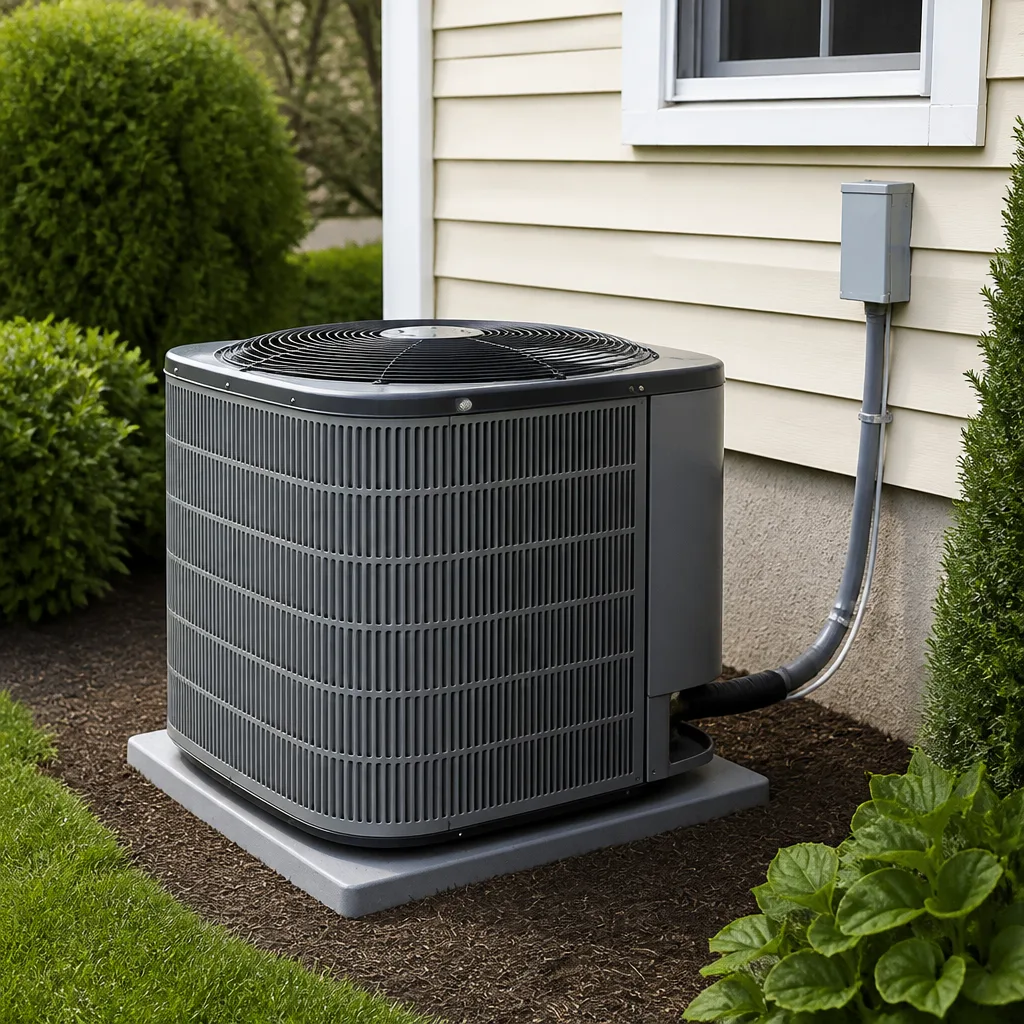 AC repair
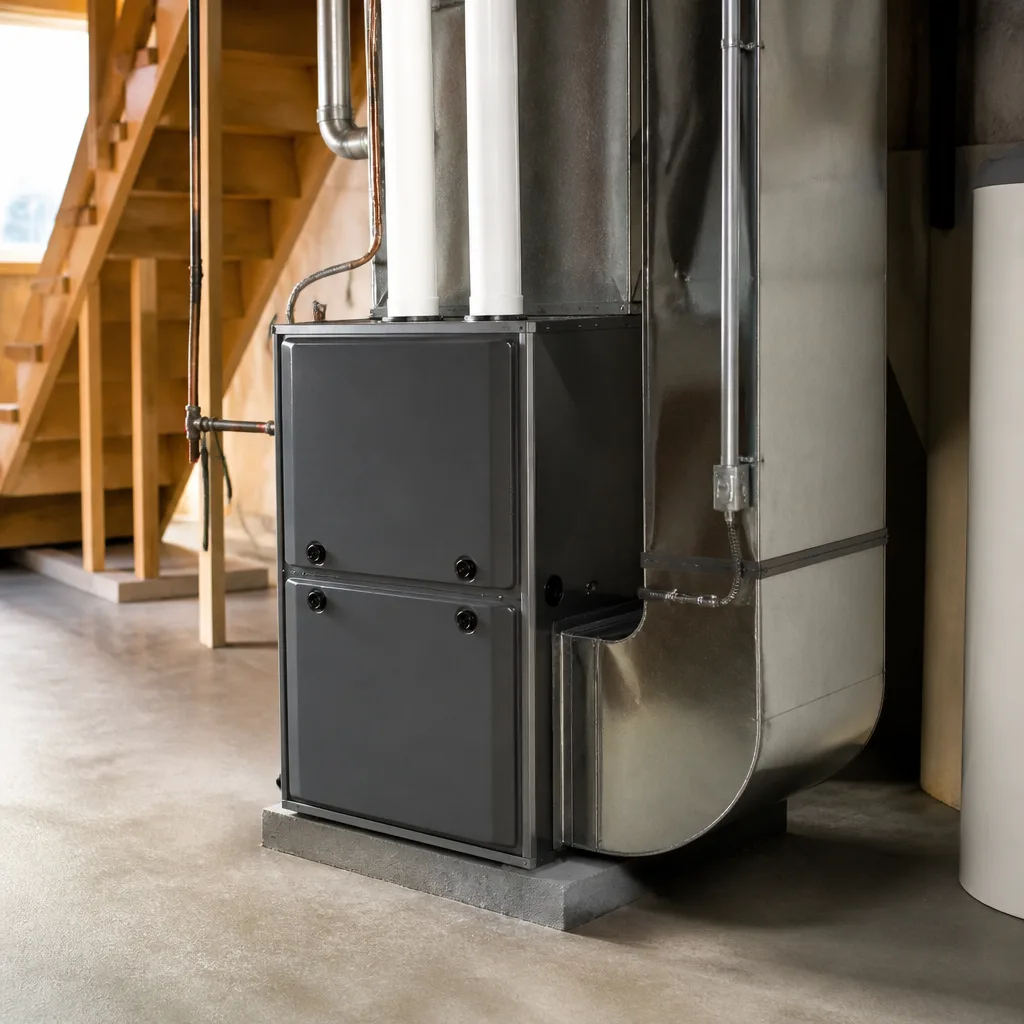 Furnace & heating
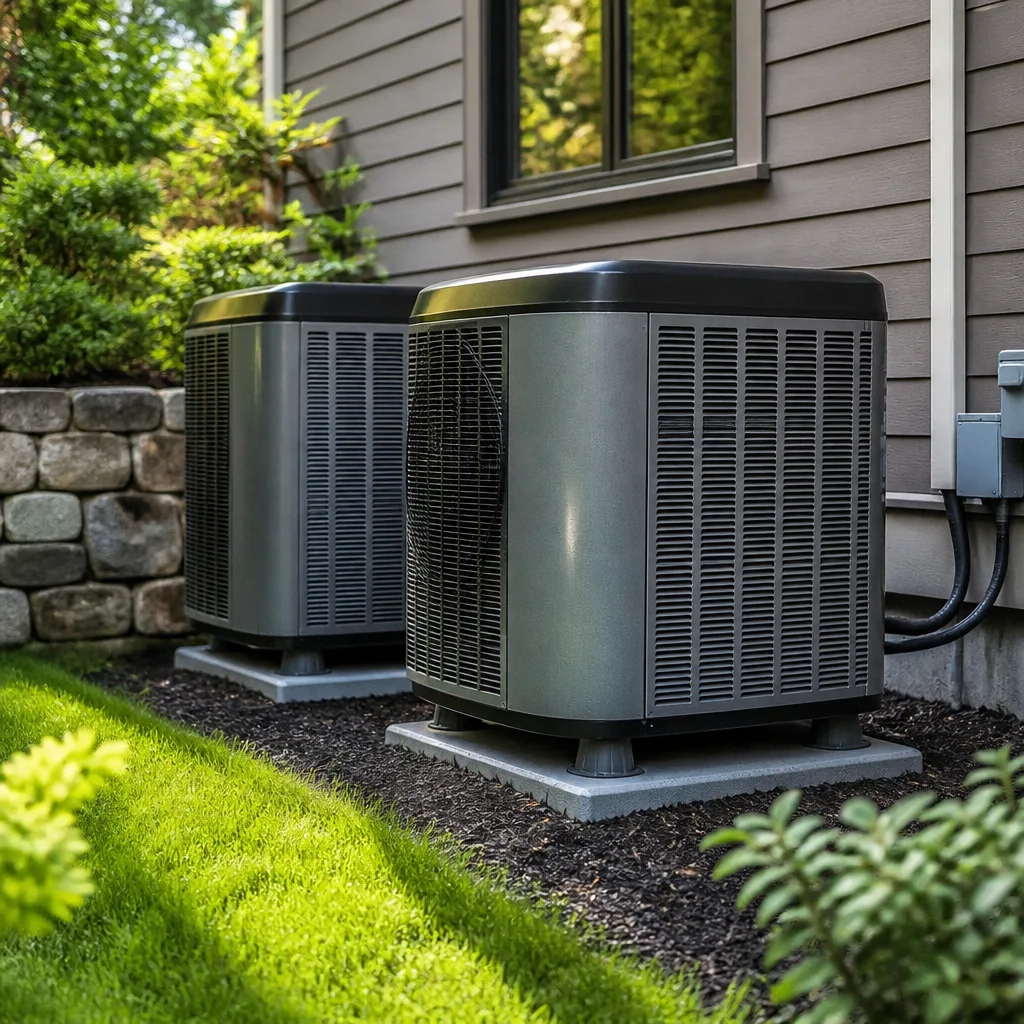 Heat pumps
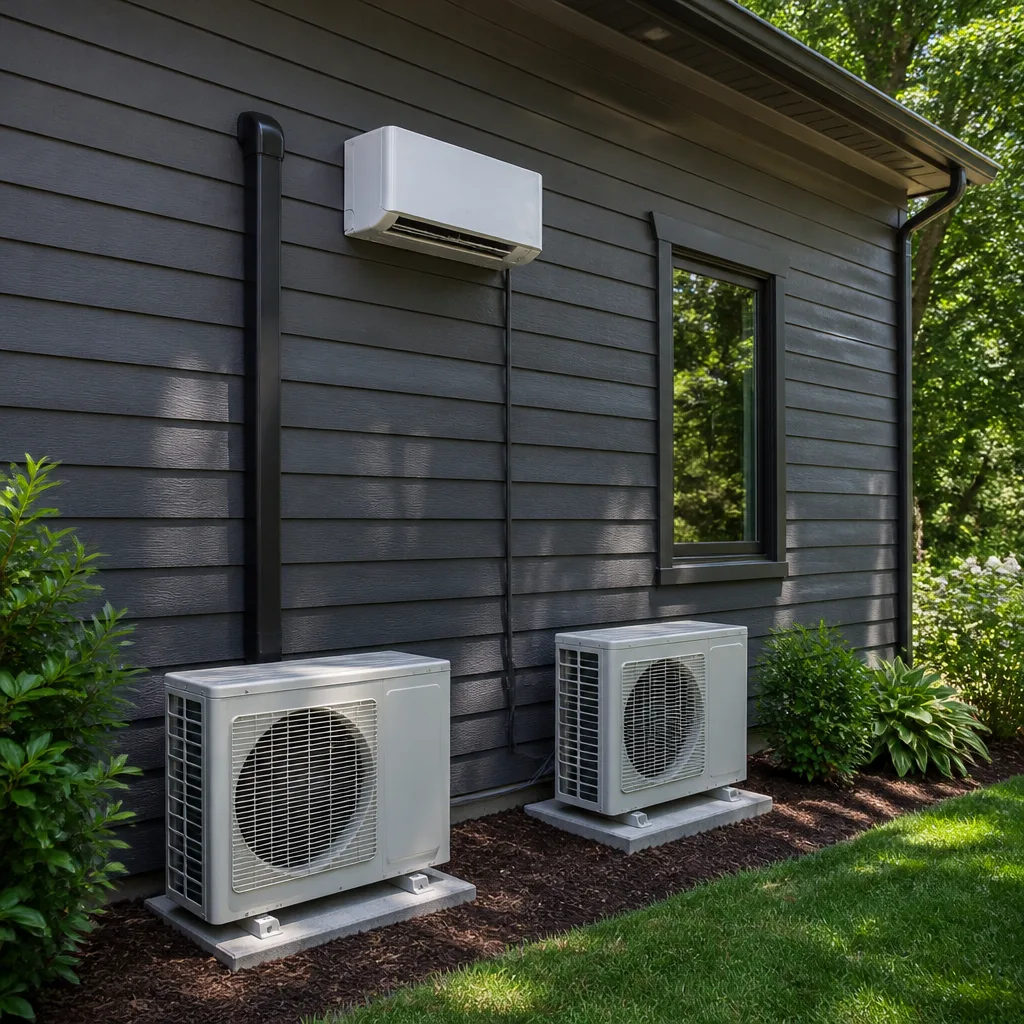 Ductless mini splits
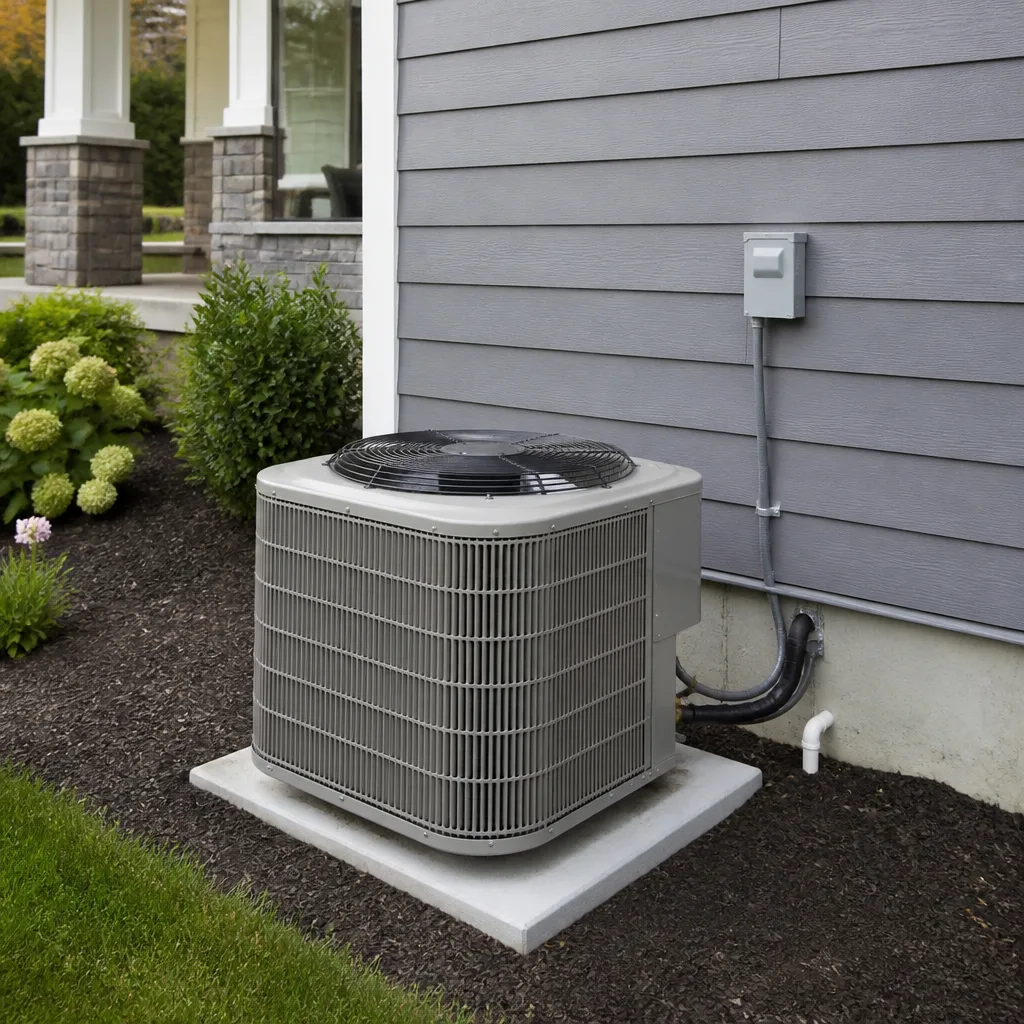 Carrier
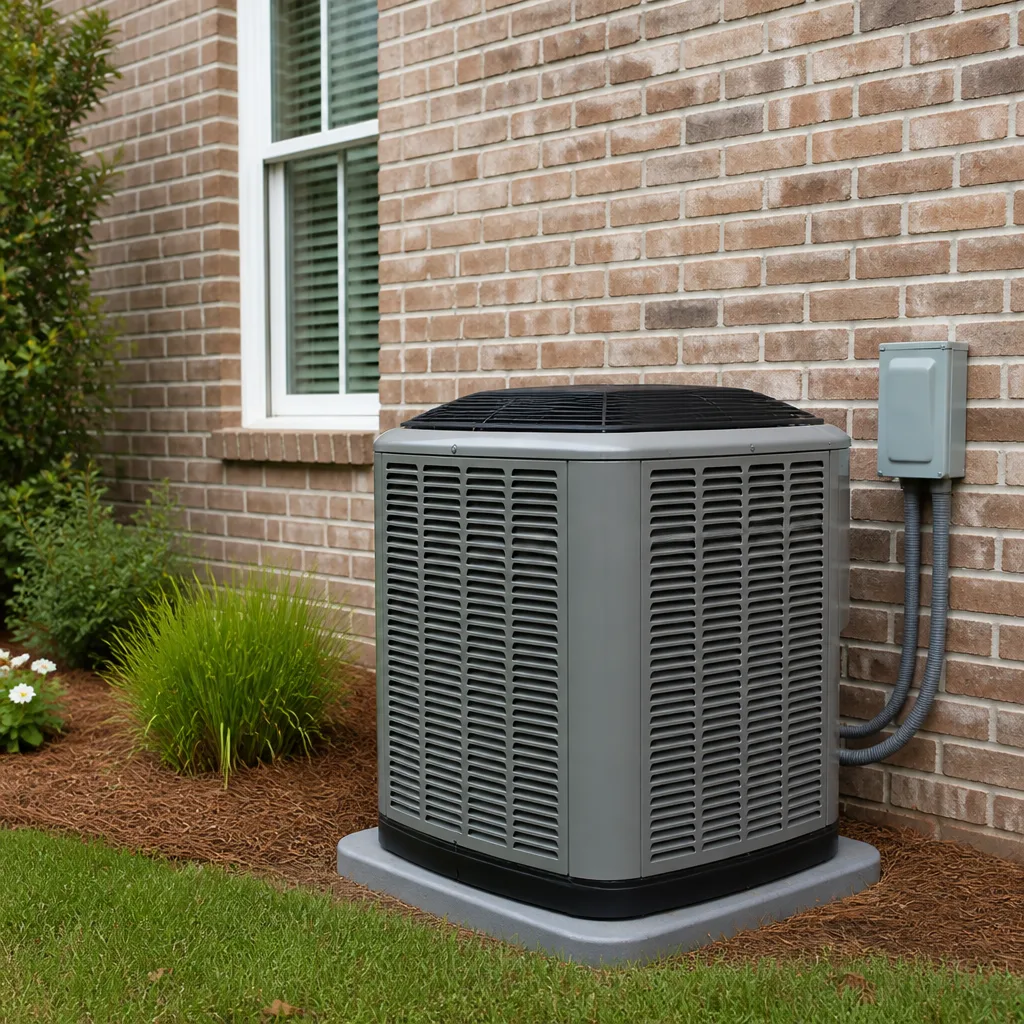 Trane
Trane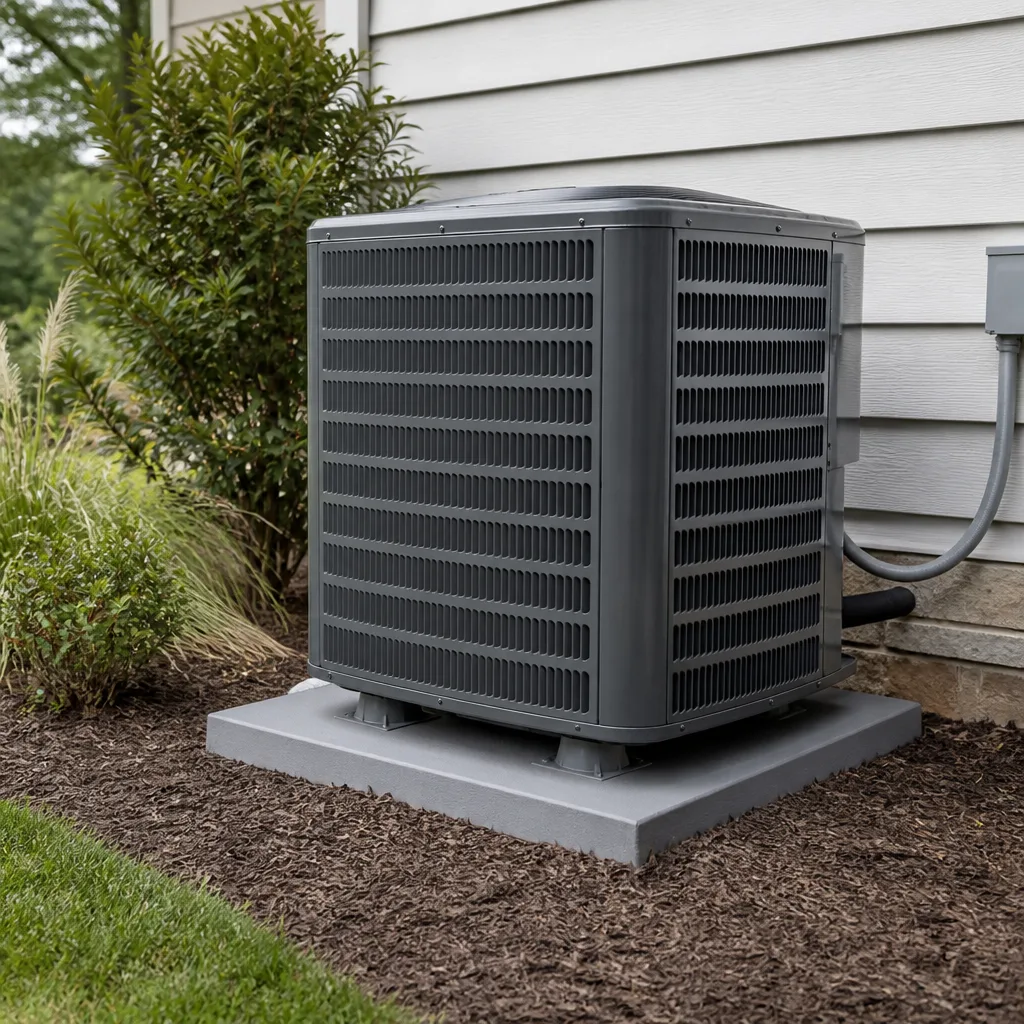 Goodman
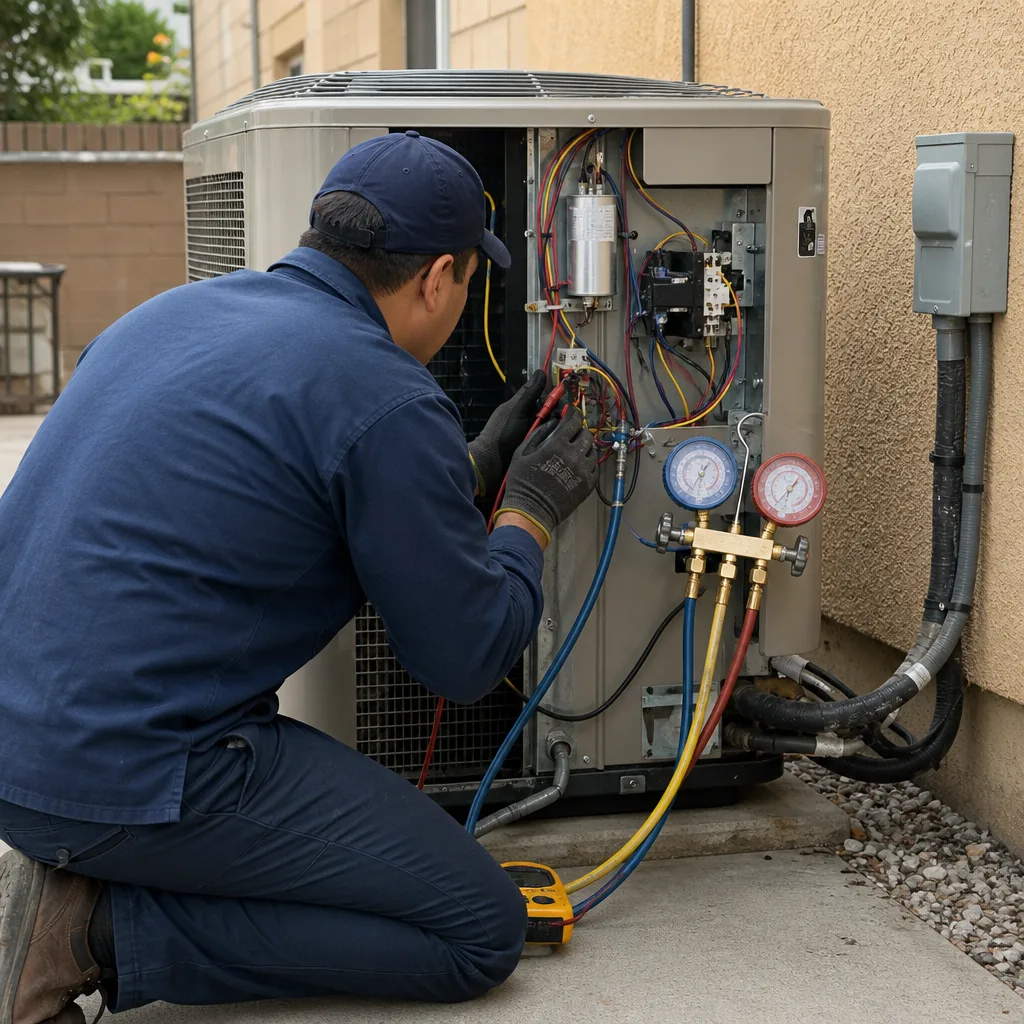
Seasonal tune-up and full diagnostic on your Carrier, Trane, or Goodman system - readings shown to you before any repair is proposed
Diagnosis first, numbers second - you approve the repair price before a single part goes in.
Get your free estimateHVAC Cost Breakdown: The Santa Clarita Homeowner’s Reference for 2026
The math most Santa Clarita homeowners are using for HVAC decisions is wrong. Not because they’re bad at math, but because the numbers they’re pulling from Google are two years stale. The EPA’s phase-down of R-410A refrigerant, fully in effect for new equipment since January 2025, has pushed entry-level AC unit prices up roughly 20 – 30% from 2022 baselines. Meanwhile, parts for existing R-410A systems are climbing as manufacturers shift production lines to R-454B equipment. This guide gives you the real 2026 numbers for Santa Clarita: what five common jobs actually cost, how to read a quote without getting taken, which rebates actually apply in Los Angeles County, and the honest math on repair versus replace. For more guides & resources, visit our blog.
Quick Answer
A full HVAC system replacement in Santa Clarita runs $9,500 – $18,000 in 2026 depending on tonnage and efficiency tier, while common repairs run $150 – $450 for a capacitor, $400 – $800 for a condenser fan motor, $1,200 – $2,400 for an evaporator coil, and $1,800 – $3,200 for a furnace heat exchanger. The R-410A phase-out means parts for systems manufactured before 2025 are rising 8 – 15% annually, so repair costs on older equipment are climbing faster than replacement costs. Get a written price before any work starts, confirm the SEER2 rating qualifies for rebates, and don’t pay for a repair that exceeds one-third the cost of replacement unless the system is under 8 years old.
Styles & brands we work with
Table of Contents
- Why 2026 Prices Are Different From Every Guide You’ve Read
- Real Costs for the Five Most Common Santa Clarita Jobs
- What the R-454B Transition Means for Your Existing R-410A System
- How to Read a Quote Line by Line
- California Tax Credits and Utility Rebates for 2026
- The Repair vs. Replace Math, Using Santa Clarita Utility Rates
- Common Mistakes to Avoid
- When to Call a Professional
- Frequently Asked Questions
Why 2026 Prices Are Different From Every Guide You’ve Read
Most HVAC cost guides are written by content mills that scrape other guides. Those guides scraped guides from 2022 and 2023. By the time you read them, the numbers are fiction. Here’s what actually changed.
In 2024, the EPA finalized the phase-down of R-410A under the American Innovation and Manufacturing (AIM) Act. New residential equipment manufactured after January 1, 2025 must use A2L refrigerants like R-454B or R-32. This sounds like a regulation detail. It’s actually the largest pricing shock the residential HVAC market has seen in 20 years.
Manufacturers spent the last three years retooling factories, re-engineering compressors, and requalifying every component for the new refrigerant class. That investment gets passed through. An entry-level 3-ton AC unit that cost $3,800 in 2022 now runs $4,600 – $5,200 just for the equipment. Add installation labor, which has climbed with prevailing wages in Los Angeles County, and you’re looking at a 20 – 30% total increase for the same tonnage.
In Santa Clarita, where summer temperatures routinely hit 100°F in July and August, replacement demand doesn’t drop when prices rise. Systems fail at the worst possible time, and the valley heat doesn’t negotiate. That’s why we tell homeowners to plan replacement before failure: the emergency replacement market is always the most expensive market. Our Seasonal HVAC Care for Santa Clarita: Year-Round Homeowner’s Guide shows how to time maintenance and replacement for the best pricing.
Parts inflation hits separately. As manufacturers shift production capacity to R-454B components, they run smaller batches of R-410A parts. Smaller batches mean higher unit costs. We’re seeing 8 – 15% annual increases on R-410A-specific components like evaporator coils and compressors in 2026. Meanwhile, the R-410A refrigerant itself has spiked, and while reclaimed refrigerant is still legal for servicing existing systems, the supply chain favors new equipment.
Real Costs for the Five Most Common Santa Clarita Jobs
These are 2026 prices for Santa Clarita, based on what we actually see in the field across Valencia, Saugus, Canyon Country, and Newhall. They include parts and labor, not just equipment.
1. Capacitor Replacement: $150 – $450
The capacitor is a small cylinder that gives the compressor and fan motor the electrical jolt they need to start. In Santa Clarita’s heat, capacitors fail more often than almost any other component. A dual-run capacitor, which serves both the compressor and fan, typically runs $25 – $60 for the part. The rest is diagnosis and labor. This is a same-day repair in almost every case.
2. Condenser Fan Motor Replacement: $400 – $800
The condenser fan motor sits in the outdoor unit and pulls air across the coil to reject heat. When it fails, the unit overheats and shuts down. Motors cost $150 – $300 depending on horsepower and brand compatibility. Labor runs 1.5 – 2.5 hours. On older units, this is the repair where you should start asking whether the system is worth continued investment.
3. Evaporator Coil Replacement: $1,200 – $2,400
The evaporator coil sits inside the air handler or furnace and absorbs heat from indoor air. Coil failures on R-410A systems are increasingly common as systems age past 10 years, and replacement coils for pre-2025 equipment are rising faster than other parts. The coil itself runs $400 – $900. Labor is 3 – 5 hours because the technician has to recover refrigerant, open the plenum, replace the coil, pressure-test, evacuate, and recharge. In Santa Clarita, a coil replacement on a 12-year-old system is often the tipping point where replacement math starts making sense.
4. Full AC Replacement: 2-Ton $6,500 – $9,000 | 3-Ton $7,500 – $11,500 | 4-Ton $9,000 – $14,000
These ranges cover a complete AC-only replacement: outdoor condensing unit, indoor coil, line set, pad, whip, disconnect, and installation. They do not include the furnace unless you’re replacing the full system. Add $3,000 – $5,000 for a matched furnace replacement. Cost drivers include tonnage, SEER2 rating (more on that below), brand, and whether your existing ductwork passes a static pressure test. In Valencia and Stevenson Ranch, where homes are newer, ductwork is generally in better shape. In older Canyon Country and Newhall homes, undersized returns are common and sometimes need correction.
5. Furnace Heat Exchanger Replacement: $1,800 – $3,200
The heat exchanger is the metal chamber that separates combustion gases from the air you breathe. When it cracks, carbon monoxide can enter the airstream. This is a safety repair, not a comfort repair. Parts run $600 – $1,200. Labor is 3 – 5 hours. On furnaces over 15 years old, heat exchanger replacement is rarely the smart money. A cracked heat exchanger on an older furnace is a replacement trigger.
Cost Summary Table
| Job | 2026 Santa Clarita Range | Typical Same-Day? |
|---|---|---|
| Capacitor replacement | $150 – $450 | Yes |
| Condenser fan motor | $400 – $800 | Usually |
| Evaporator coil | $1,200 – $2,400 | No (1 day) |
| Full AC: 2-ton | $6,500 – $9,000 | No (planned install) |
| Full AC: 3-ton | $7,500 – $11,500 | No (planned install) |
| Full AC: 4-ton | $9,000 – $14,000 | No (planned install) |
| Furnace heat exchanger | $1,800 – $3,200 | Usually |
These are cash-out-the-door numbers, not the stripped-down base prices some companies advertise to get a foot in the door. If a quote is significantly below these ranges, ask what’s missing.
What the R-454B Transition Means for Your Existing R-410A System
The refrigerant transition is not a cliff for homeowners with working R-410A systems. You can still legally run your current system, still get it serviced, and still buy R-410A (reclaimed or existing stock) for repairs. What’s changing is the cost of keeping older equipment alive.
First, the parts. Every manufacturer that built R-410A residential equipment is now building R-454B equipment. Production lines that once made R-410A evaporator coils now make R-454B coils. The parts supply for your 2018 system is shrinking. Prices respond to scarcity. We’re seeing 8 – 15% annual increases on R-410A-specific components in 2026, and that trend continues through the decade.
Second, the physics. R-454B operates at pressures similar to R-410A but requires different metering devices and compressor oil. You cannot simply dump R-454B into an R-410A system. The systems are not backwards compatible. If your outdoor unit fails after 2028, you will likely be quoted a new R-454B system, not a replacement R-410A unit, because manufacturers are winding down R-410A condensing unit production.
Here’s the practical decision rule we give Santa Clarita homeowners:
- System under 8 years old: Repair anything under $2,500. The system has 7 – 10 years of useful life left, and even a coil replacement pays back.
- System 8 – 12 years old: Cap repairs at one-third of full replacement cost. If the repair is $3,000 and replacement is $10,000, put the money toward replacement.
- System over 12 years old: Any repair over $1,500 deserves a replacement quote alongside the repair quote. In Santa Clarita’s heat, a 13-year-old system that needs a coil today often needs a compressor next summer.
- System over 15 years old: Replace. Do not repair. You’re running on borrowed time, and every repair dollar is capital you won’t recover.
How to Read a Quote Line by Line
A legitimate replacement quote has four line-item groups. If a quote is just a number on a letterhead, ask for the breakdown. If the company won’t provide one, walk.
1. Equipment
This is the condensing unit, evaporator coil, and furnace (if included). Equipment typically represents 45 – 55% of the total quote. Expect to see make, model, tonnage, and SEER2 rating listed. If the quote says “3-ton 14 SEER2” without a model number, you can’t verify anything. Legitimate contractors list the equipment they’re installing. In 2026, a 14.0 SEER2 system is the efficiency floor; anything lower can’t legally be installed in California for new work.
2. Labor
Labor covers removal of old equipment, installation of new equipment, line set fabrication or replacement, condensate drain work, electrical disconnect wiring, thermostat connection, refrigerant charge, and startup testing. On a full system replacement, labor runs 30 – 40% of the total. If labor looks cheap, someone is cutting corners: no nitrogen purge during brazing, no vacuum pulled to 500 microns, no static pressure test. You won’t see those cuts on day one. You’ll see them in year two.
3. Materials and Supplies
This covers the line set, pad, whip, disconnect box, fittings, PVC, sheet metal, and miscellaneous hardware. Usually 5 – 8% of the quote. This line item should be boring. It’s a red flag if it’s zero, and a red flag if it’s 20% of the job.
4. Permit and Fees
In Los Angeles County, a mechanical permit for an HVAC replacement runs $150 – $400 depending on the municipality. The permit is not optional. Any contractor who suggests skipping the permit is asking you to absorb liability for work that hasn’t been inspected. The permit also triggers the Title 24 compliance check, which confirms your installation meets California Energy Code. Your permit line item should be visible. If it’s not there, ask where it went. For details on local requirements, read HVAC Permits, Codes & Inspections in CA: What You Need to Know.
California Tax Credits and Utility Rebates for 2026
California’s incentive stack matters in Santa Clarita because SCE rates are among the highest in the nation, and efficiency pays back faster at higher marginal rates. Here’s what’s available in 2026.
Federal Tax Credit (25C)
The Energy Efficient Home Improvement Credit is available through 2032. For 2026 installations, a qualifying heat pump or central AC system meeting the SEER2 efficiency thresholds is eligible for a credit of 30% of the installed cost, capped at $600 for central AC or $2,000 for a heat pump. The specific threshold for central AC is SEER2 of 16.0 or higher (with EER2 of 12.0 or higher depending on equipment class). Heat pumps qualify at 15.2 SEER2 or higher. This is a tax credit, not a deduction: it reduces your tax bill dollar for dollar.
SCE Residential HVAC Rebates
Southern California Edison offers rebates for high-efficiency heat pump HVAC conversions through its Residential Energy Efficiency program. In 2026, a ducted heat pump replacement typically qualifies for $1,000 – $3,000 depending on efficiency tier and whether you’re converting from gas or electric resistance. The key requirement is that the equipment be on SCE’s Qualified Products List and installed by a participating contractor.
SoCalGas Energy Savings Assistance and Heat Pump Incentives
SoCalGas has shifted from rebating standard efficiency furnaces to incentivizing high-efficiency units and hybrid systems. In 2026, a furnace with 97% AFUE or higher can qualify for a $200 – $400 rebate depending on program availability. The larger SoCalGas programs are income-qualified, but standard incentives for high-efficiency gas furnaces remain available to all. Check the current program year before planning.
TECH Clean California
The TECH program has been the primary driver of heat pump adoption in Southern California. It pays incentives for replacing gas furnaces and water heaters with heat pump equipment. For 2026, TECH incentives for a heat pump HVAC system can reach $1,000 – $4,000 depending on income eligibility and system type. The program is structured around contractor participation: if you want the TECH incentive, the installing contractor must be enrolled. Ask before signing.
The Repair vs. Replace Math, Using Santa Clarita Utility Rates
National cost guides build payback models using average electricity rates around $0.16/kWh. That’s not your rate. In Santa Clarita, SCE’s summer tiered rates run roughly $0.31 – $0.40/kWh for mid-tier usage, and some rate plans push past $0.50/kWh during 4 – 9 PM peak windows. This changes the calculus.
Here’s the direct comparison on a 3-ton system in a typical 2,000-square-foot Santa Clarita home:
- Current system: 13 SEER, single-stage, installed 2012. Uses roughly 3,800 kWh annually for cooling in Santa Clarita’s climate. At a blended summer rate of $0.35/kWh, that’s $1,330 per year in cooling electricity.
- Replacement option: 18 SEER2 heat pump with variable-speed compressor. Uses roughly 2,500 kWh annually. At the same blended rate, that’s $875 per year. Savings: $455 per year.
- Replacement cost: $12,500 installed, minus $2,000 federal tax credit, minus $2,500 TECH incentive. Net cost: $8,000.
- Simple payback: $8,000 ÷ $455 = 17.6 years. That’s longer than the equipment lifespan. Poor investment on paper if you’re only counting electricity.
But here’s what the payback model misses. That 2012 system is going to need repairs. If it’s already needed a $1,400 condenser fan motor this year and a $900 capacitor last year, you’re averaging $500 – $700 annually in repair spend. Add that to the electricity calculation and the payback drops under 10 years. Now factor in SoCalGas: if you’re also replacing a furnace, a heat pump eliminates roughly $400 – $600 in winter gas heating costs in Santa Clarita’s mild winters. The combined payback lands around 7 – 9 years.
That’s the honest math. It’s not a slam dunk for every home. It’s a slam dunk for homes with aging equipment, rising repair bills, and time-of-use rate plans that punish afternoon air conditioning.
Common Mistakes to Avoid
- Using 2022 price anchors. If your mental model says a 3-ton AC costs $6,000 installed, you will be shocked by 2026 quotes. Adjust your expectations: entry-level 3-ton systems now start around $7,500 in Santa Clarita, and quality installations with 16+ SEER2 equipment run $10,000 – $13,000.
- Ignoring the SEER2 rating. SEER2 replaced SEER in 2023. The same unit that was “16 SEER” is “15.2 SEER2.” If a quote uses old SEER numbers, the contractor either doesn’t know or hopes you don’t. Both are disqualifying.
- Skipping the permit. Some contractors offer “no permit” pricing to shave a few hundred dollars. The LA County inspector will never see the job, and when you sell the house, unpermitted HVAC work becomes a disclosure problem. A $300 permit is cheap insurance.
- Replacing the outdoor unit only. If you install a new R-454B condenser on an old R-410A evaporator coil, the system won’t work. Full stop. The coil must match the condenser’s refrigerant. Any quote that prices a condenser replacement without a coil replacement is incomplete.
- Waiting until failure to replace. In July, when it’s 105°F in Valencia, you’ll pay emergency pricing and wait days for equipment. Planning a replacement in spring or fall lets you get three quotes, compare equipment, and schedule installation on your terms.
- Focusing only on brand. The installation quality matters more than the name on the unit. A badly installed Trane will underperform and fail earlier than a properly installed Goodman. The brand is 30% of the outcome; the installer is 70%.
- Ignoring static pressure. If your ductwork is undersized (common in older Canyon Country homes), even the best system will short-cycle, overheat, and die young. A proper installation includes a static pressure test. Ask if it’s part of the job.
When to Call a Professional
Most HVAC work in Santa Clarita needs a licensed contractor. Beyond obvious cases like a completely dead system or a blown breaker that won’t reset, here are the signs that mean you should pick up the phone: the outdoor unit is making a grinding or screeching sound (bearing or compressor failure), the system runs but blows warm air (refrigerant leak or compressor issue), you smell burning or gas near the furnace (shut it off and call immediately), your energy bills jumped 30% year over year with no change in usage, or the system is short-cycling on and off every few minutes. Refrigerant work requires an EPA Section 608 certification by law. Electrical work inside the cabinet is 240-volt and genuinely dangerous. Don’t open the panel. Dalton Heating & Air Santa Clarita offers free estimates in Santa Clarita. Call (661) 621-3712 and talk to a live person, day or night.
Frequently Asked Questions
A full HVAC system replacement in Santa Clarita runs $9,500 – $18,000 in 2026, depending on tonnage, efficiency tier, and whether you’re replacing the furnace and air handler along with the condensing unit. A 3-ton AC-only replacement starts around $7,500 for entry-level 14 SEER2 equipment. Call (661) 621-3712 for a written fixed-price quote based on your actual home.
Yes. R-410A equipment can still be serviced in 2026, and reclaimed R-410A remains available for repairs. However, R-410A-specific parts are rising 8 – 15% annually as manufacturers shift production to R-454B equipment, and the supply of R-410A condensing units is winding down. Expect repair costs to keep climbing on pre-2025 systems. If your system is over 12 years old and needs a major repair, get a replacement quote alongside the repair quote.
For most Santa Clarita homes, 16 SEER2 is the sweet spot: efficient enough to qualify for the $600 federal tax credit, affordable enough that the upfront premium pays back within the equipment’s life. If you’re installing a heat pump and chasing the $2,000 federal credit and TECH incentives, 17 – 18 SEER2 makes financial sense. Below 15 SEER2, you’re paying less upfront but more every August for the next 12 – 15 years.
For most Santa Clarita homes, yes. Winters are mild enough that modern cold-climate heat pumps handle heating without backup strips, and SCE’s high summer rates make heat pump efficiency pay back faster than in cheaper electricity markets. The combined incentives (federal tax credit, TECH program, SCE rebates) can knock $4,000 – $7,000 off the installed cost. The exception is homes that rarely run heat and already have a functioning gas furnace; in that case, a high-efficiency AC-only replacement may be the better spend. Get specific numbers before deciding.
Three factors drive LA County’s higher HVAC pricing: prevailing wage requirements on permitted work in many municipalities, higher workers’ compensation insurance costs, and Title 24 energy code compliance that requires additional testing and documentation. In Santa Clarita specifically, summer heat loads mean systems are sized and installed for 105°F+ design temperatures, which sometimes requires larger equipment than national sizing charts suggest. You’re paying for code compliance and heat capacity you’ll actually need.
If your furnace is over 12 years old, yes. Replacing both at once saves $2,000 – $5,000 compared to doing them separately because the labor overlaps: the installer is already working in the same cabinet, the same electrical connections, and the same plenum. Replacing a 15-year-old furnace after the AC dies means paying for that labor twice. If the furnace is under 8 years old and running well, a coil-only replacement paired with the new condenser is usually fine.
A straightforward AC replacement with existing ductwork takes one full day, typically 6 – 8 hours. A full system replacement including furnace takes one to two days. If ductwork modifications are required, add a third day. Replacement is scheduled work, not emergency work; get your quotes in spring or fall and you’ll have time to compare equipment options and lock in a written price before the first heat wave hits. Call (661) 621-3712 to schedule a free estimate at your convenience – and get the price in writing before any work begins.
The Bottom Line
HVAC pricing in Santa Clarita in 2026 has shifted structurally, not cyclically. The R-410A phase-out reset equipment costs upward by 20 – 30%, parts for older systems are climbing annually, and the reports you read from two years ago are no longer a reliable baseline. The practical takeaways: expect $150 – $450 for a capacitor, $7,500 – $11,500 for a 3-ton AC replacement, and $9,500 – $18,000 for a full system. On systems over 12 years old, cap repair spend at one-third of replacement cost. Stack the federal tax credit with TECH and SCE incentives to net out $4,000 – $7,000 on qualifying equipment. And get every quote line-itemed: equipment, labor, materials, and permit. If a contractor won’t put the price in writing before starting, that’s not a contractor – that’s a gamble. Furnace repair in Santa Clarita and heat pump installation in Santa Clarita follow the same discipline: a written price, a written guarantee, and a live person on the phone at (661) 621-3712. For the full picture on what we cover in the valley, start at our Dalton Heating & Air Santa Clarita home page.
Written by Marco Benitez, Owner at Dalton Heating & Air Santa Clarita, serving Santa Clarita since 2003.
See the difference
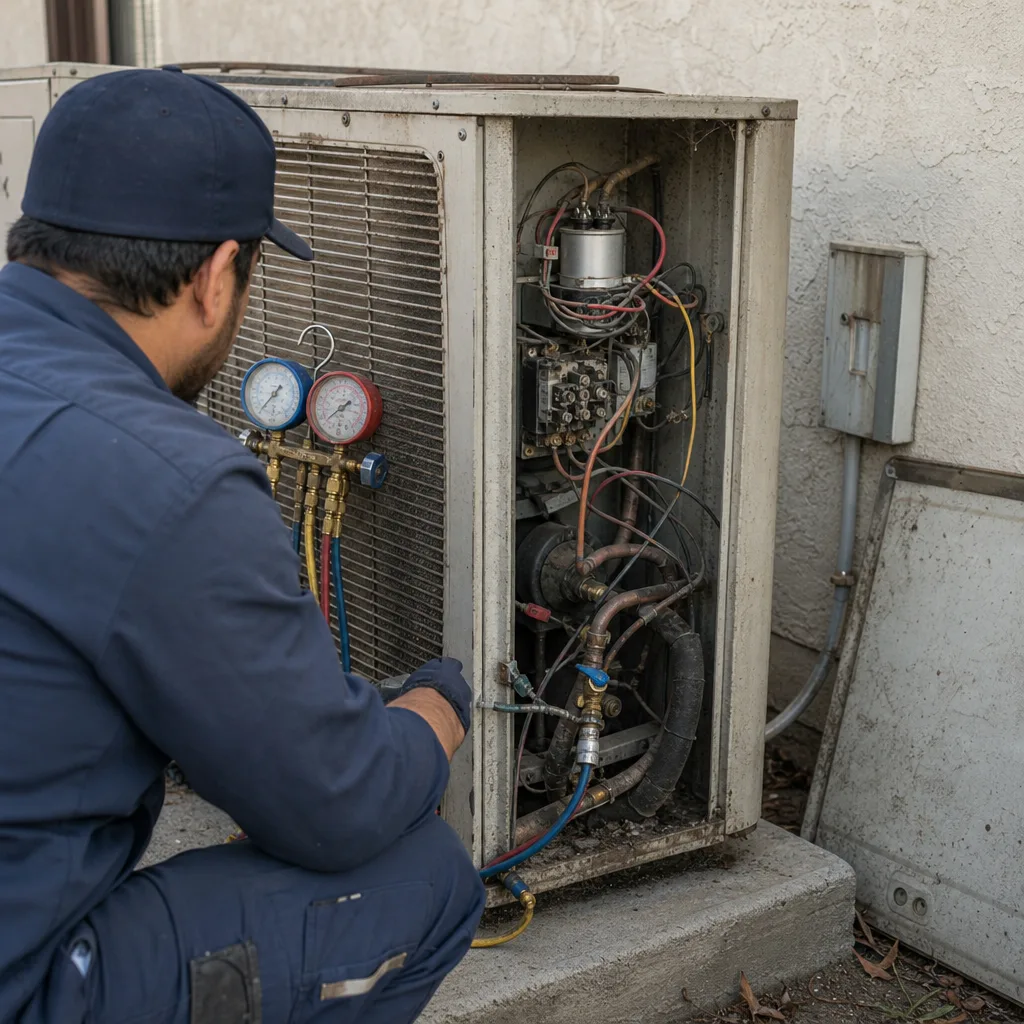 Before
 After
After Before
 After
After Before
 After
After