
 Furnace & heating
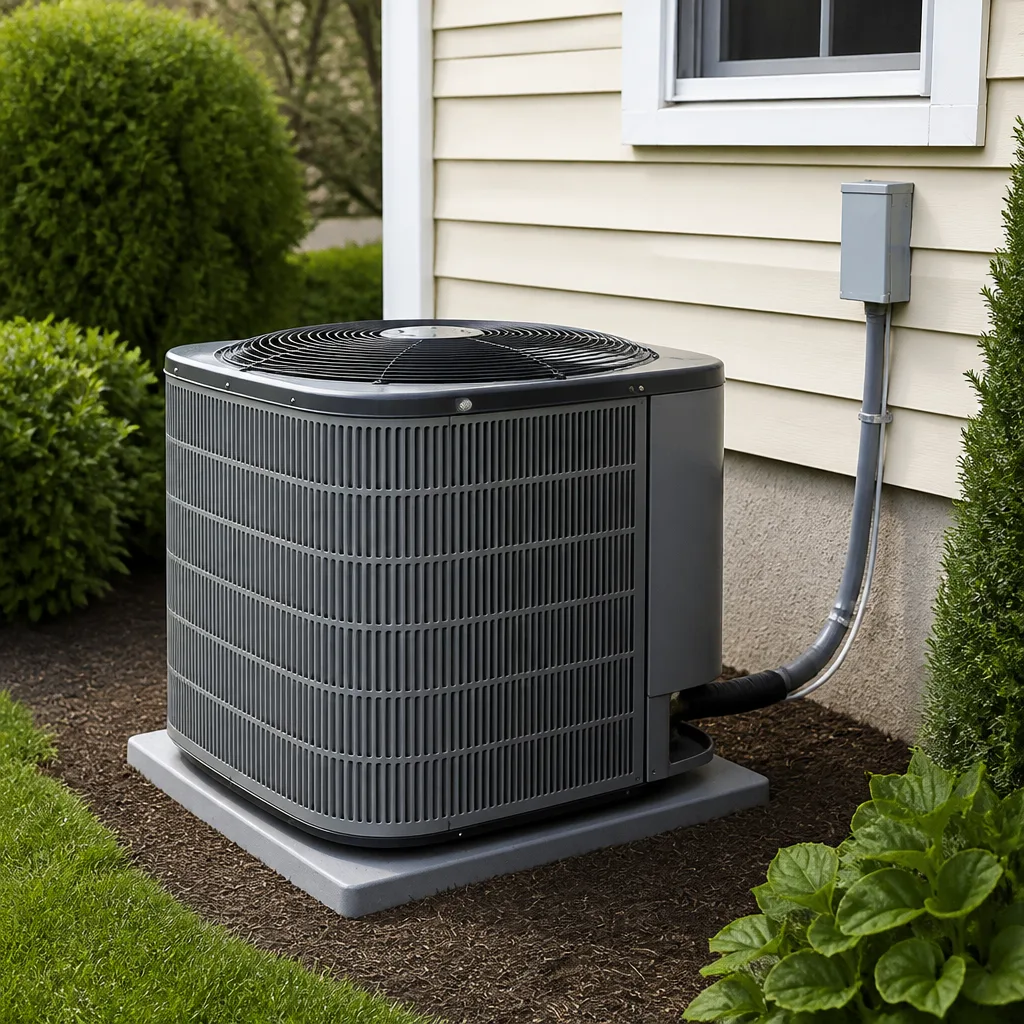 AC repair
 Heat pumps
 Ductless mini splits
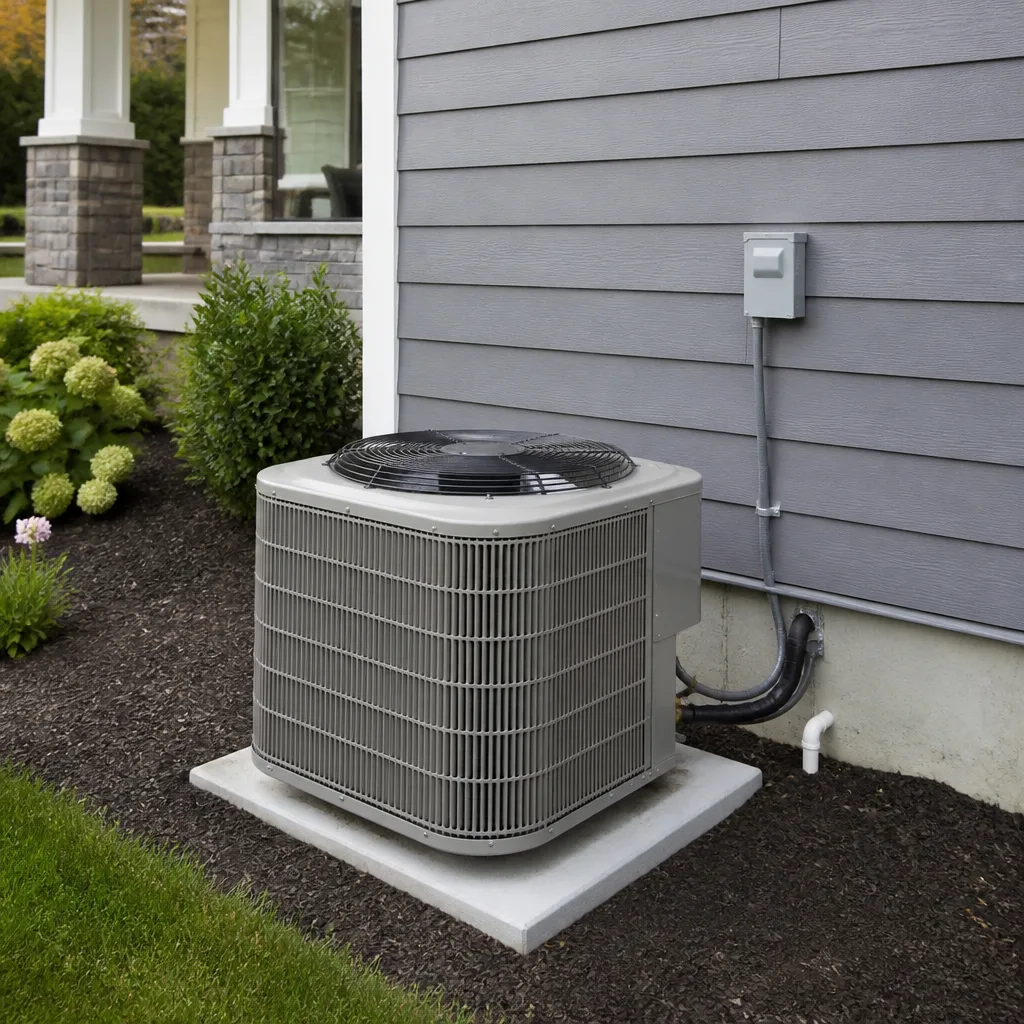 Carrier
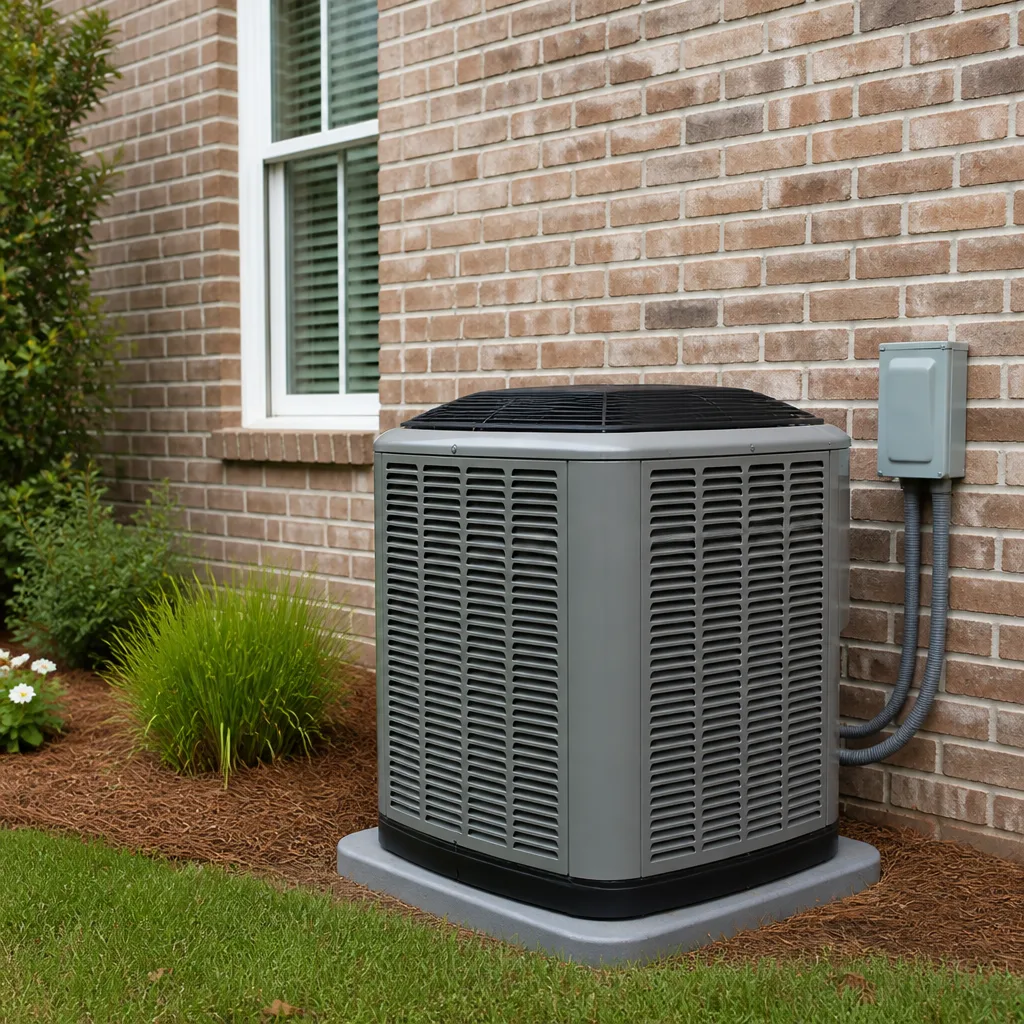 Trane
Trane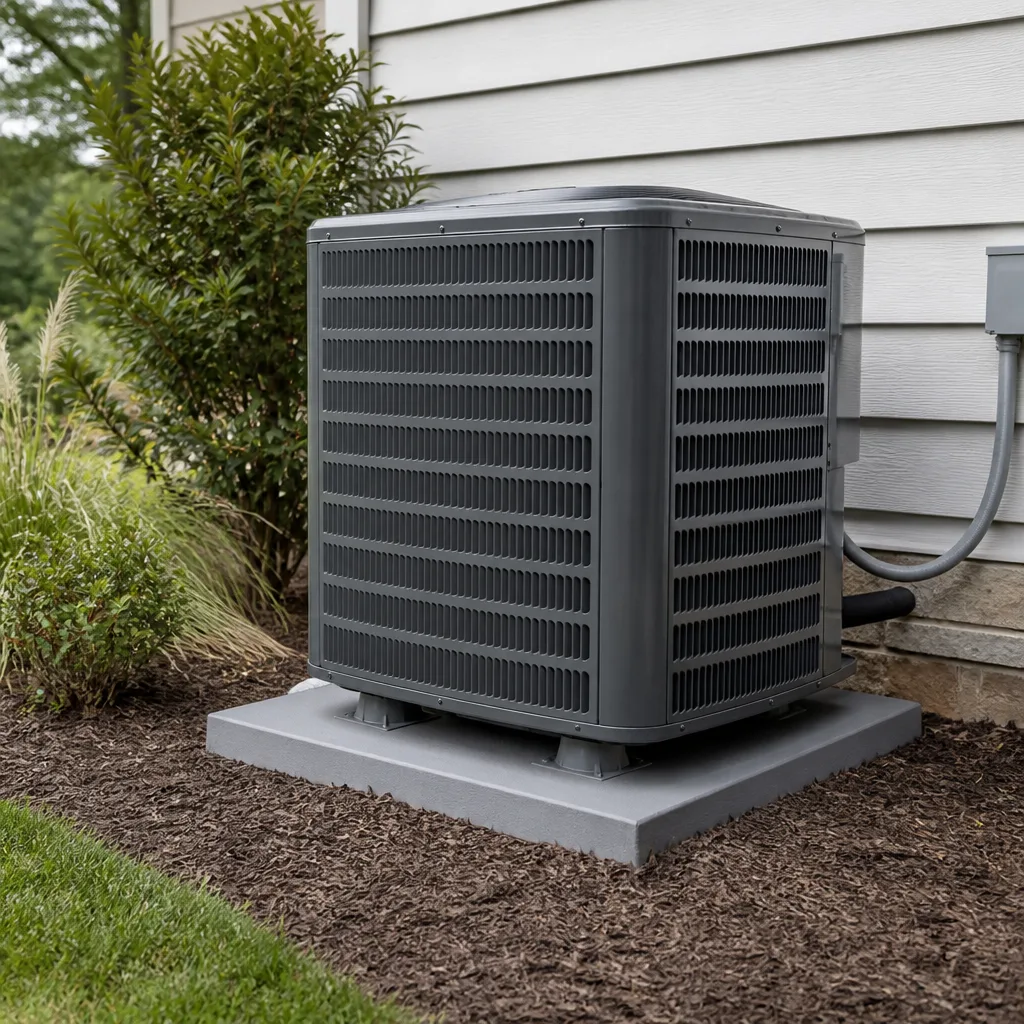 Goodman
Seasonal tune-up and full diagnostic on your Carrier, Trane, or Goodman system - readings shown to you before any repair is proposed
Diagnosis first, numbers second - you approve the repair price before a single part goes in.
Get your free estimateCarrier Capacitor Replacement: The Santa Clarita Owner’s Guide
We replace Carrier capacitors throughout Santa Clarita, typically for $180 – $340 installed, and most jobs are done same-day because we keep the common Carrier specs on the truck. A capacitor is the small cylinder inside your condenser that gives the compressor and fan motor the electrical shove they need to start and keep running. When it fails, the system usually hums but won’t start, or the fan spins slow and the house stops cooling. If you’ve got a Carrier that trips a breaker, runs hot at the unit, or just won’t kick on, there’s a good chance this $30 part is the culprit, and the fix is a fraction of what a compressor costs.
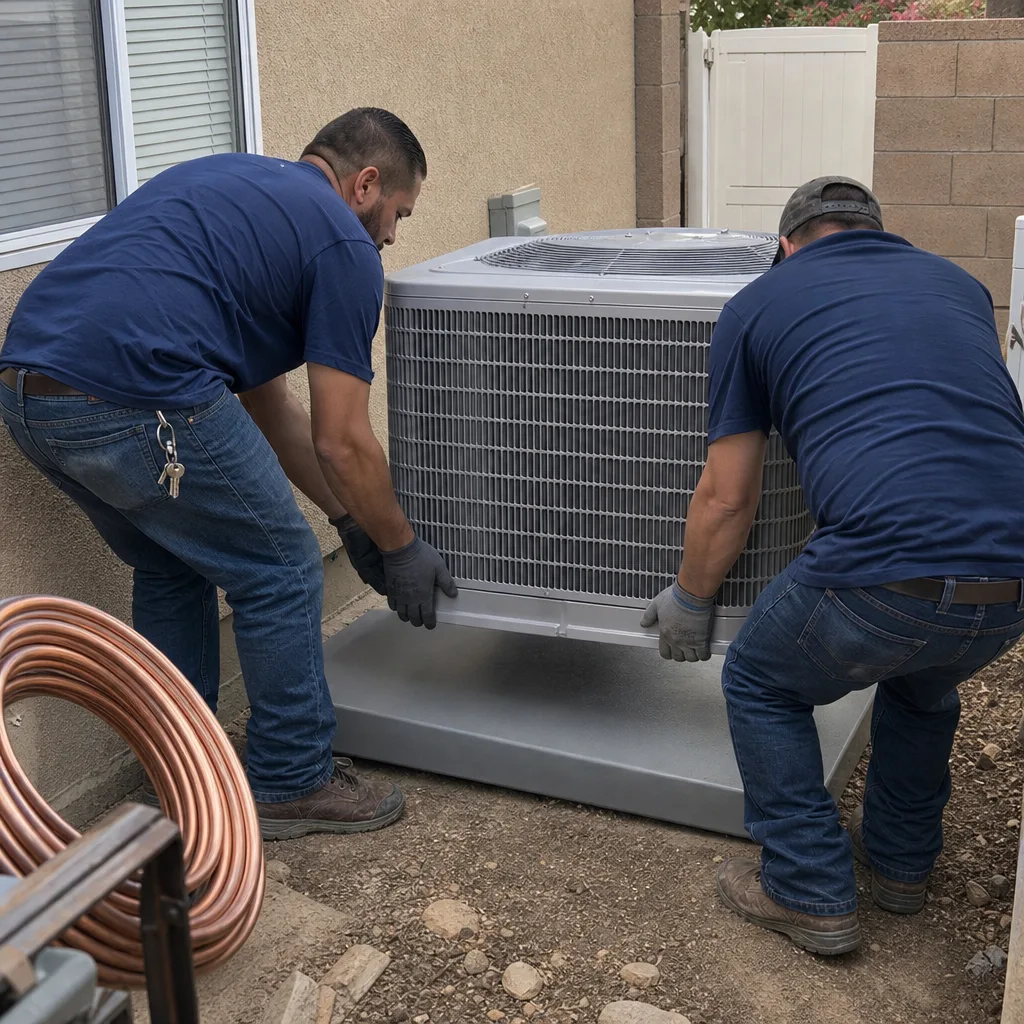
We’re an independent Carrier service provider in Santa Clarita, not a corporate Carrier branch. That matters because we can pull a capacitor off the shelf, match it to your unit’s rating plate, and have you cooling again without waiting on a dealer parts pipeline. Marco Benitez and our techs have replaced hundreds of these across Valencia, Canyon Country, Saugus, Newhall, and Castaic, and the pattern is always the same: a cheap part fails, the compressor gets blamed, and a homeowner nearly pays for a system they didn’t need.
Which Carrier Models This Applies To
Carrier has used round and oval run capacitors across nearly every residential condenser and heat pump line built in the last 30 years. That includes the Comfort series (24ABC, 24ACC), Performance series (24APA, 24ACB), Infinity (24ANB, 24VNA), and the older round-cabinet units still running all over Santa Clarita’s tract home neighborhoods. Heat pumps like the 25HBC and 25VNA use the same dual-run capacitor configuration, though some two-stage Infinity units add a second capacitor for the second stage.
The right replacement comes down to three numbers printed on the side of your existing capacitor: microfarads (μF), voltage rating, and whether it’s a dual-run (three terminals: C, HERM, FAN) or single-run (two terminals). A typical Carrier 3-ton unit takes a 45/5 μF, 370V or 440V dual-run. Here’s the compatibility gotcha most people miss: the voltage rating on the new capacitor must be equal to or higher than the original, never lower. A 370V original can be replaced with a 440V, but not the other way around. Getting the μF wrong by even 5 μF on the compressor side causes hard starts, overheating, and a shorter life. We stock both the genuine Carrier replacement and quality aftermarket equivalents like Amrad and Titan HD. In our experience, a US-made aftermarket capacitor holds up as well as or better than OEM, costs less, and is what we usually install unless the unit is still under Carrier’s parts warranty. We’d never install a no-name import to save ten bucks.
Styles & brands we work with
Signs Your Carrier Capacitor Replacement Is Failing
- Humming condenser that won’t start. You hear the contactor click and a low hum from the outdoor unit, but the fan and compressor never fire. The capacitor has lost enough microfarads that it can’t provide the starting torque.
- Fan spins slow or not at all while the compressor runs. On a dual-run capacitor, the fan side can fail while the compressor side still works. You’ll feel lukewarm air at the register and a condenser that’s overheating because the fan isn’t pulling air through the coil.
- AC trips the breaker on startup. A weak capacitor forces the compressor to pull locked-rotor amps every time it tries to start. The breaker sees that surge and opens. This is a telltale sign in neighborhoods across Santa Clarita during the first triple-digit week of summer.
- Top of the capacitor is swollen, split, or leaking oil. Take the side panel off and look at the cylinder. If the top is domed instead of flat, if it’s bulged at the seam, or if there’s a greasy film around it, the capacitor has vented. It’s done.
- AC ran fine yesterday, won’t run today. Capacitors in the Santa Clarita valley don’t usually fail gradually. They fail on the hottest afternoon of the week because heat is the primary killer of capacitor internals. A unit that worked at 8 a.m. and won’t start at 3 p.m. is the classic capacitor failure profile.
See the difference
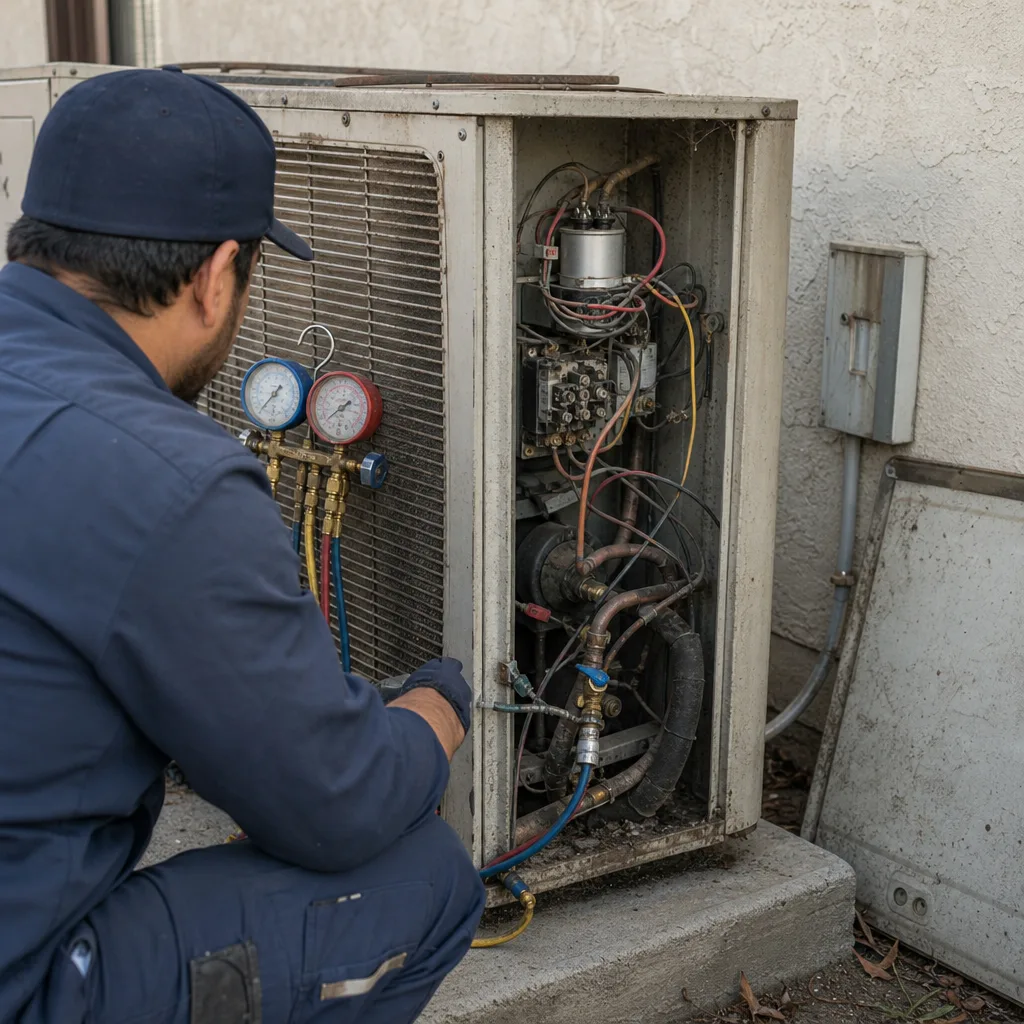 Before
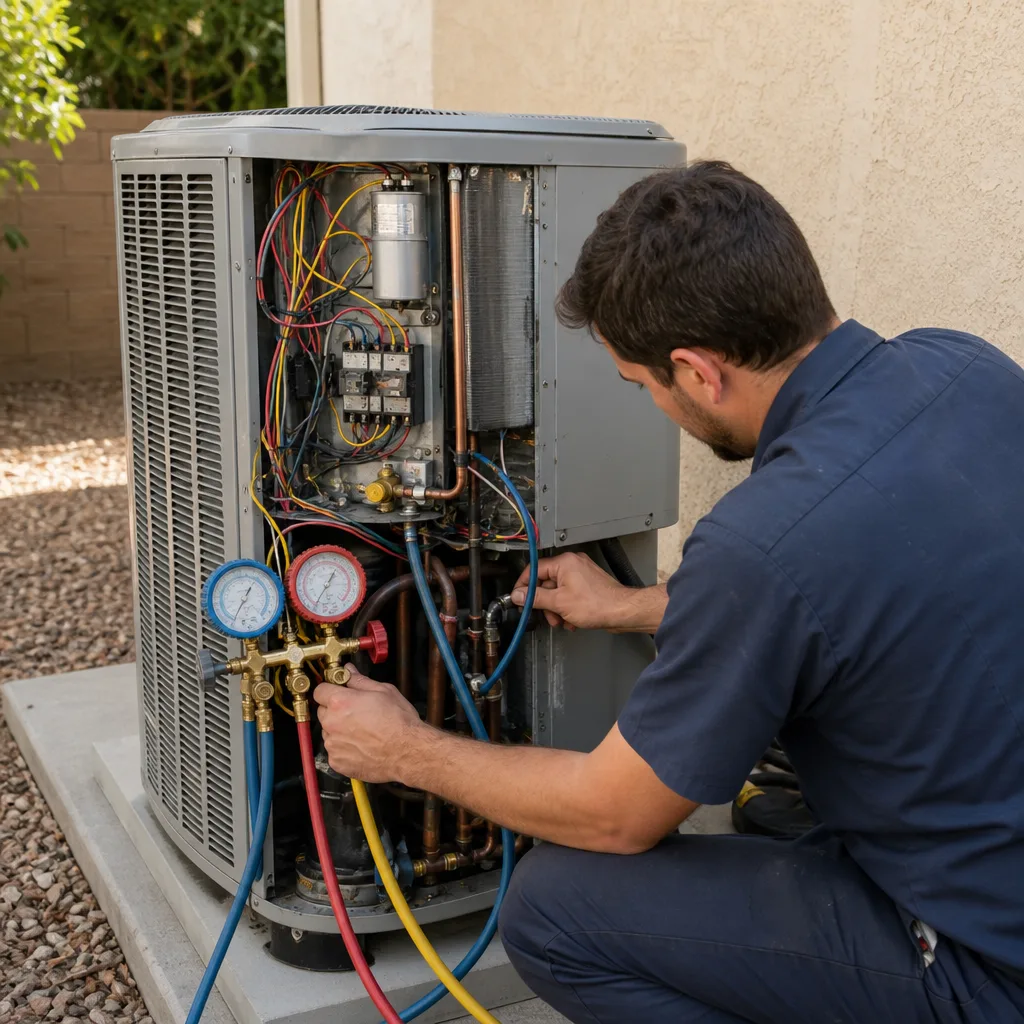 After
After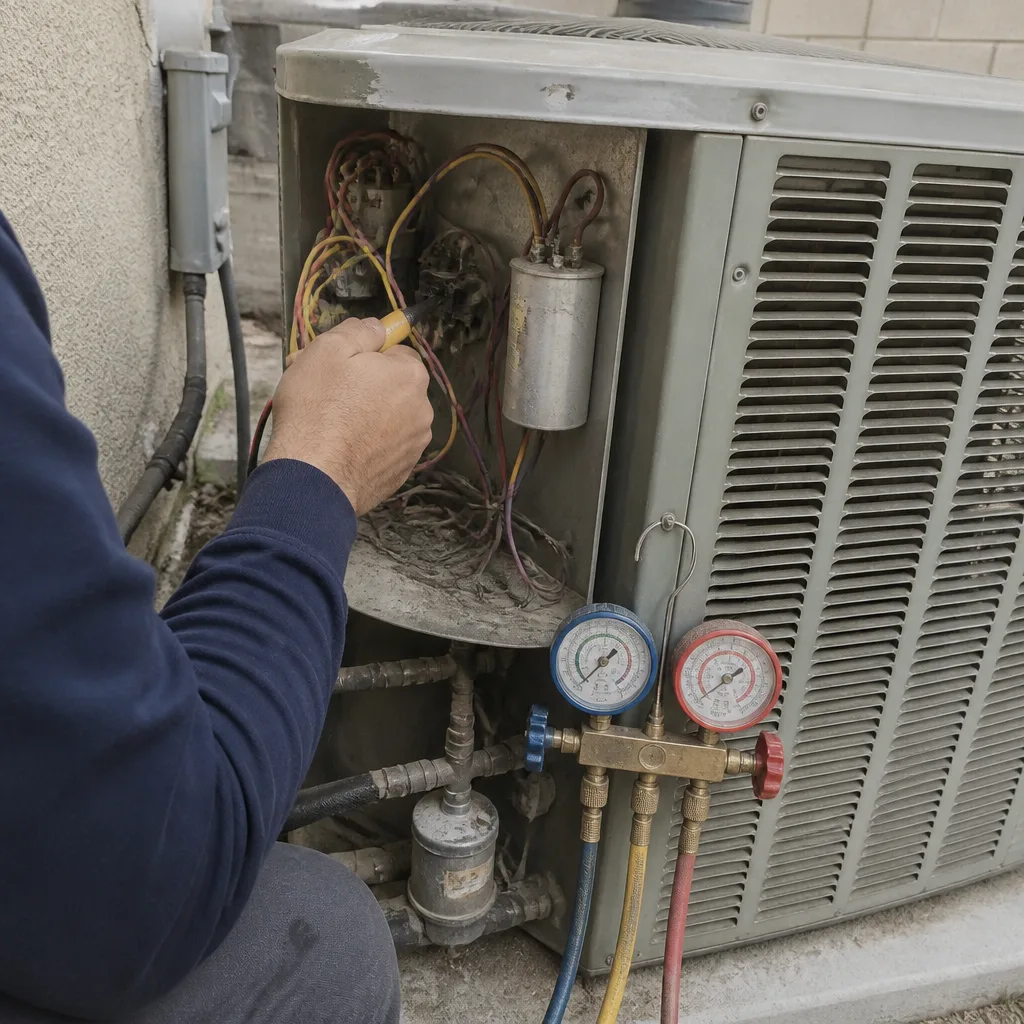 Before
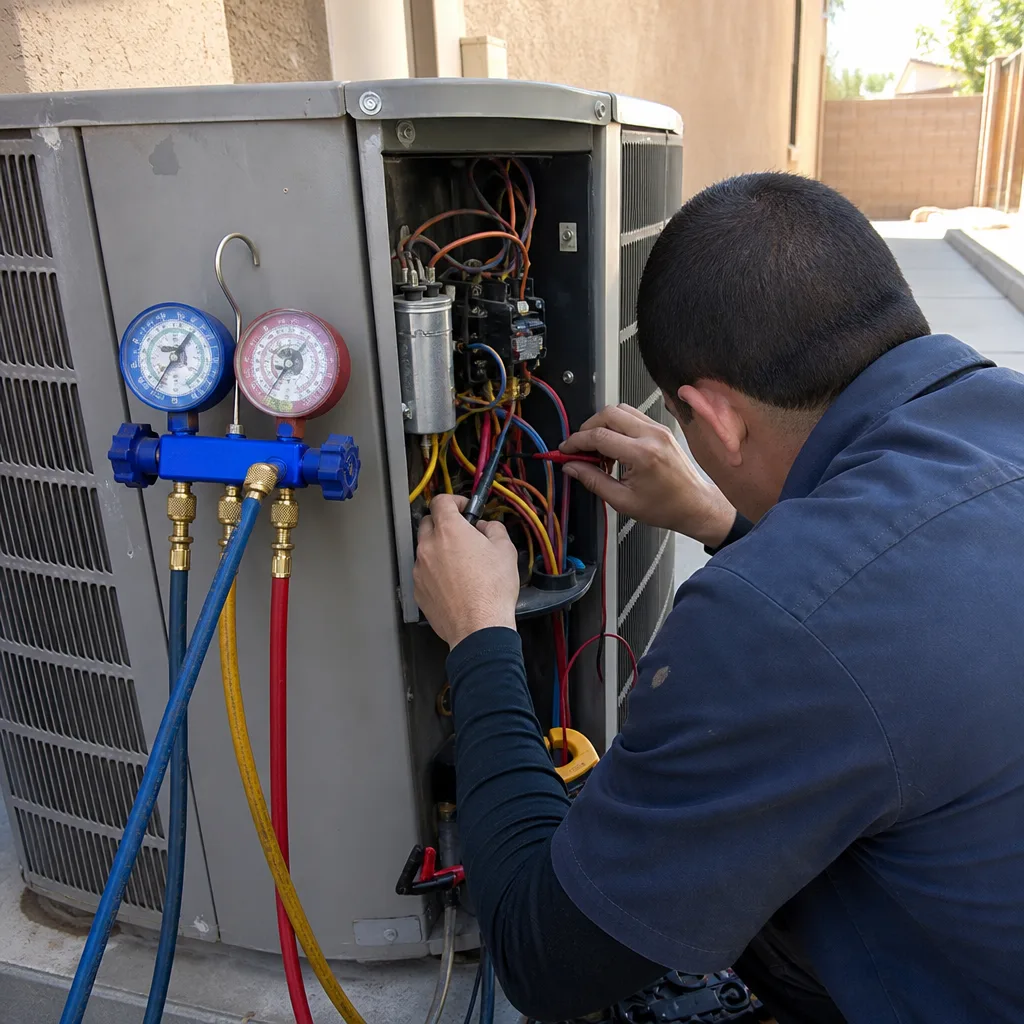 After
After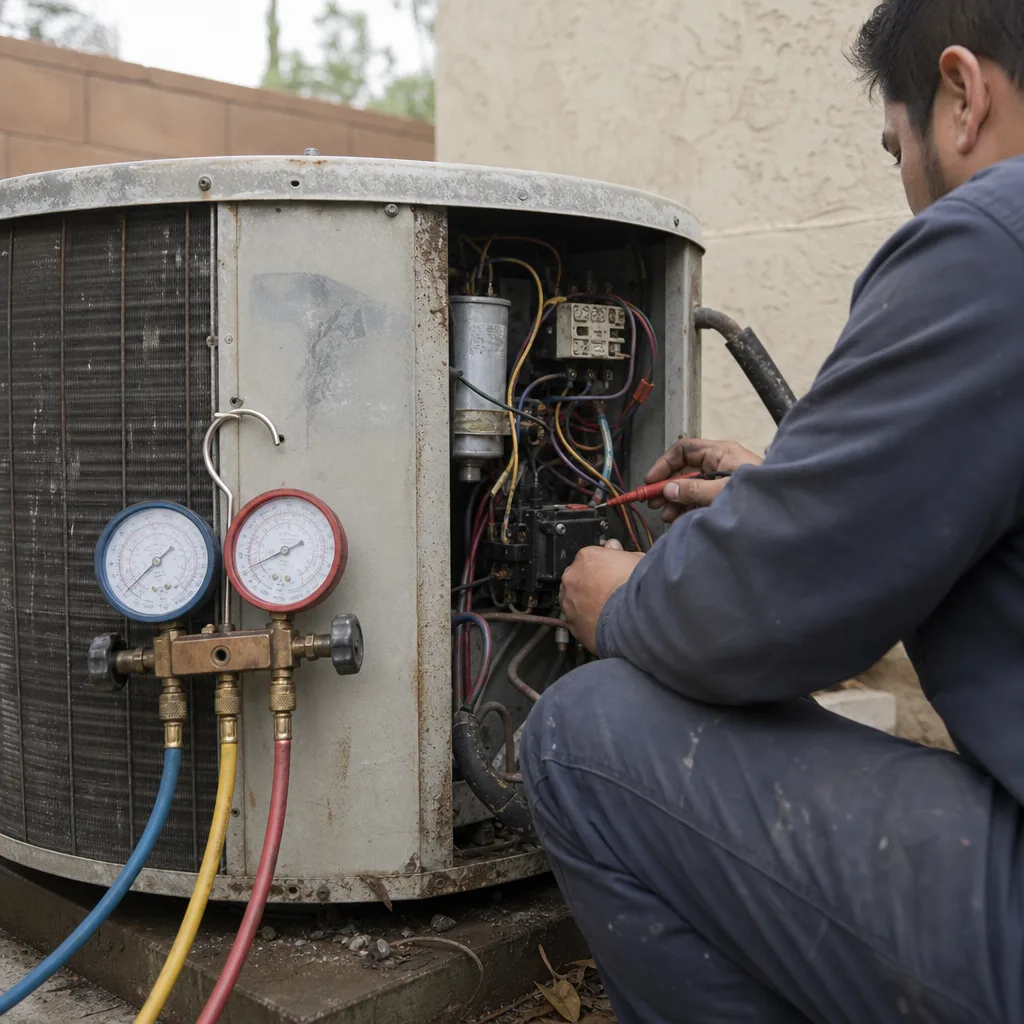 Before
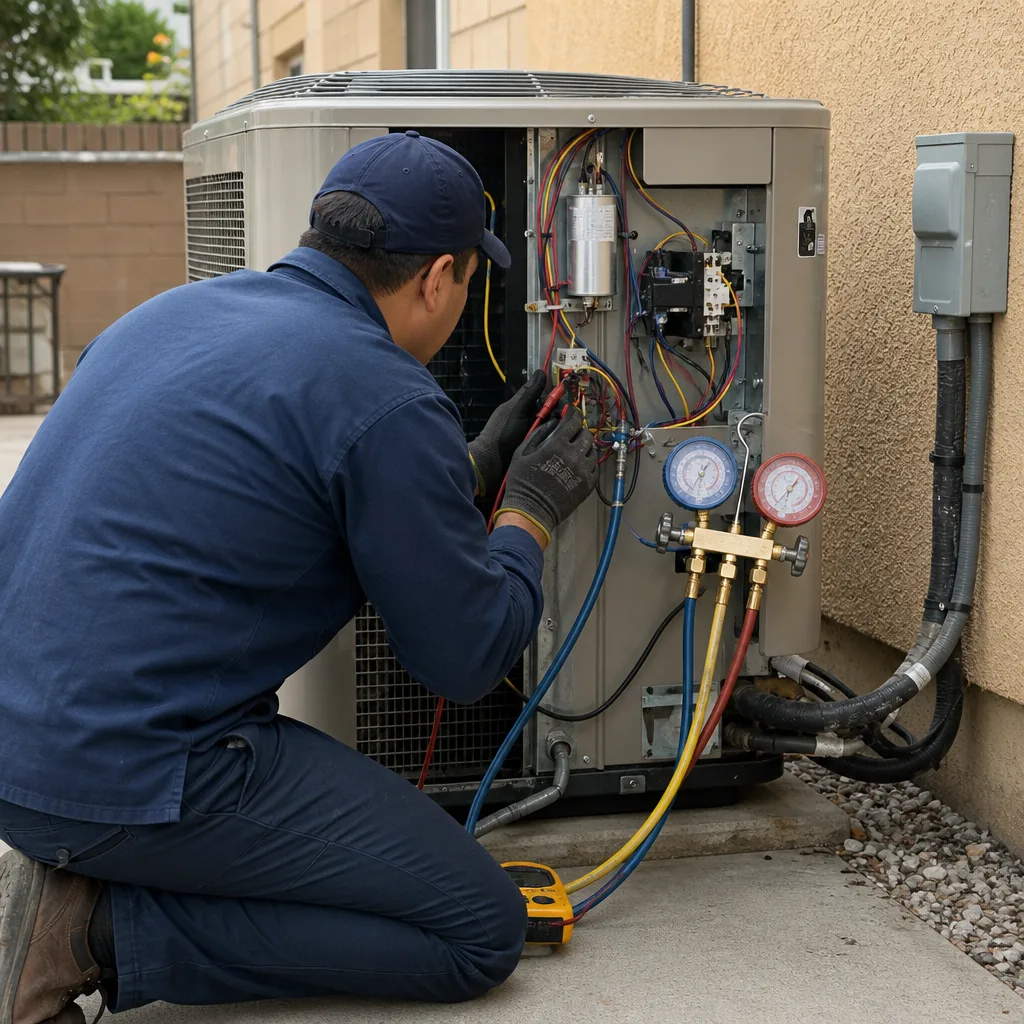 After
AfterReplacement Cost & What’s Included
For Carrier capacitor replacement in Santa Clarita, you’re looking at $150 – $650 on the broader repair range, but capacitors specifically land at $180 – $340 installed depending on the unit. A standard single-stage Carrier Comfort condenser takes a common 45/5 dual-run capacitor that we install for around $220 – $280. A two-stage Infinity with dual capacitors, or a heat pump that needs a start capacitor and potential relay in addition to the run capacitor, runs higher, closer to $300 – $340. The part itself is $25 – $65. The rest is labor, testing, and the warranty.
Here’s what that price includes, in writing, before we touch the unit: the capacitor itself, removal of the old one, installation and terminal-by-terminal wiring of the new one, a test of the compressor and fan amp draw after startup, and confirmation the system is cooling correctly. Every repair at Dalton Heating & Air Santa Clarita comes with a written guarantee for a full year. If the capacitor fails in that year, we come back at no charge. That’s The Garrison Standard we’ve held since 2003, and it’s the same on a $30 capacitor as it is on a full system. Price on paper before the first bolt turns, that’s how we work.
DIY or Call Us?
Here’s the honest split. The dangerous part of a capacitor isn’t just the AC line voltage. A capacitor stores a DC charge even after power is disconnected, and a charged 440V capacitor can knock you on your back or worse. The terminals on a dual-run capacitor sit exposed inside a sheet metal cabinet with 240V nearby. If you don’t know how to discharge a capacitor safely and verify zero volts with a meter, do not open the condenser cabinet. This isn’t a scare tactic. It’s the reason we carry insulated discharge tools and treat every capacitor as live until proven dead.
What you can safely do from the outside: check that the breaker is on, check that the thermostat is calling for cool, and hose down the condenser coil if it’s caked with cottonwood and dust. If the unit still hums and won’t start, that’s the point to call us. We’ll be out fast, match the capacitor to the rating plate, test the system after the swap, and leave the cabinet buttoned up clean. Call (661) 621-3712 and tell us what your unit is doing. We’ll give you a straight answer and a free estimate before we roll a truck.
FAQs
A Carrier capacitor typically lasts 5 – 10 years in the Santa Clarita valley, but heat is the main thing that kills them, and units in full-sun side yards or on hot rooftops in Valencia and Canyon Country tend to burn through them on the shorter end of that range. We replace capacitors on 6-year-old units all the time, and we’ve also seen original capacitors on 15-year-old units still testing in spec. If you’ve got the same capacitor in a unit pushing past 8 years in direct sun, plan on it.
No. A capacitor is a sealed, non-serviceable part. Once it swells, vents, or drifts more than 10% off its microfarad rating, it cannot be repaired, rebuilt, or recharged. Replacement is the only correct fix, and it’s one of the most common and cost-effective repairs we do on Carrier equipment in Santa Clarita. Call (661) 621-3712 if yours has failed and you want a written price.
The swap itself takes 30 – 45 minutes on most Carrier residential units, including testing the compressor and fan startup afterward. We carry the common Carrier capacitor ratings on the truck, so there’s no parts run. Add in our system check and cleanup, and you’re looking at about an hour from arrival to a running unit.
Yes. Our trucks carry the capacitor ratings that fit most Carrier Comfort, Performance, and Infinity condensers and heat pumps, along with OEM and quality aftermarket options. For less common sizes or specialty two-stage configurations, we can usually have the part in hand same day from a local supply house in Santa Clarita.
Written by Marco Benitez, Owner & Lead HVAC Technician, Dalton Heating & Air Santa Clarita at Dalton Heating & Air Santa Clarita, serving Santa Clarita and nearby areas.