
Last updated October 16, 2026
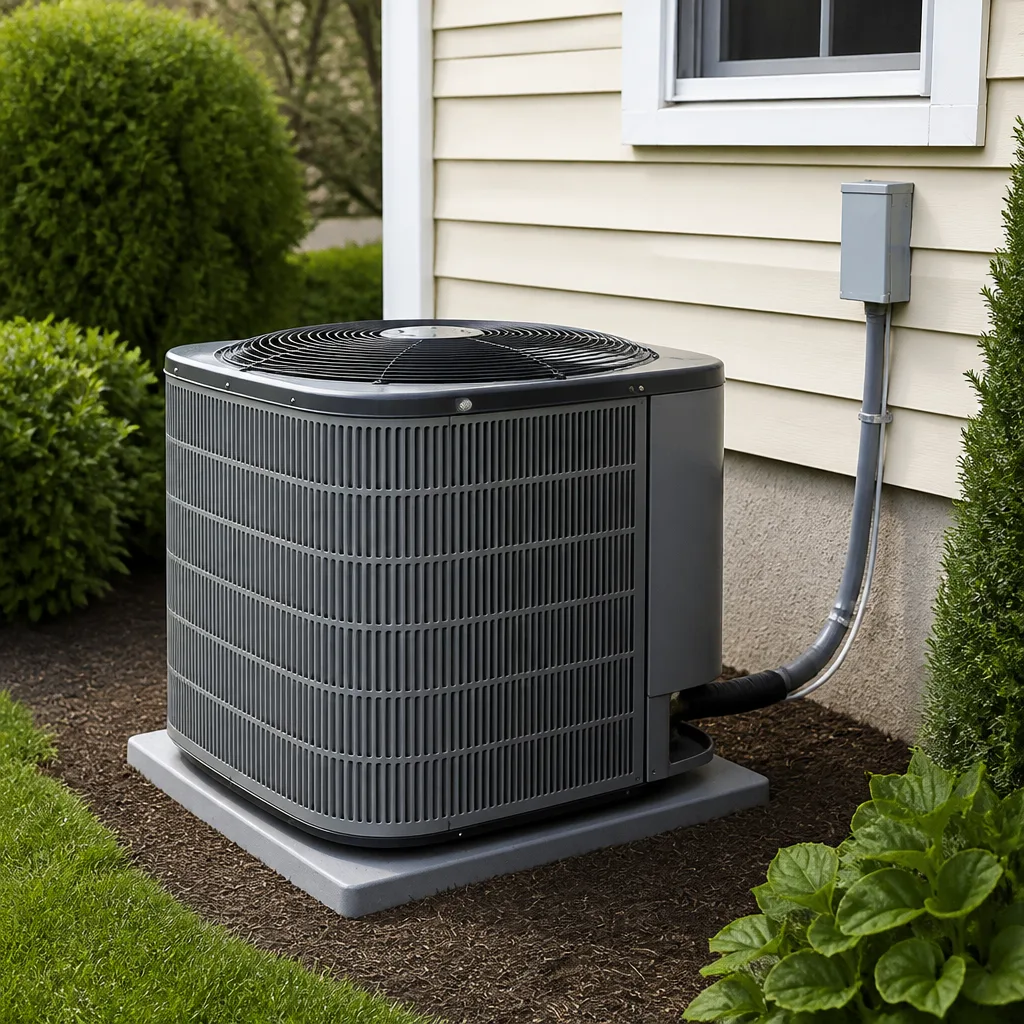 AC repair
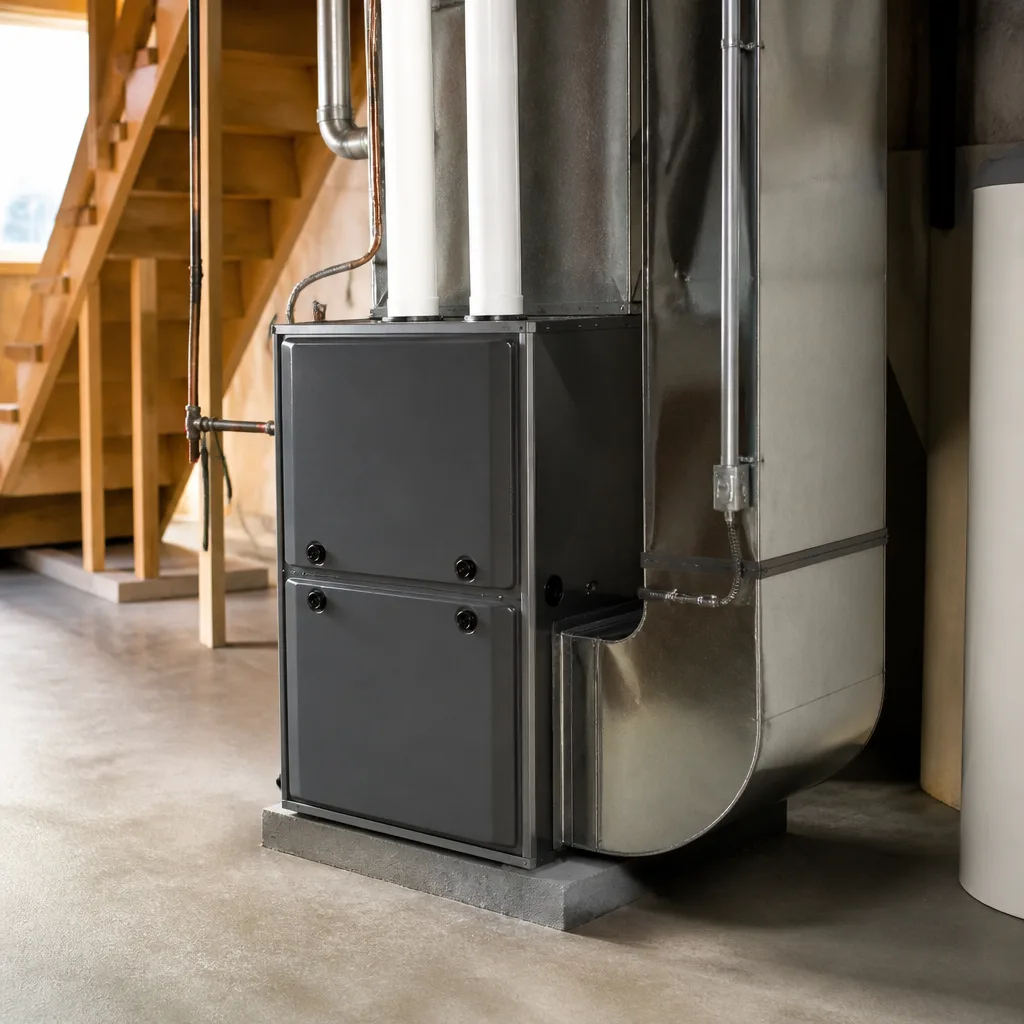 Furnace & heating
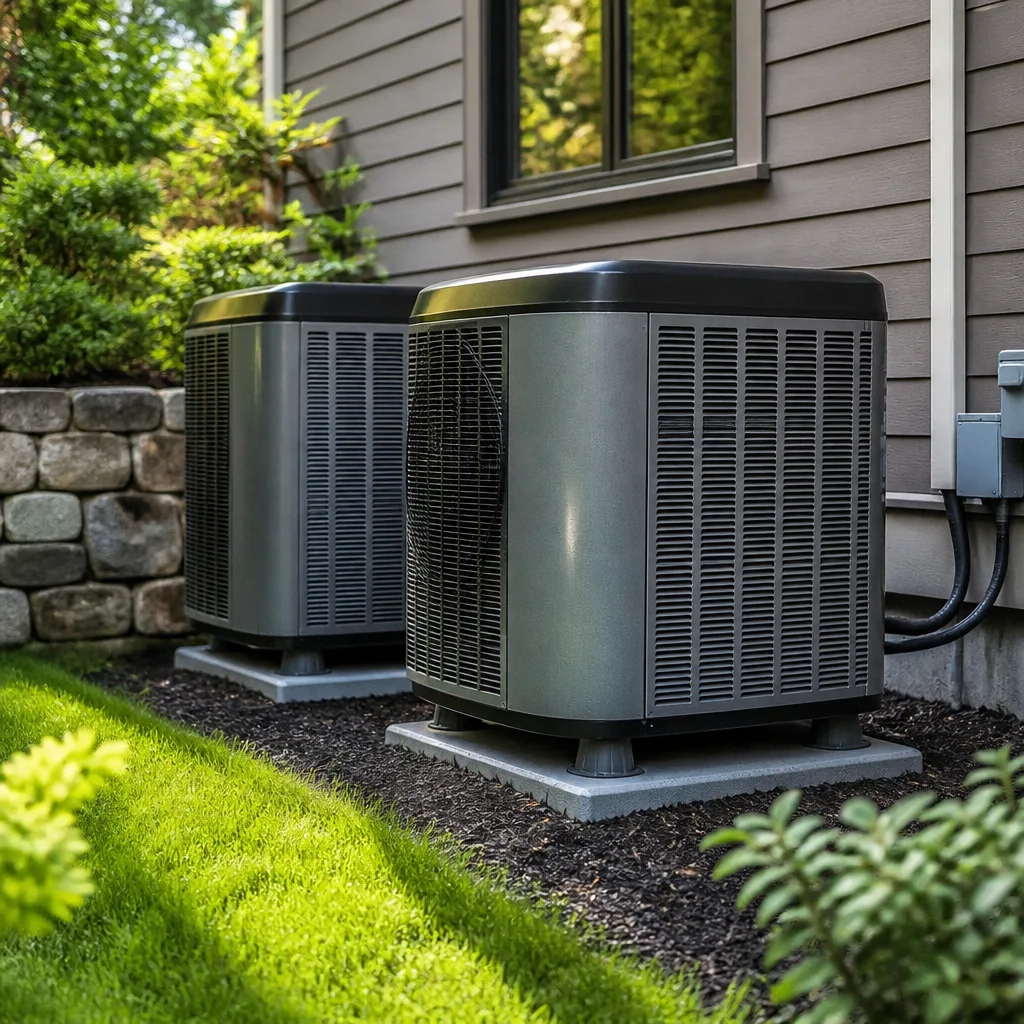 Heat pumps
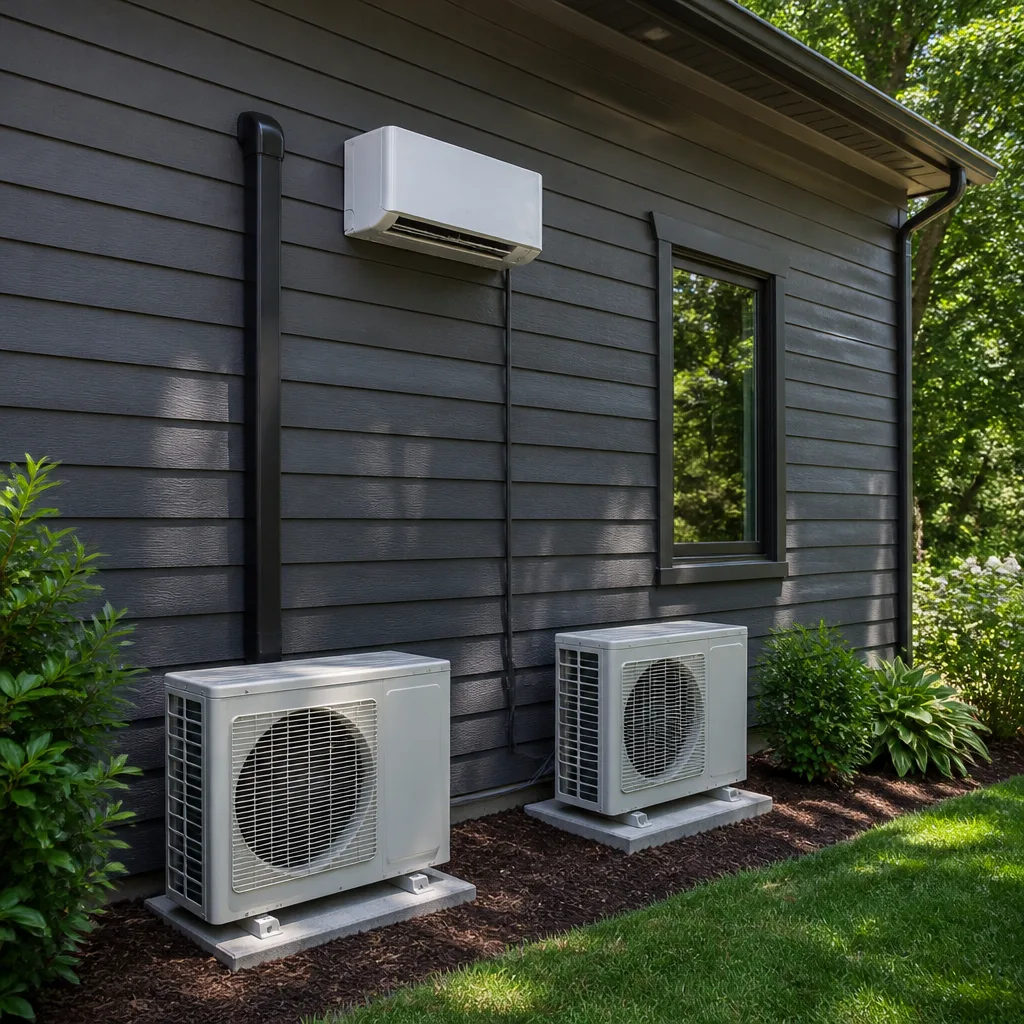 Ductless mini splits
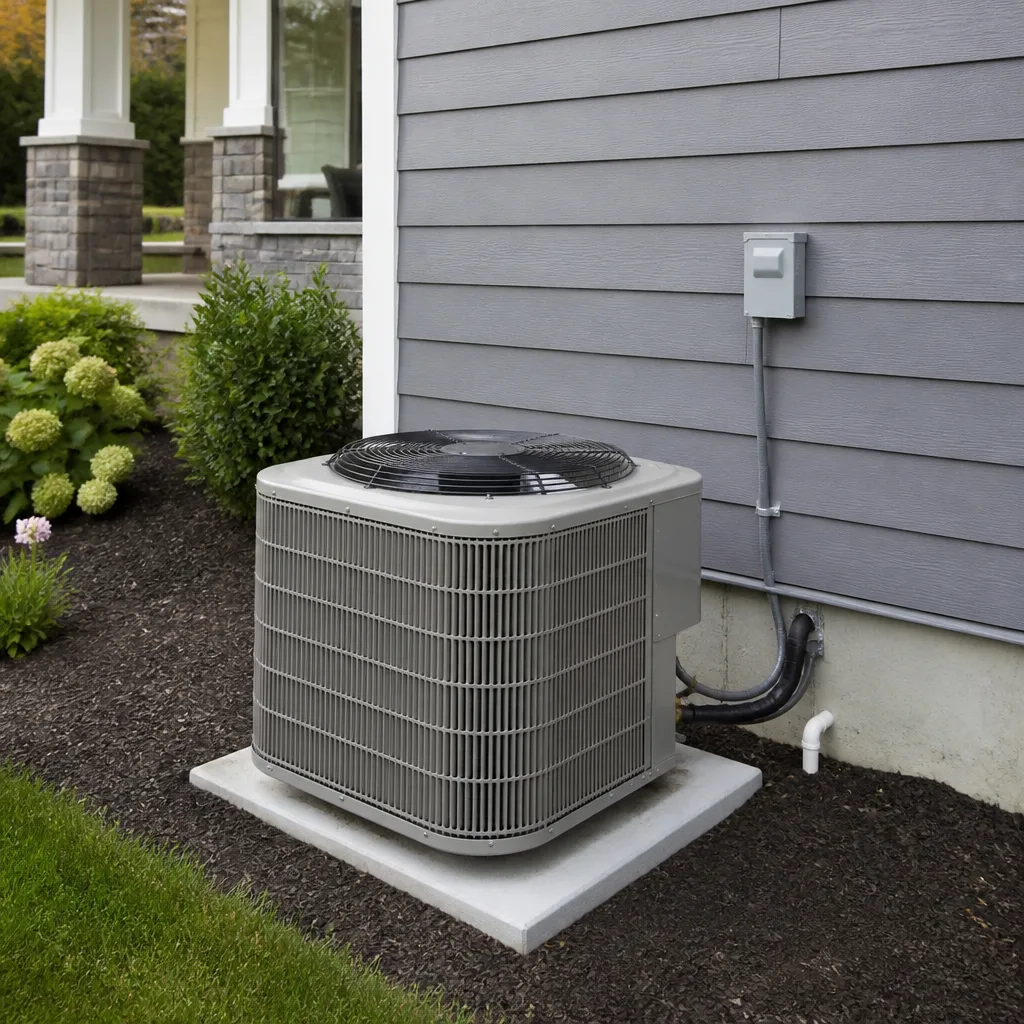 Carrier
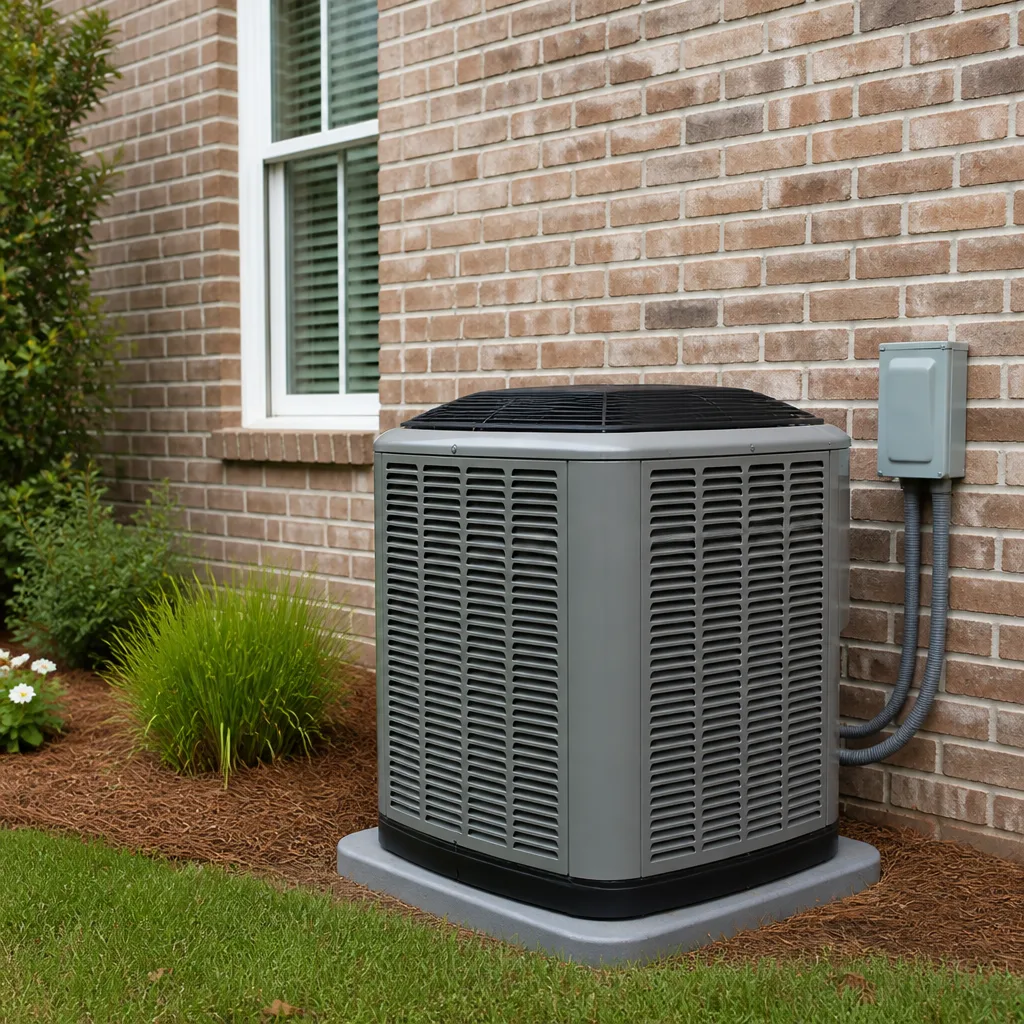 Trane
Trane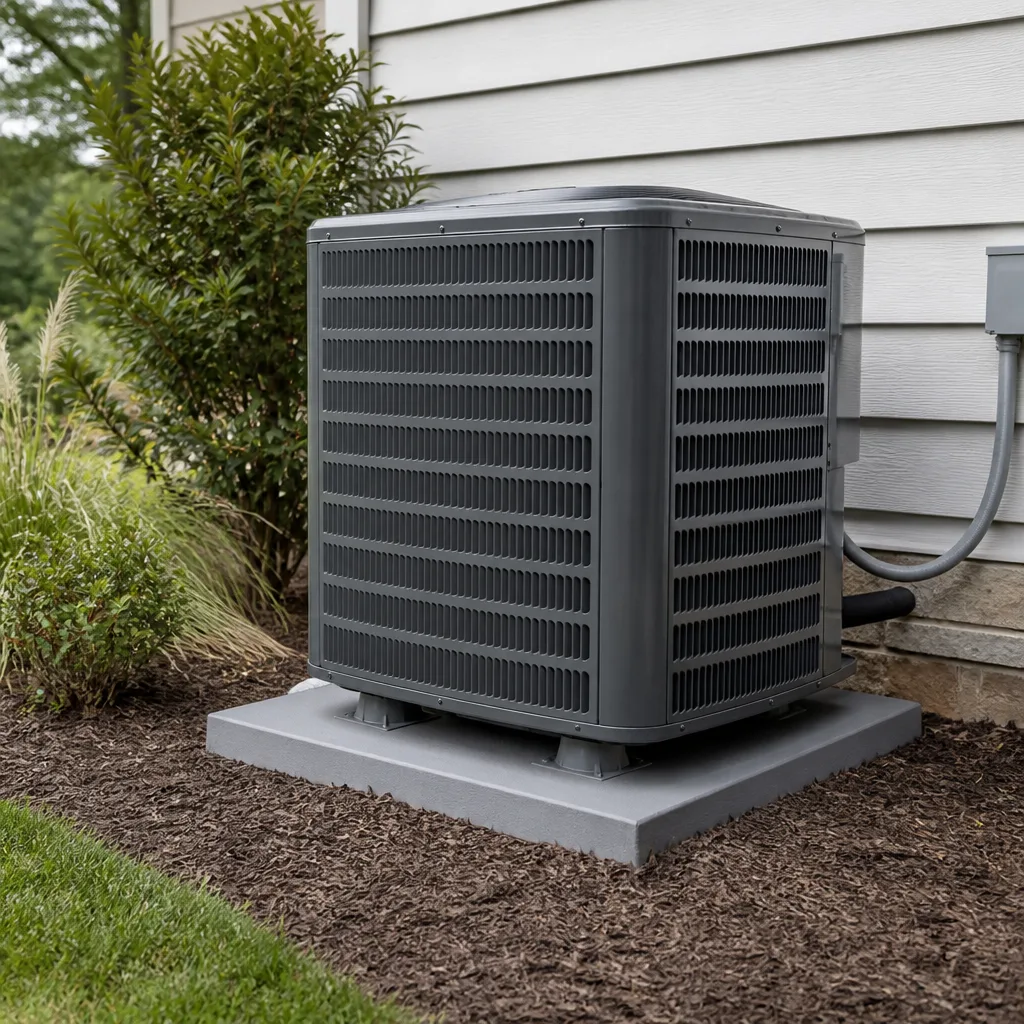 Goodman
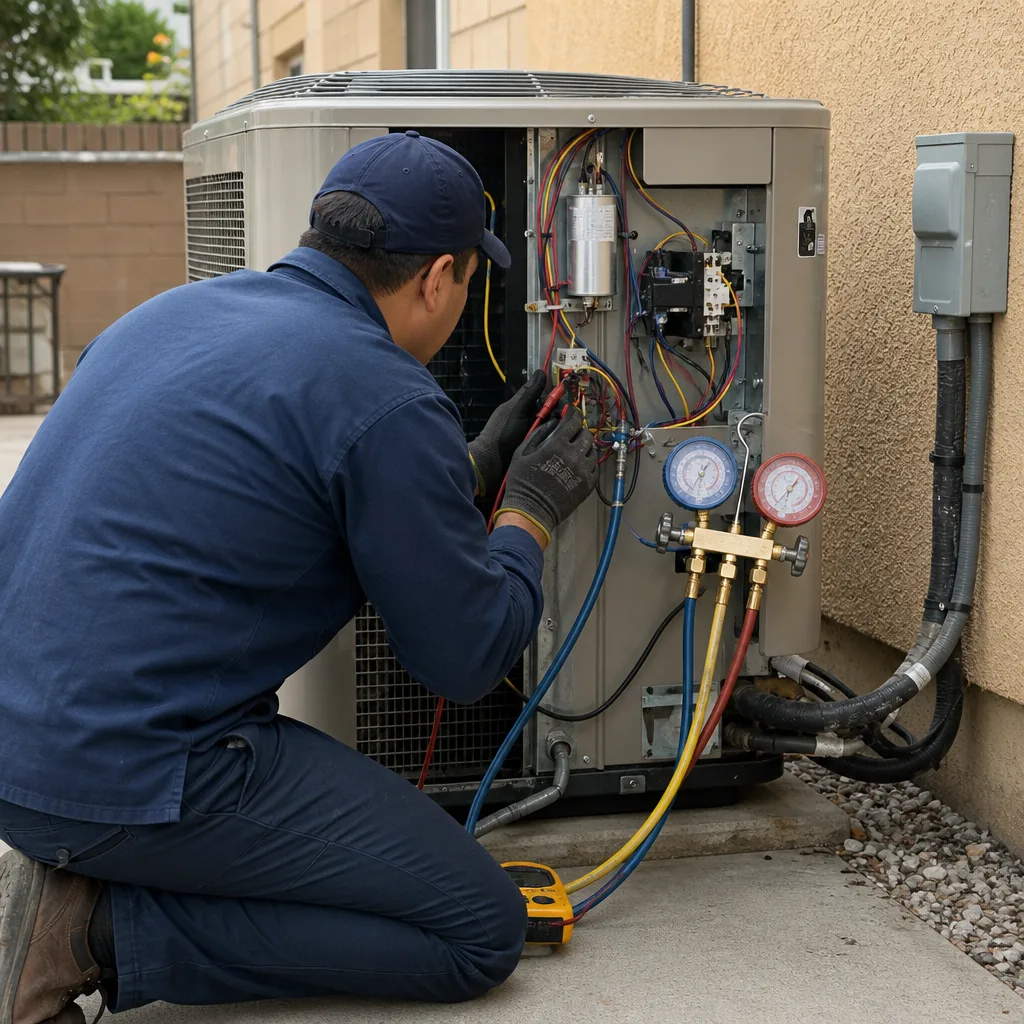
Seasonal tune-up and full diagnostic on your Carrier, Trane, or Goodman system - readings shown to you before any repair is proposed
Diagnosis first, numbers second - you approve the repair price before a single part goes in.
Get your free estimateThe Complete Guide to HVAC in Santa Clarita
Santa Clarita recorded 29 days above 95°F in 2023, yet most “LA area” HVAC guides are written for coastal climates where that number is closer to two. That gap is why this guide exists. The Santa Clarita Valley is a high-desert bowl, and the advice that works in Burbank or Pasadena quietly fails up here. In the sections below, you’ll learn how the SCV’s heat-sink geography, foundation types, housing stock, and Title 24 requirements shape real HVAC decisions, and what that means for your equipment, your repair bill, and your electric statement. For more guides & resources on keeping your home comfortable, explore our blog.
Quick Answer
HVAC in Santa Clarita means sizing equipment for a climate that hits triple digits in July and drops below freezing on December nights. A properly sized central system for a 2,000-square-foot SCV home typically costs $9,000 – $16,000 installed, while most repairs run $150 – $450 depending on the part. The single biggest mistake Santa Clarita homeowners make is trusting a coastal sizing chart that undershoots the cooling load by 20 – 30 percent.
Styles & brands we work with
Table of Contents
- Why Santa Clarita’s Geography Changes Your HVAC Math
- How Sandy Soil and Slab Foundations Affect Ductwork and Heat Gain
- The Three Housing Types in Santa Clarita and How Their HVAC Ages
- What California Title 24 Requires at Permit Time in the SCV
- How to Read Your SoCalGas and SCE Bills to Find the Real Cost Driver
- Choosing Equipment: What Makes Sense in Santa Clarita, What Doesn’t
- Should You Repair or Replace? A Santa Clarita Decision Framework
- Maintenance That Actually Matters in This Climate
Why Santa Clarita’s Geography Changes Your HVAC Math
Santa Clarita sits in a valley that traps heat. During the day, sun beats down on the surrounding mountains and the valley floor absorbs it. At night, that stored heat radiates back out, which is why SCV summer nights often stay 15 degrees warmer than nights in the San Fernando Valley, only 20 miles south. For your HVAC system, that means the cooling season here is not just hotter, it’s longer. A system sized for a coastal zip code will run constantly, struggle to hold set temperature after 4 p.m., and fail years early.
In our experience across Santa Clarita, we regularly see homes where the original builder-specified condenser was sized at 3 tons for a 2,000-square-foot house. The Manual J load calculation, when run correctly with SCV climate data, calls for 3.5 to 4 tons for that same footprint, especially on south-facing lots in Valencia and Saugus with minimal shade. That half-ton difference is the gap between a system that cycles properly and one that runs 14 hours a day in August.
The winter side matters too. Santa Clarita’s high-desert elevation means December and January nights routinely reach 28°F to 32°F. That is not cold enough to dominate your equipment selection the way a northern climate would, but it does mean your furnace or heat pump sees real runtime, and a system sized only for cooling will underperform on the coldest mornings in Canyon Country and Newhall.
Note: for genuinely dangerous heating components, particularly gas furnaces and any line involving natural gas, a failed heat exchanger can release carbon monoxide into the home. If you smell gas or a furnace smells like exhaust, shut it off, ventilate, and call (661) 621-3712 or your gas utility immediately. Do not attempt to inspect a heat exchanger yourself.
How Sandy Soil and Slab Foundations Affect Ductwork and Heat Gain
Santa Clarita’s soil is largely alluvial and sandy, the product of the Santa Clara River’s historic floodplain. That matters for HVAC in two ways most guides never mention. First, slab foundations dominate SCV tract housing, which means ductwork is frequently run through the attic rather than a crawlspace or basement. Attic ducts in Santa Clarita sit in temperatures that commonly reach 130°F to 150°F in summer. If that ductwork is under-insulated, leaky, or poorly sealed, your system loses 20 to 30 percent of its cooling before air ever reaches a register.
Second, sandy soil drains fast, but it also shifts. Over 20 or 30 years, minor settling can pull duct connections apart where they pass through the slab or chase walls. We have opened supply plenums on 1990s-era Canyon Country homes and found gaps you could fit a fist through. The homeowner was paying to cool the wall cavity, not the living room.
What this means practically: duct inspection is not optional in Santa Clarita. A static pressure test and visual inspection of accessible duct runs will reveal leakage that no amount of condenser tuning will fix. Seal the ducts first, then size the equipment. It’s the single highest-ROI improvement in this valley, and it is required reading before you invest in a new system. For more on how this plays into repairs, see our AC Repair in Santa Clarita page.
The Three Housing Types in Santa Clarita and How Their HVAC Ages
Santa Clarita’s housing stock falls into three broad categories, and each one ages differently when it comes to HVAC equipment.
1. 1980s – 2000s Tract Homes (Valencia, Saugus, Canyon Country, Newhall)
These homes were built fast during SCV’s rapid expansion, and most original equipment was R-22 refrigerant systems with 10 SEER efficiency at best. R-22 has been phased out, and replacement refrigerant is increasingly expensive. If your system was installed before 2010 and has never been replaced, you are likely running an R-22 system, and a refrigerant leak repair can now cost more than a new R-410A or R-454B unit on a per-year basis. Original ductwork in these homes is typically 30 to 40 years old and has been through decades of 140°F attic heat. Budget for duct sealing or replacement as part of any major equipment change.
2. Hillside Custom Builds (Sand Canyon, Plum Canyon, portions of Saugus)
Custom hillside homes often have multiple zones, vaulted ceilings, and large south-facing glass. Those architecture choices create serious solar gain that the original designer sometimes underestimated. We see custom SCV homes where one zone is chronically 8 degrees warmer than the rest, and the fix is a zone damper adjustment or a supplemental ductless unit, not a larger condenser. Hillside homes also sit on piers and varied terrain, so duct runs are longer, leak more, and are harder to access. Maintenance costs on these homes run noticeably higher than on flat-lot tract homes.
3. Newer Valencia Master-Plan Communities (2010 – present)
Newer builds came with 14 SEER minimum efficiency and R-410A refrigerant, which is good news. But builder-grade installs are often done fast, with ducts that pass code but leak at the upper end of the legal limit. We have also seen a wave of ductless mini-splits in these communities, which work well for individual rooms but underperform when homeowners try to heat or cool an entire floor with one head unit. If you are in a newer Valencia home, your equipment is probably fine; your ductwork and zoning deserve a hard look.
If you are weighing a full system change on any of these home types, see Heat Pump Installation in Santa Clarita for what qualifies as a good candidate install.
What California Title 24 Requires at Permit Time in the SCV
California’s Title 24 energy standards are not suggestions, and Santa Clarita’s climate zone (which falls under state climate zone 14 inland) triggers specific requirements at permit time. If you are replacing a furnace, condenser, or heat pump in Santa Clarita, the city of Santa Clarita building department will require a Title 24 compliance document proving the new equipment meets minimum efficiency for this climate zone.
Here is what Title 24 requires for a typical SCV single-family replacement:
- Minimum cooling efficiency of 14 SEER for split systems, though the 2023 update pushes most new installs to 15 SEER or higher depending on system type.
- Minimum heating efficiency of 80 AFUE for furnaces; note that 90+ AFUE condensing furnaces are increasingly standard because they meet the requirement while cutting SoCalGas consumption in SCV winters.
- Duct leakage testing on any new or altered ductwork; if your installer touches the ducts, the duct system must pass a leakage test.
- Refrigerant charge and airflow verification, meaning the installing contractor has to document proper charge and airflow, not just connect lines and walk away.
- A properly sized system per ACCA Manual J, which is the load calculation standard; Santa Clarita’s climate data produces a higher cooling load than coastal zones, and that calculation must be submitted.
If a contractor tells you they can replace your system without a permit, that is a red flag. Unpermitted work creates problems at resale and can void your equipment warranty. The permit process in Santa Clarita is not onerous, but it does take a few days, so plan for it when scheduling a replacement.
How to Read Your SoCalGas and SCE Bills to Find the Real Cost Driver
Most Santa Clarita homeowners see a high utility bill and assume the equipment is the problem. Often it is, but not in the way they think. Here is a simple method to find the real cost driver.
- Pull your SCE electric usage for July, August, and September. Southern California Edison bills show kilowatt-hour usage by billing period. Compare those three months to April and May. If your summer usage is 3x your spring usage or more, your cooling load is driving the bill, and an undersized or inefficient AC is likely the culprit.
- Pull your SoCalGas usage for December, January, and February. Compare those months to May and June. If winter gas usage jumps significantly, your furnace is doing real work, and its AFUE rating matters. A 30-year-old furnace at 70 AFUE versus a modern unit at 95 AFUE is a direct 25-point efficiency gap on the same amount of delivered heat.
- Check your SCE bill for the “delivery charge” versus “generation charge” split. Both fluctuate, but time-of-use rates in SCE territory penalize late-afternoon AC use. If your bill shows heavy usage between 4 p.m. and 9 p.m., the fix is not always more efficiency; it can be a programmable thermostat that pre-cools the home before peak rates begin.
- Look for a steady baseline creep. If your winter electric usage is also high, you may have an electric resistance heater or heat strips running as a supplement, which is common in SCV heat pump installs where the balance point was never set correctly for our actual winter lows.
If the numbers point to your equipment rather than rate structure, and you are in the repair-versus-replace window, start at Furnace Repair in Santa Clarita to understand what a typical repair costs before you commit to a full replacement.
Choosing Equipment: What Makes Sense in Santa Clarita, What Doesn’t
Santa Clarita’s climate rewards sensible, mid-range equipment choices over exotic solutions. Here is what our installs and service records actually show.
- High-efficiency AC paired with an 80 AFUE furnace is the most common sweet spot for SCV homes. The cooling season dominates, so spend on SEER; the heating season is short enough that paying for a 96 AFUE condensing furnace often doesn’t pencil out unless you plan to stay 15 years or your home has high winter gas use.
- Heat pumps are growing rapidly in Santa Clarita, especially in all-electric homes and newer Valencia builds without gas service. A cold-climate heat pump rated to 5°F will handle SCV winters easily. If your home already has gas, a dual-fuel setup (heat pump plus gas furnace backup) works but adds complexity.
- Carrier, Trane, and Lennox all sell excellent equipment, but the install quality matters more than the brand on the cabinet. We service all major residential brands, including American Standard, and the best-installed system beats the best-marketed system every time.
- Avoid oversizing as much as undersizing. A 5-ton unit on a house that needs 3.5 tons will short-cycle, fail to dehumidify, and wear out early. In Santa Clarita’s dry summers, short-cycling is the difference between a 15-year condenser and an 8-year one.
Should You Repair or Replace? A Santa Clarita Decision Framework
Here is the framework we use with Santa Clarita homeowners when a system is down and the bill is pending. Answer these in order.
- Is the system over 15 years old? If yes, and the repair exceeds 30 percent of replacement cost, replacement usually wins. The equipment is already past design life.
- Is the failed part the compressor or the heat exchanger? A compressor replacement runs $2,500 – $4,500 on a mid-sized SCV home. A heat exchanger replacement runs $1,200 – $2,800. Both are signs the system is nearing end of life.
- Is the system R-22? If yes, every refrigerant-related repair carries an inflated refrigerant cost. Replace rather than chase leaks.
- Do you plan to stay in the home 5+ years? If yes, replacement locks in efficiency savings and warranty coverage. If you are selling soon, a repair plus documentation of the fix may be the better play.
- Has the system been repaired 3 or more times in the last 2 years? That pattern means more failures are coming. Cut the cycle.
Most furnace repairs in Santa Clarita run $150 – $450 depending on the part, and most AC repairs run $180 – $550. A full system replacement for a 2,000-square-foot SCV home typically lands between $9,000 and $16,000, depending on efficiency, fuel type, and ductwork scope. For a detailed HVAC Cost Breakdown: The Santa Clarita Homeowner’s Reference for 2026, see our dedicated guide. When a homeowner asks us whether to repair or replace, we quote both paths in writing and let the numbers decide. The repair is guaranteed in writing for a full year; if it fails in that time, we return at no charge.
Maintenance That Actually Matters in This Climate
Santa Clarita’s combination of heat, dust, and high-desert air means certain maintenance tasks matter more here than in coastal Southern California.
- Coil cleaning twice a year. SCV is dry and dusty, and that dust coats condenser coils fast. A dirty coil reduces heat rejection and drives up runtime and compressor temperature. Clean it before summer and again in fall.
- Filter replacement every 30 to 60 days during cooling season. Dusty conditions combined with heavy system runtime means filters load faster. A plugged filter starves airflow and freezes coils.
- Condensate drain clearing in spring. Our dry air doesn’t prevent drain line clogs; the dust and biofilm still build. A clogged drain triggers a safety float switch and shuts the system down, usually on the hottest day.
- Static pressure and airflow check every 2 years. Duct leakage and filter resistance change over time. A static pressure measurement catches airflow problems before they kill a compressor.
- Capacitor and contactor inspection annually. These are the most common electrical failure points, and both are cheap to inspect and cheap to replace proactively.
If the maintenance surface feels overwhelming, the short version is this: change the filter, clean the outdoor coil, and get a professional inspection once a year. That one hour of inspection catches most failures before they happen, and the written report tells you exactly what was found, not what the technician wants to sell you.
Common Mistakes to Avoid
- Using a coastal sizing chart for a Santa Clarita home. The cooling load here is higher than Burbank or Pasadena. An undersized system runs constantly and fails early.
- Sealing the house too tight without adding ventilation. Newer SCV homes are built tight for efficiency, but tight homes trap indoor air. If you have sealed windows and doors and added insulation, make sure you have proper ventilation, or indoor air quality suffers.
- Skipping the permit on a system replacement. Title 24 compliance and city inspection protect you at resale and maintain the equipment warranty. Unpermitted work creates a mess you inherit.
- Replacing equipment before inspecting the ducts. The best condenser in the world cannot overcome ducts leaking 25 percent of their airflow into a 140°F attic. Ducts first, equipment second.
- Waiting for complete failure before calling. A noisy bearing, a slow-to-start compressor, or a 20-degree temperature split is an early warning. Early repairs are usually cheap; failure repairs are not.
- Choosing a contractor on price alone. A low bid in Santa Clarita usually means no permit, no duct testing, no load calculation, and no written guarantee. The cheap install is the expensive one.
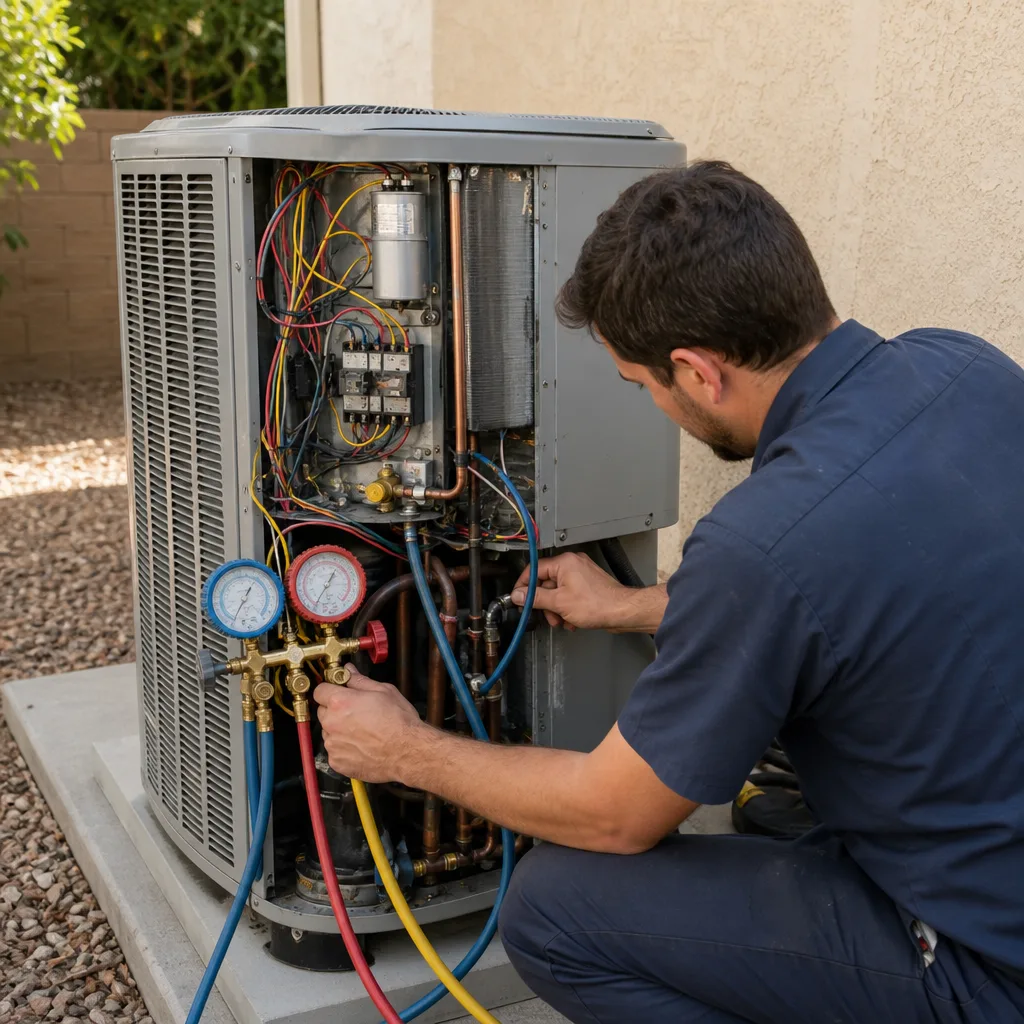
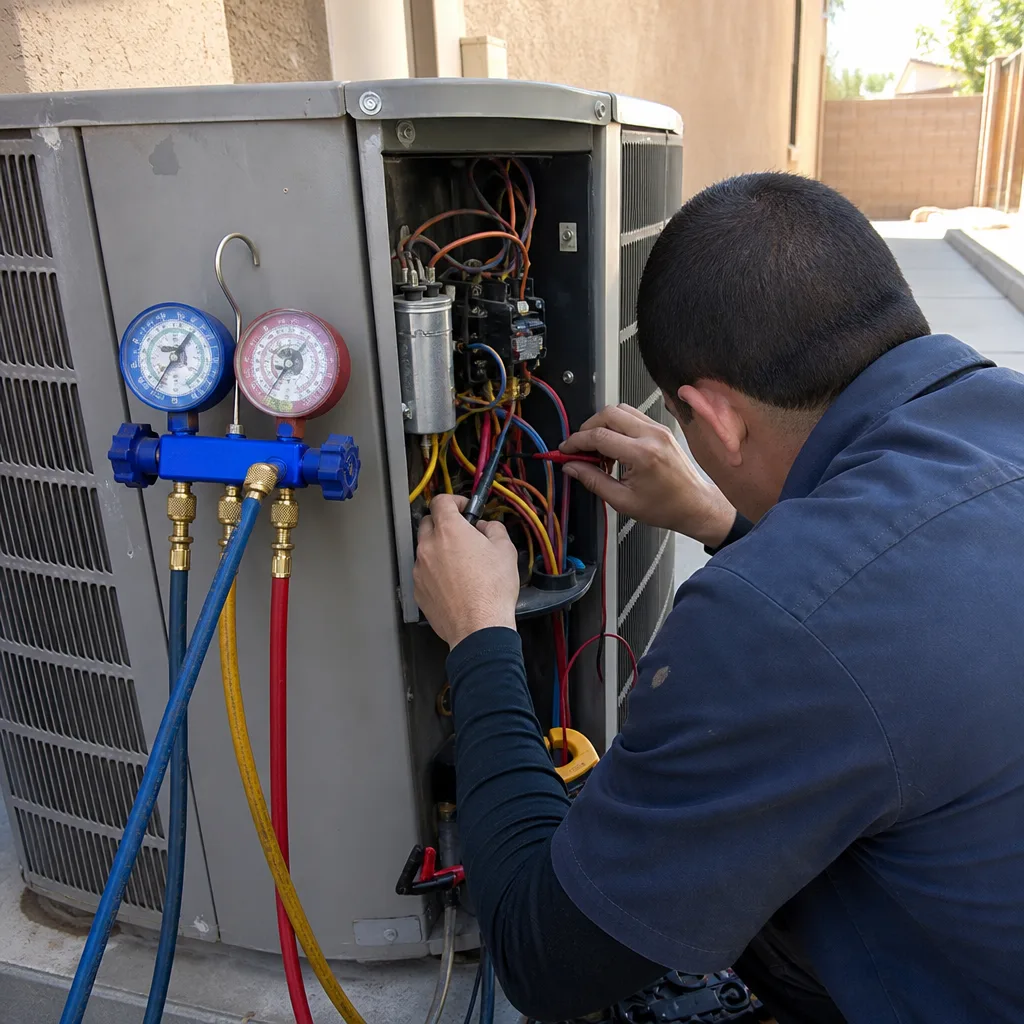
See the difference
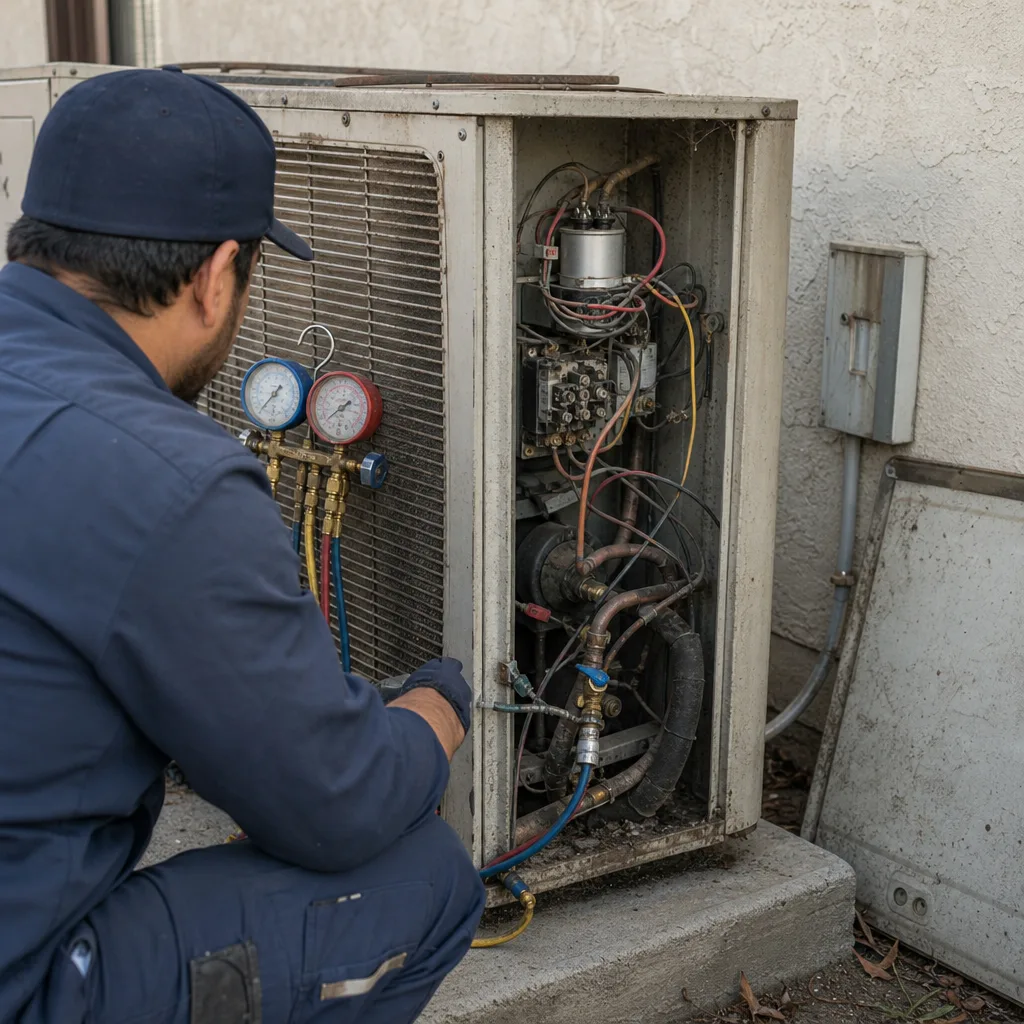 Before
 After
After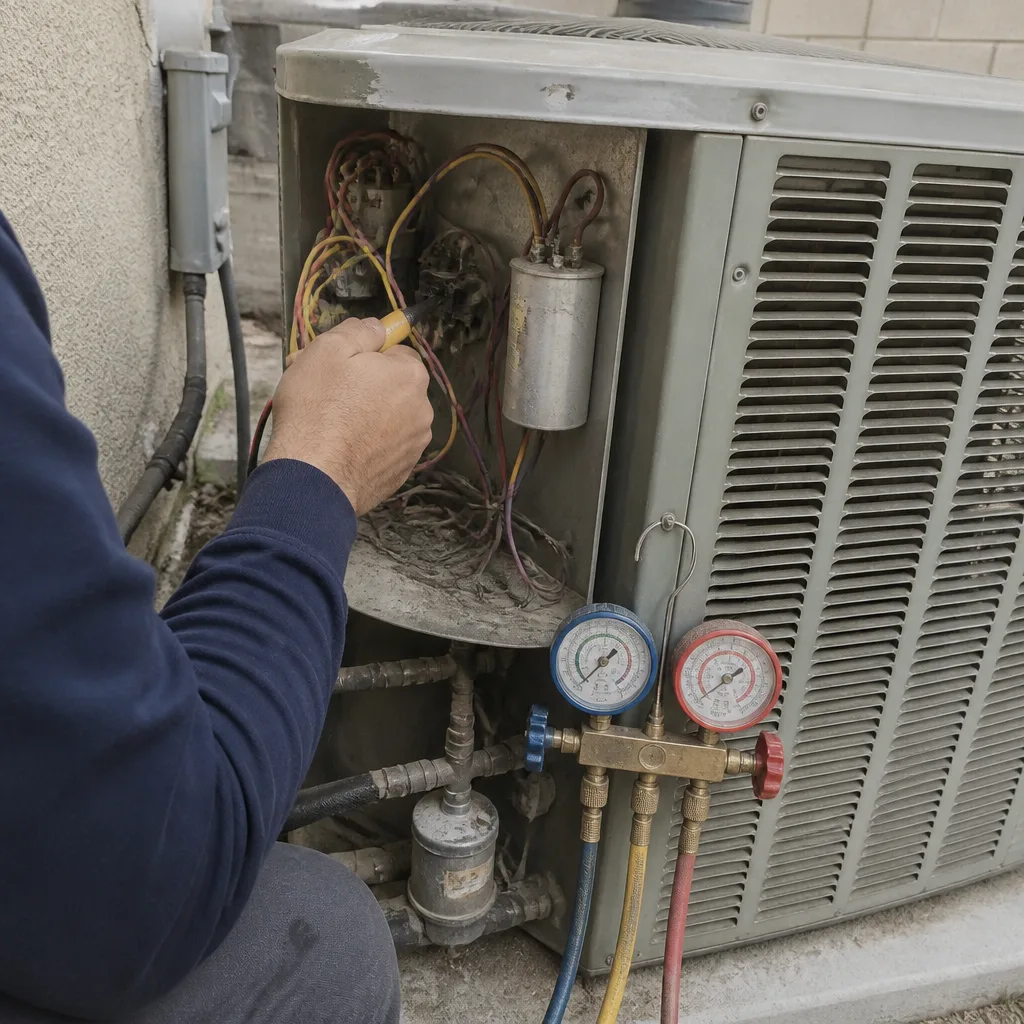 Before
 After
After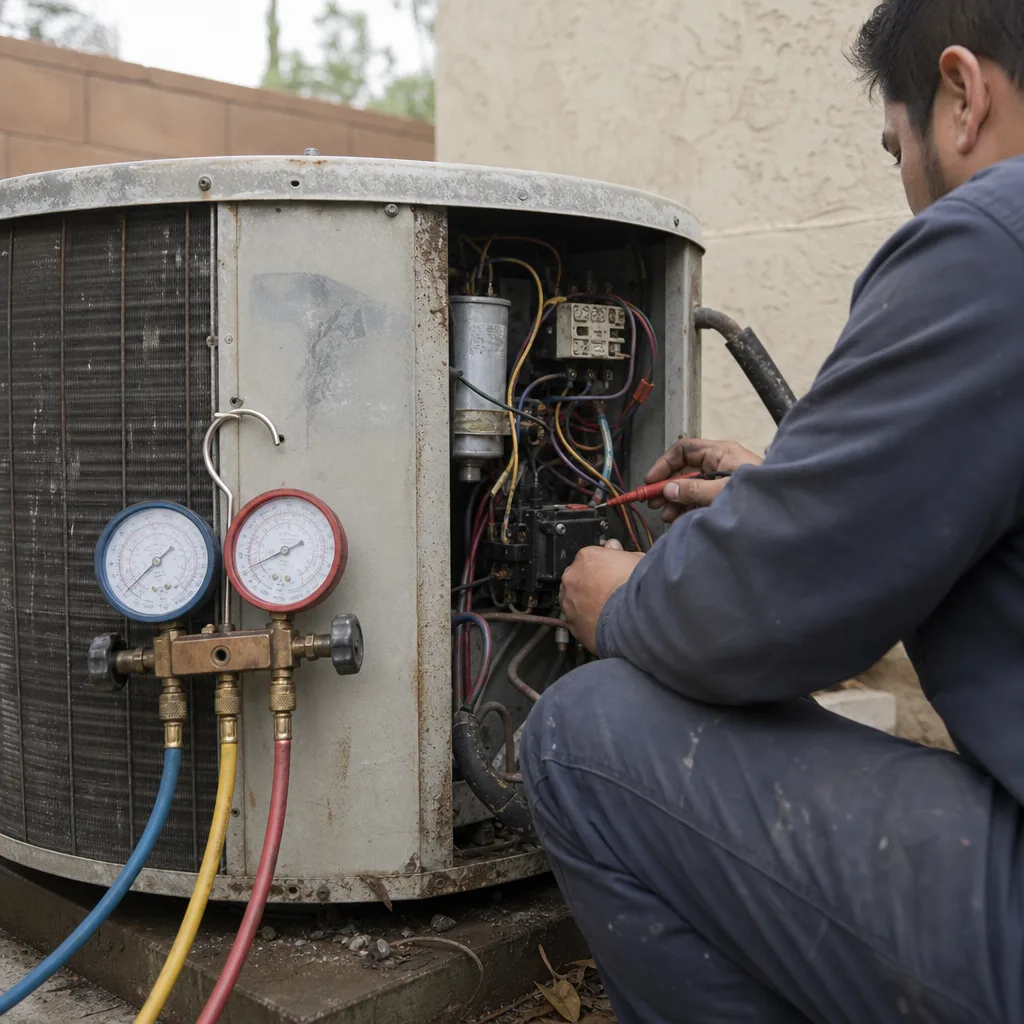 Before
 After
AfterWhen to Call a Professional
Call a professional when you smell gas from the furnace, hear a grinding or banging from the condenser, see ice on the refrigerant lines, or notice your system running constantly without reaching set temperature. Those are failure signals, not maintenance items. Also call before you replace equipment: a proper load calculation and duct inspection in Santa Clarita will change your equipment decision more than any brochure will. Not sure who to trust? Read our How to Hire a HVAC Contractor in Santa Clarita: A Step-by-Step Guide first. Dalton Heating & Air Santa Clarita offers free estimates in Santa Clarita. Call (661) 621-3712 and we will put the options in writing before any work starts.
Frequently Asked Questions
Most HVAC repairs in Santa Clarita run $150 – $450 for furnace work and $180 – $550 for AC work, depending on the part. A full system replacement for a typical SCV home runs $9,000 – $16,000. Call (661) 621-3712 for an exact quote, the estimate is free.
This is the classic symptom of an undersized system or leaking ducts. SCV summer cooling loads are 20 – 30 percent higher than coastal zones, and many original installs used lower loads. The fix starts with a load calculation and a duct leakage test, not a bigger thermostat.
Yes, particularly in all-electric homes and newer Valencia builds. A cold-climate heat pump handles SCV winter lows easily, and the cooling efficiency beats older AC equipment. If you have natural gas, a dual-fuel setup works but adds complexity.
Expect 12 – 15 years from a properly sized and maintained system in the SCV. Undersized systems in hot Santa Clarita summers frequently fail in 8 – 10 years. The compressor typically fails first, and the repair economics usually favor replacement at that point.
Yes. The city of Santa Clarita requires a permit for system replacements, and Title 24 compliance documentation must be submitted. An unpermitted install can void your warranty and create problems at resale.
Spring and fall offer the best scheduling flexibility in the SCV, but prices are not seasonal. The real timing decision is driven by how close your current system is to failure, not by the calendar. If temperatures are already hot, don’t wait for a cooler month.
The Bottom Line
HVAC in Santa Clarita is a different game than the rest of Southern California, and the difference comes down to geography, soil, and housing stock. Size the equipment for a high-desert bowl with triple-digit summers and freezing winter nights, not for a coastal zip code. Inspect the ducts before you replace the equipment. Pull a permit, meet Title 24, and use a contractor who puts the price in writing and stands behind the work for a year. If you live in Santa Clarita and want the details on your specific home, call (661) 621-3712. We will show up inside the stated window, inspect what is there, and hand you a written price before any work begins. That is the standard, and it is not optional.
Written by Marco Benitez, Owner at Dalton Heating & Air Santa Clarita, serving Santa Clarita since 2003.