
Last updated October 16, 2026
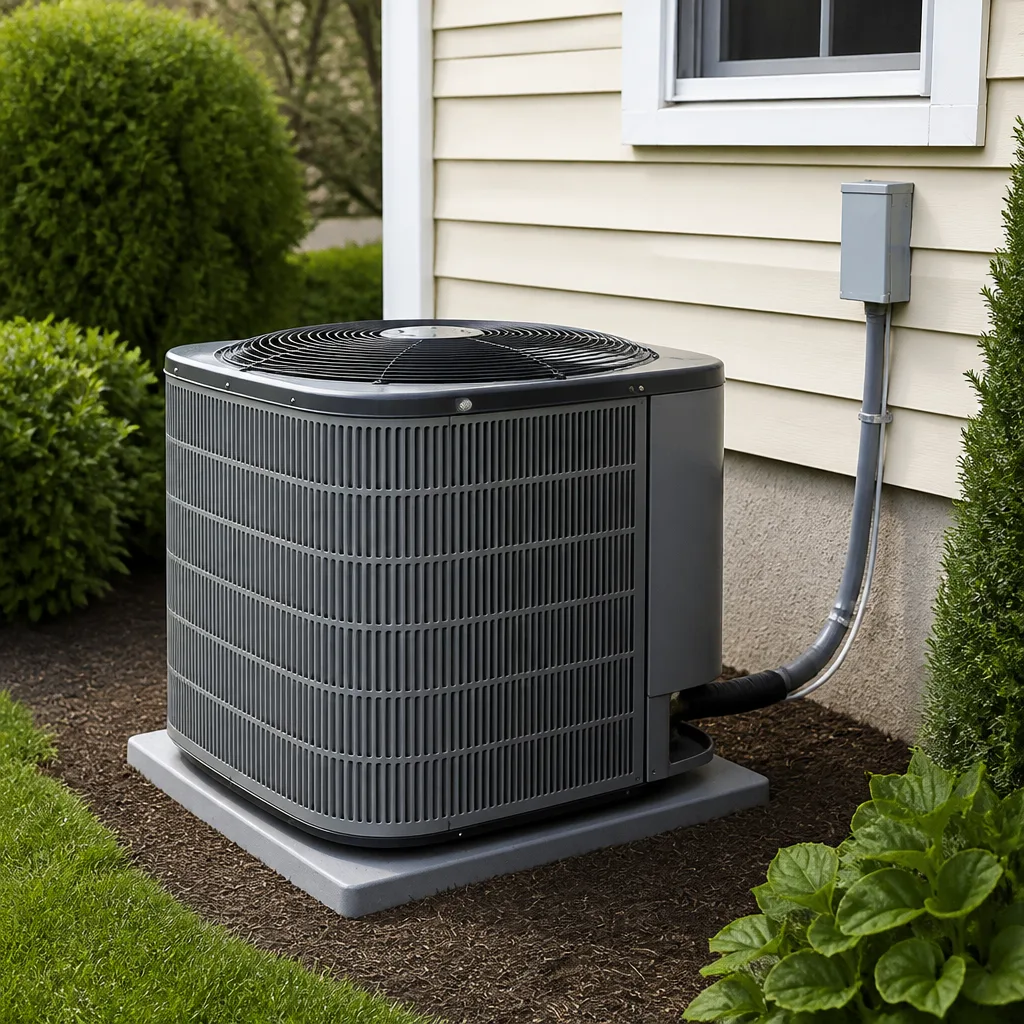 AC repair
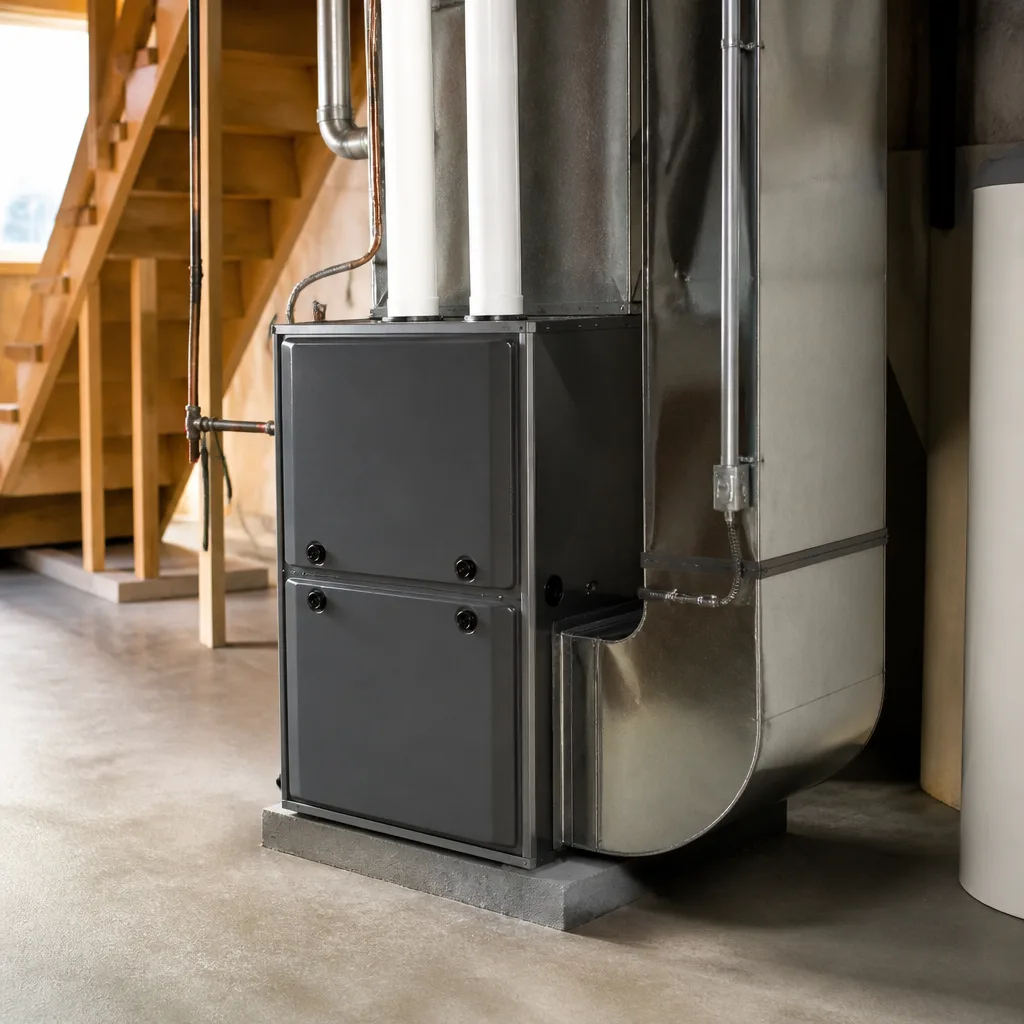 Furnace & heating
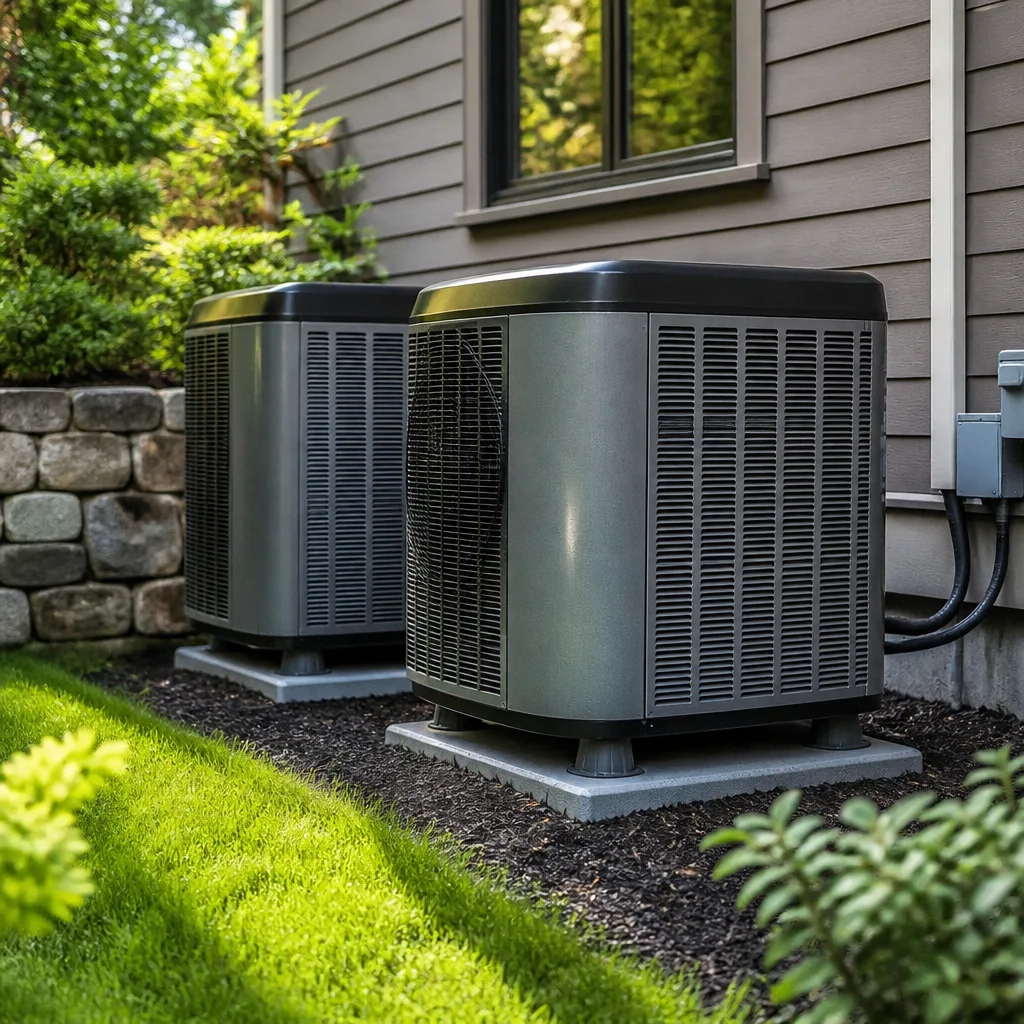 Heat pumps
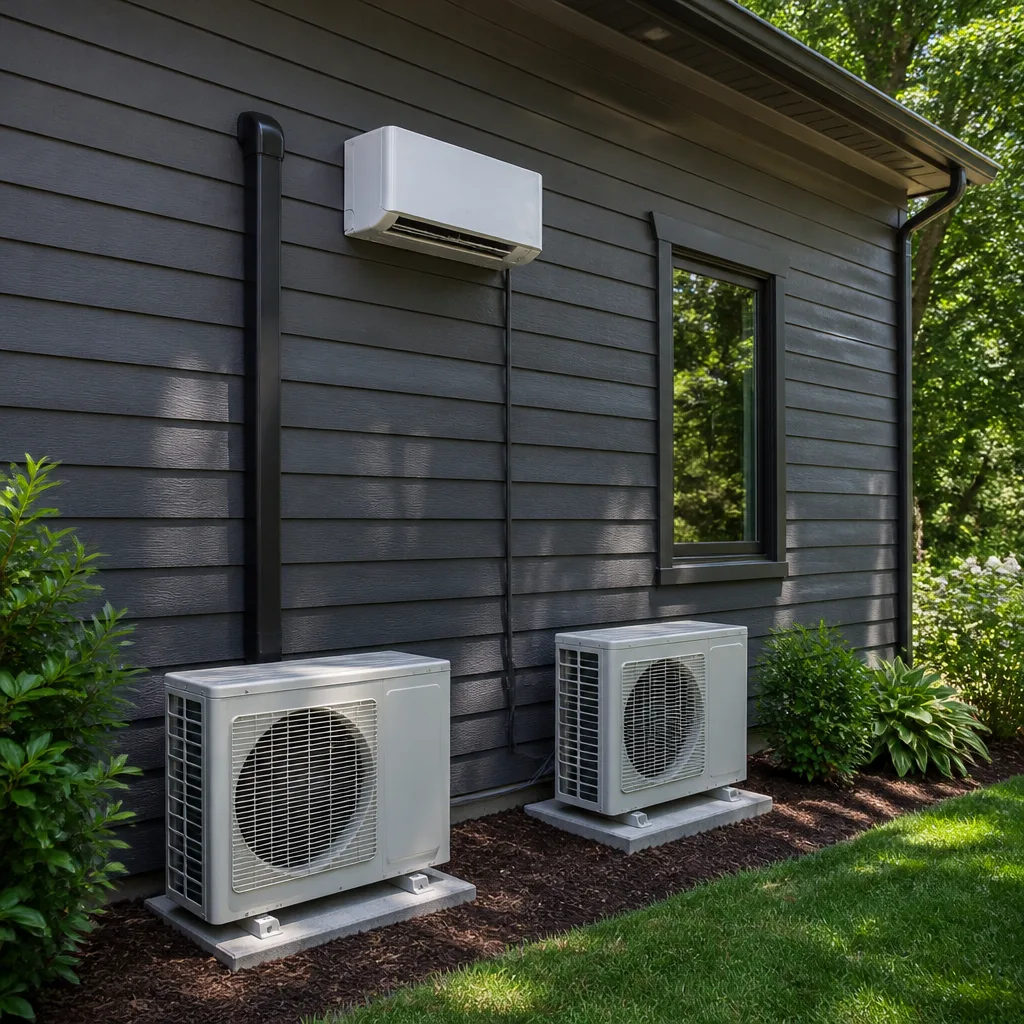 Ductless mini splits
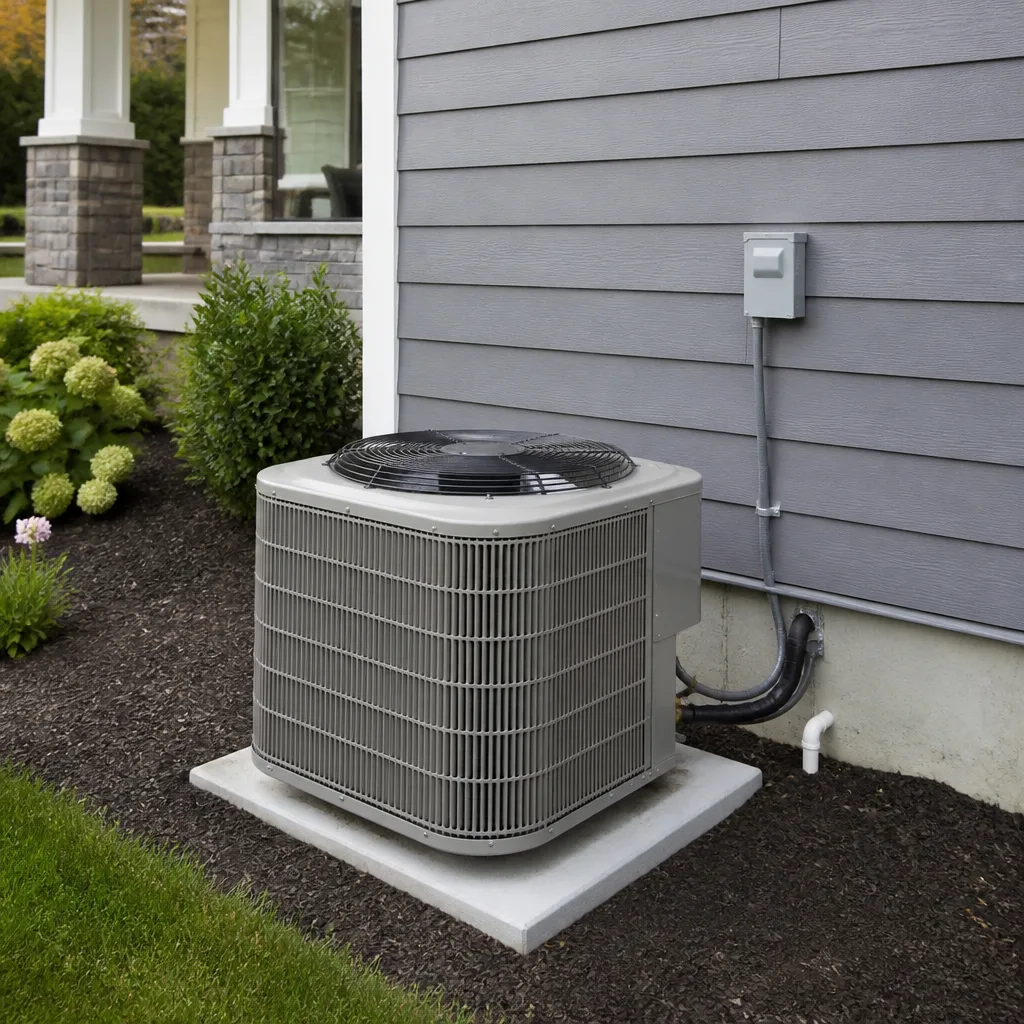 Carrier
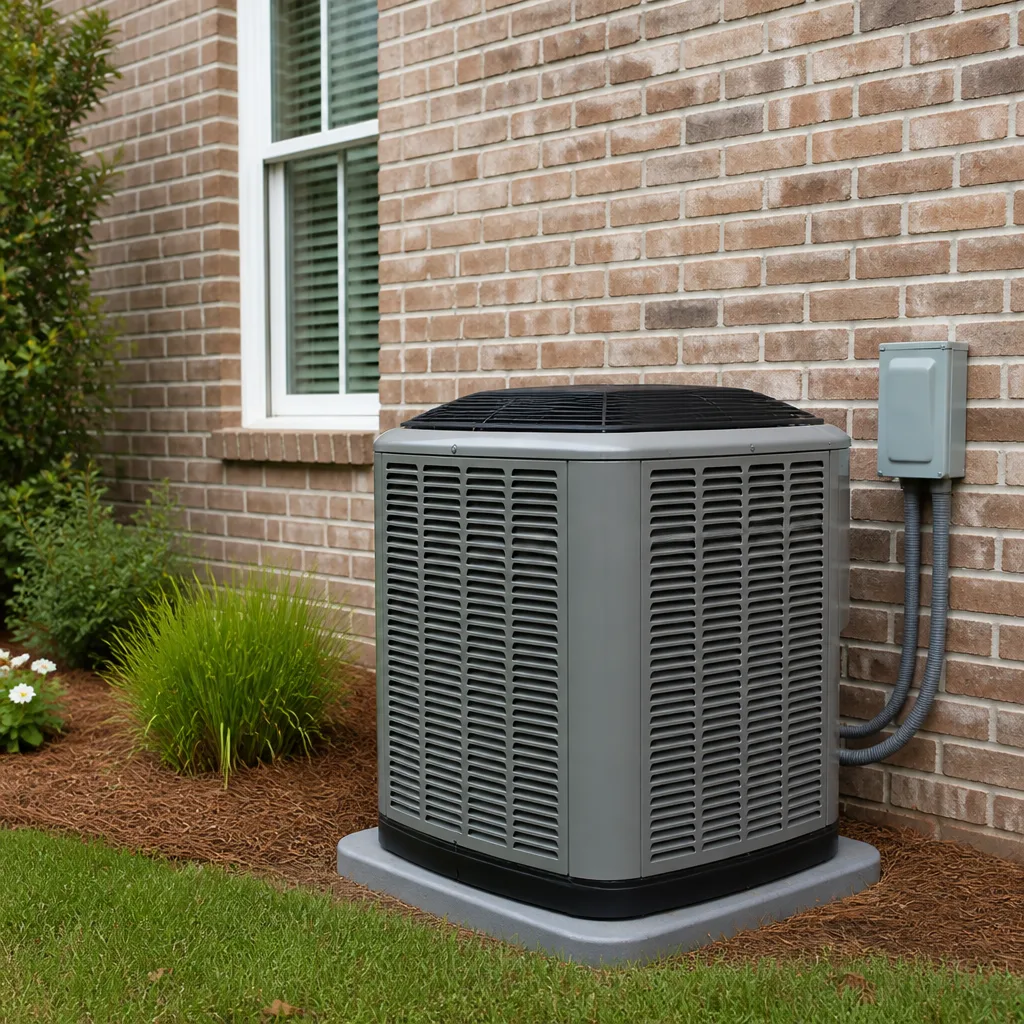 Trane
Trane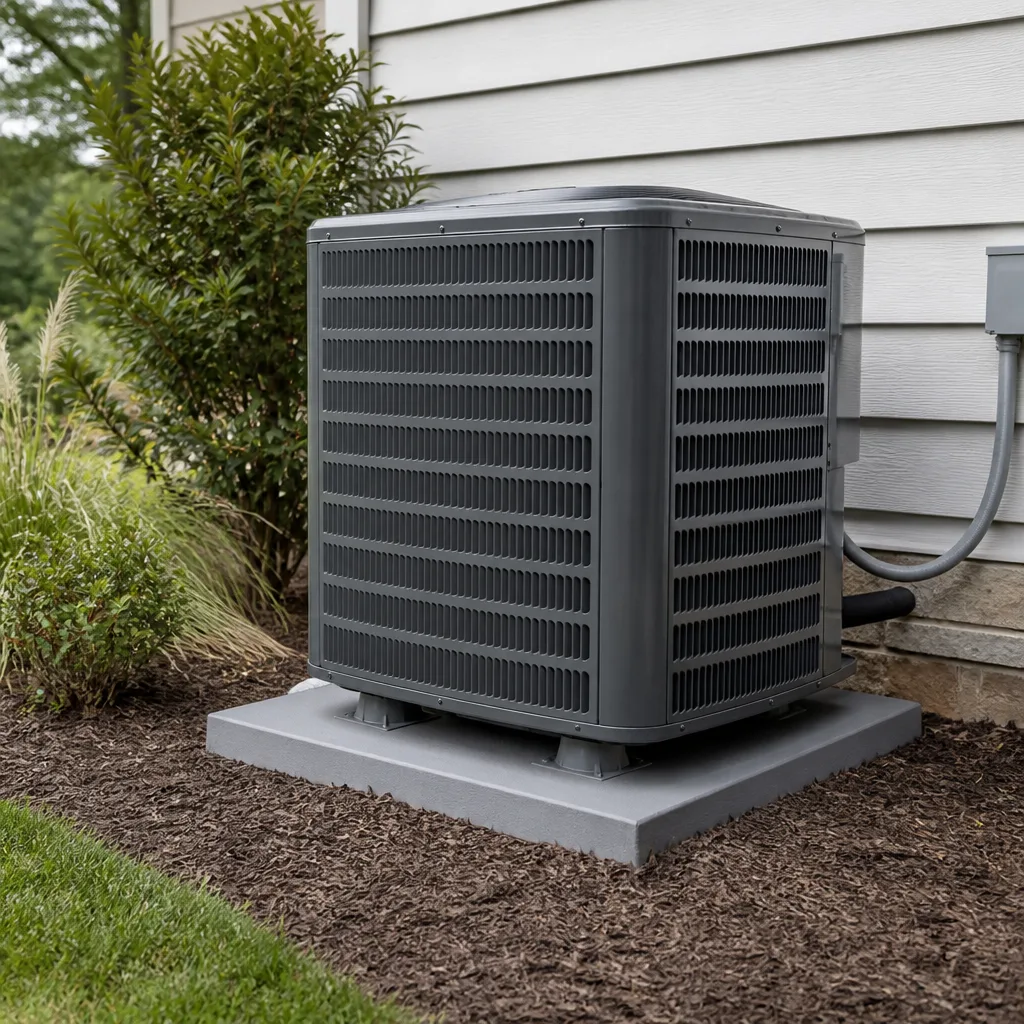 Goodman
Seasonal tune-up and full diagnostic on your Carrier, Trane, or Goodman system - readings shown to you before any repair is proposed
Diagnosis first, numbers second - you approve the repair price before a single part goes in.
Get your free estimateSeasonal HVAC Care for Santa Clarita: Year-Round Homeowner’s Guide
June is the month Santa Clarita air conditioners die. Not August, when it’s 108°F and everyone expects strain, but June, the month the valley hits its first real heat spike and every system that sat idle through winter gets asked to perform at full load for the first time in seven months. The capacitor that was marginal in October fails. The contactor that was pitted in March welds shut. The filter that hasn’t been changed since Thanksgiving turns the evaporator coil into a block of ice. This guide explains the actual seasonal rhythm of Dalton Heating & Air Santa Clarita home service territory, a climate that doesn’t follow the four-season template most HVAC guides assume, and gives you the maintenance calendar, the specific tasks that matter, and the red flags worth acting on before the first triple-digit day arrives.
Styles & brands we work with
Quick Answer
Seasonal HVAC care in Santa Clarita means front-loading your main system service into April before the first 95°F day, doing a second check in late September before heating season, and treating Red Flag Warning days as active air-quality events that require filter changes and recirculation settings. The two transition windows, late September and early April, are the cheapest and easiest times to book service because demand is at its lowest, and most systems need no more than an annual inspection plus filter swaps and a duct static pressure test every few years to stay reliable.
Table of Contents
- Why the Standard Seasonal Calendar Fails in Santa Clarita
- The SCV Maintenance Calendar, Month by Month
- April: The Real Start of Cooling Season
- Red Flag Warning Days and What to Do
- Winter Heating Prep for Brief Freezes
- The Transition Windows: When to Book and Why It Matters
- Static Pressure Testing: The Test Most People Skip
- Filter Strategy for Valley Air
- Common Mistakes to Avoid
- When to Call a Professional
- Frequently Asked Questions
- The Bottom Line
Why the Standard Seasonal Calendar Fails in Santa Clarita
Most HVAC guides for Santa Clarita are written for places with four roughly equal seasons, a winter that actually stresses the heating system, and a summer that lasts twelve weeks. Santa Clarita does not fit that model. The valley gets maybe five to seven nights a year below 32°F, scattered across December, January, and February, with daytime temperatures that rebound into the 60s within hours. The cooling season stretches from late April through early October, with the worst heat concentrated in June through September. And the Santa Ana wind season, running from September through November, introduces a variable no standard maintenance schedule accounts for: airborne smoke and ash that loads up filters and coats condenser coils in a matter of days.
The failure to recognize this pattern is why we see so many June AC failures in Santa Clarita. Homeowners follow the generic advice they read online, service their system in March because “spring maintenance” sounds right, and then wonder why the capacitor gave out on June 17th when the temperature first crossed 98°F. The system was fine in March. The problem is that March service does nothing for the components that fail under high heat load, because those components were not stressed in March. The maintenance calendar has to match the actual stress calendar, not the one printed in a national magazine.
What this means in practice is simple: the pre-cooling-season service call should happen in April, not March, and the pre-heating-season check should happen in late September or October, not November. The transition weeks, late September through mid-October and late March through mid-April, are the sweet spot for booking because demand is low, technicians are not running emergency calls, and you can actually schedule around your own calendar rather than taking whatever slot is left.
The SCV Maintenance Calendar, Month by Month
Here is the maintenance calendar we recommend for Santa Clarita homeowners, based on what actually fails in this climate and when. This is the schedule we use internally when advising customers on their own systems, and it reflects the valley’s actual weather pattern rather than a generic spring-checks-the-AC, fall-checks-the-furnace template.
January-February: Light Duty
- Run the furnace for at least 15 minutes once a week even if you don’t need real heat. Short cycles keep the blower bearings lubricated, the gas valve from sticking, and the heat exchanger from developing condensation rust during idle periods.
- Check the filter after January’s Santa Ana wind events. January is a peak fire-weather month in Southern California, and smoke can load a filter in under a week even with the system running only intermittently.
- If you hear a thump, rattle, or squeal from the furnace on startup, note it. Thermostats failing to call for heat are usually a thermostat issue; a furnace that starts loud is usually a blower wheel or inducer motor issue that will get worse.
March: Warm Season Prep Lite
- Nothing major happens in March. The weather is mild, the system is not stressed, and any service work done now will not reveal the problems that only appear under high heat load.
- If you skipped filter changes all winter, do one now. But don’t treat this as “spring maintenance.” It’s just a filter swap.
- Start listening for any odd sound from the outside condenser unit if you run the AC briefly on a warm day. A loud buzz or click on startup can be a contactor or capacitor that will fail catastrophically in June.
April: The Real Service Window
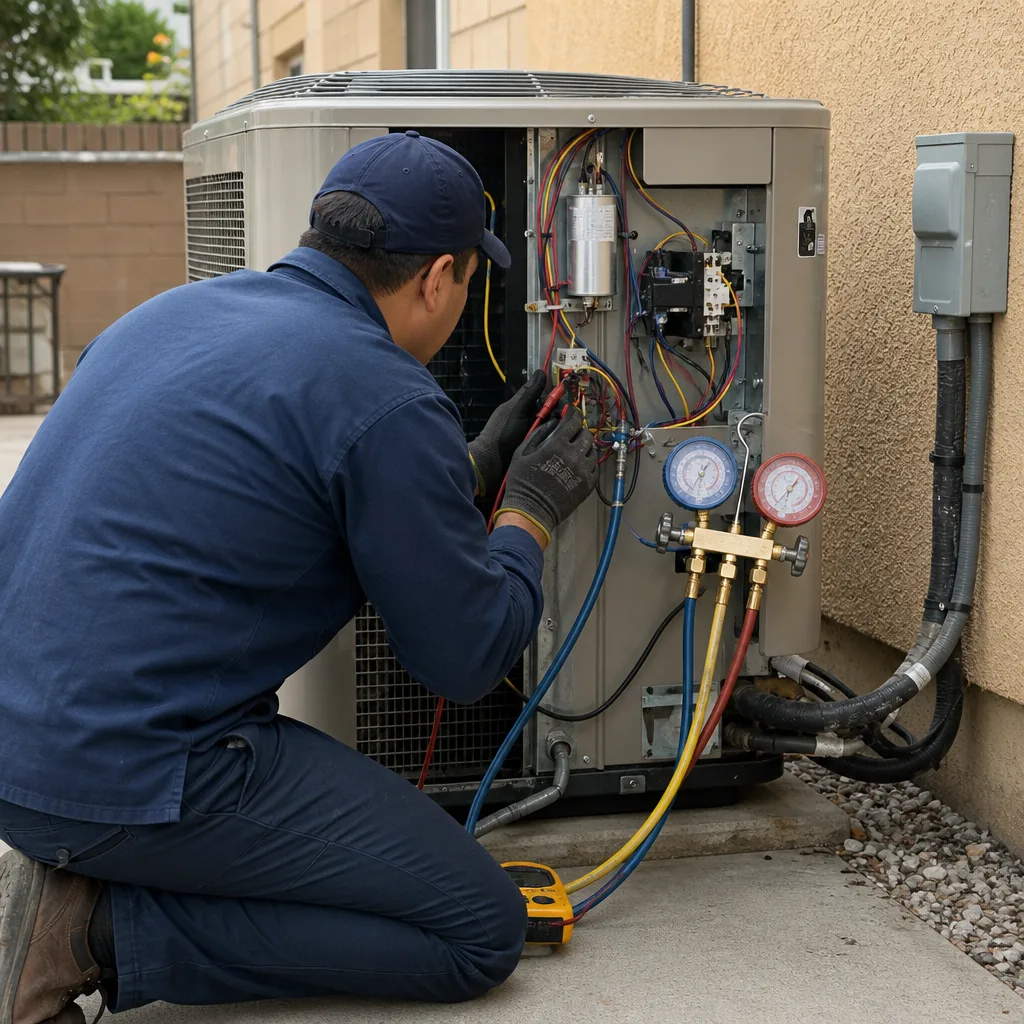
- Book the annual AC inspection and tune-up now, not in March. The goal is to find weak components before the first sustained 90°F+ stretch, not before the first 75°F day.
- Have the condenser coil cleaned. Dirt, cottonwood fluff, and winter debris on the outdoor coil reduce heat rejection efficiency by 10-20% and raise head pressure, which shortens compressor life.
- Have the refrigerant level checked. A system that is 10% low on refrigerant loses about 20% of its cooling capacity and increases compressor temperature significantly.
- Test the capacitor and contactor. These are the two components that fail most often on the first hot day of the season, and both are cheap to replace preventively versus paying for an emergency call when they fail on a Sunday in June.
- Check the condensate drain line for blockages. In Santa Clarita’s dry climate, drain lines clog less often than in humid regions, but spider webs, dust, and debris can still block them, leading to a water shutoff switch trip that kills cooling on the exact day you need it most.
May-June: First Heat Spike Watch
- The first sustained 95°F+ stretch in Santa Clarita typically arrives in late May or June. This is when we see the most emergency repair calls in the entire year, because it’s the first time since October that the system has run at full capacity for more than an hour a day.
- Listen for the compressor coming on and staying on. If the outside unit starts and stops every few minutes, that’s short cycling, which is usually a refrigerant issue or an undersized system, and it will destroy the compressor if left alone.
- Check the thermostat’s deadband setting. If you have the cooling set to 74°F and the heating set to 76°F, the system may actually run in both modes on days with wide temperature swings, wasting energy and causing wear.
- Do not wait until the unit fails. If the system is making noise, running but not cooling, or icing up, call in May. The cost of an AC Repair in Santa Clarita visit in May is the same as in August, but the wait time is measured in hours, not days, and the parts availability is better.
July-August: Peak Load, Minimum Intervention
- Change the filter every 30 days. The system is running 10-14 hours a day, pulling a lot of air through the filter, and a clogged filter will ice the coil.
- Visually inspect the outside unit once a week. Clear away leaves, cottonwood debris, and anything within two feet of the coil. The unit needs airflow on all sides.
- Set the thermostat to a higher setpoint when you leave for the day. Contrary to popular belief, leaving the AC at 72°F all day while you’re gone costs far more than letting the house drift to 80°F and cooling it down when you return. The system is more efficient when recovering from a higher setpoint than when maintaining a low one.
- If the system cannot reach setpoint on a 100°F+ day, that might be normal for an older unit in a top-floor condo with west-facing windows, but it might also be a refrigerant issue, a dirty coil, or a failing compressor. Note the difference between “runs constantly but maintains 76°F” and “runs constantly but the thermostat keeps climbing past 78°F.” The first is normal on a hot day; the second is a service call.
September-October: Cooling Season Winding Down, Heating Season Prep
Late September in Santa Clarita is the ideal time to book the furnace check. The AC is still running most days, so technicians are not slammed with heating calls yet, but the first cold snap is only six to eight weeks away. What to include:
- Heat exchanger inspection. Cracks in the heat exchanger are a carbon monoxide hazard and the single most important finding of an annual furnace inspection. On older furnaces, this should be checked every single year without exception.
- Thermocouple or flame sensor testing on older standing-pilot or intermittent-pilot furnaces. A weak flame signal causes nuisance shutdowns, which often happen at 2 a.m. on the coldest night of the year when the furnace has been idle and the flame sensor has carboned up.
- Burner cleaning and flame pattern check. A yellow, lazy flame indicates incomplete combustion, which wastes gas and produces carbon monoxide.
- Blower motor and capacitor test. The same failure modes that affect AC capacitors affect furnace blower capacitors, and a blower motor that fails in January is a cold-night emergency.
- Duct smoke and odor check. If the ducts smell musty or smoky after Santa Ana season, a duct cleaning and sanitizing may be worthwhile before the heating season seals the house up.
November-December: Heating Season, Brief but Real
- Run the furnace for 15 minutes once a week even if daytime temperatures are in the 70s. The heating system’s components need regular use just like the cooling system’s do.
- Change the filter after any significant dust or smoke event. November in Santa Clarita can still bring dry, dusty conditions.
- If you have a heat pump, note that the system works differently in winter. A heat pump in heating mode will feel less hot than gas heat, because the supply air temperature is lower. That is normal, not a malfunction. But if the outdoor unit is icing up and not defrosting, that is a service call.
April: The Real Start of Cooling Season
If you take one thing from this guide, let it be this: the single most valuable maintenance task for a Santa Clarita homeowner is the April AC inspection, timed before the first sustained heat spike of the year, not a generic March spring tune-up. The reasoning is simple. Components fail under thermal and electrical stress, and that stress does not exist until the system runs at full load. A capacitor that reads 5 microfarads under no-load testing in March may read 4.6 microfarads in April, which is still within spec, but under the load of a 98°F day in June, that same capacitor fails. The margin matters, and the April visit is when the margin is tested most reliably.
Here is what a thorough April inspection includes, in plain terms:
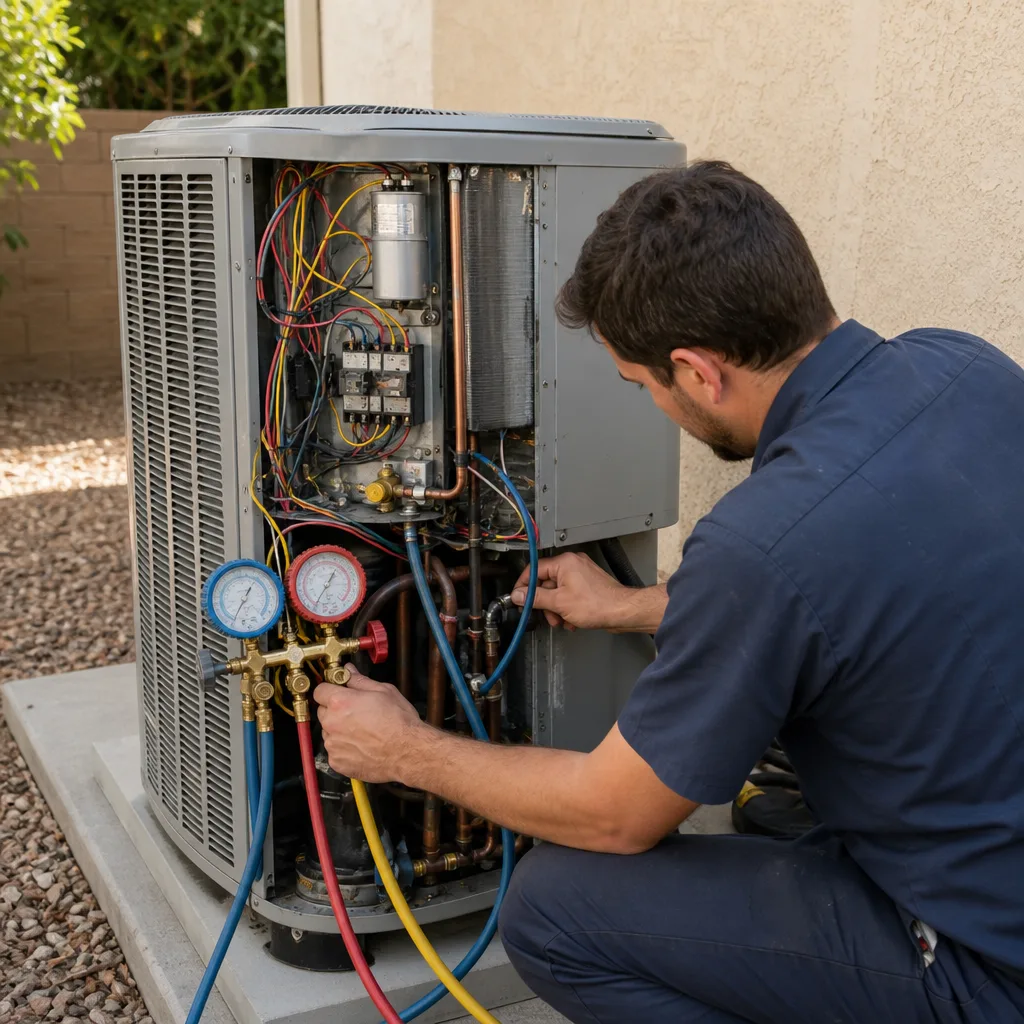
- Condenser coil cleaning: the outside coil, usually behind the house or on a side yard, sheds heat to the outside air. Dust, leaves, cottonwood debris, and spider webs act as an insulating blanket. A dirty coil raises the compressor’s head pressure, which shortens the compressor’s life and raises operating cost.
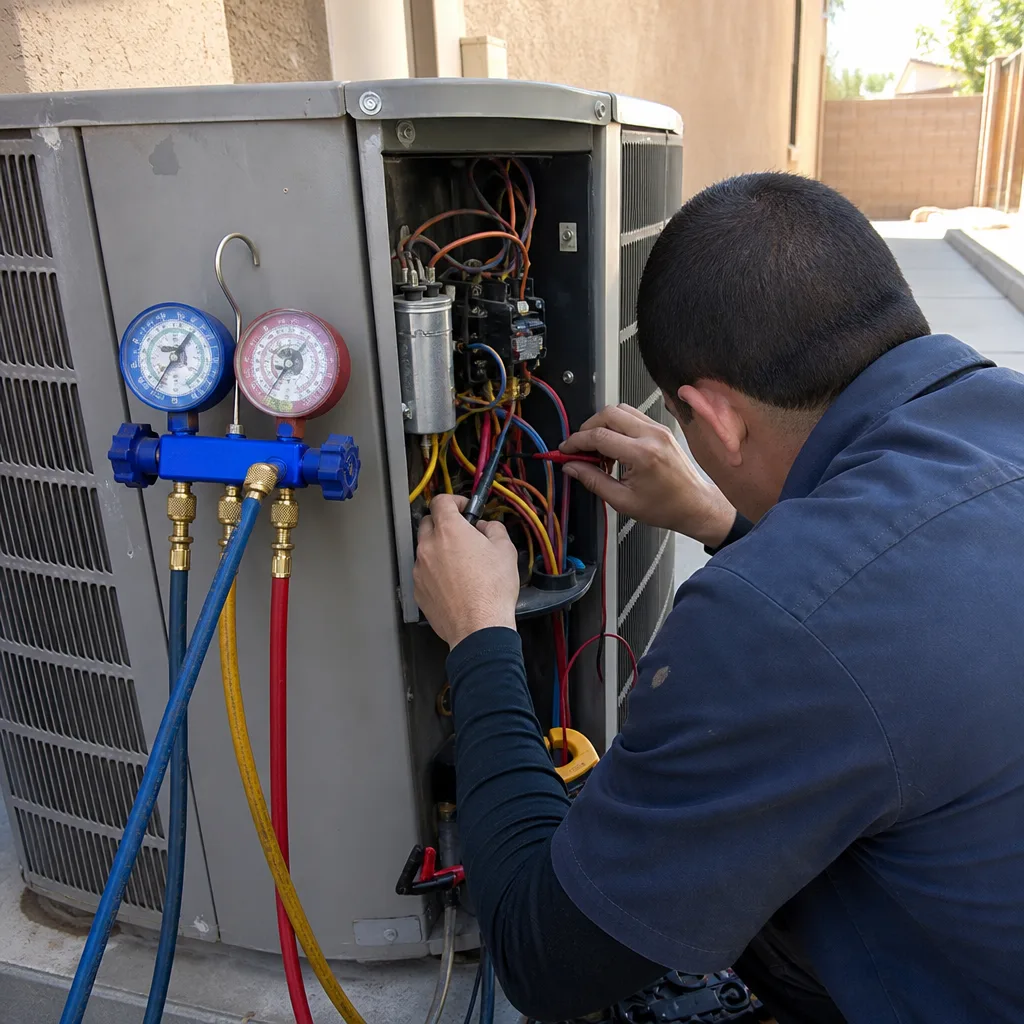
- Capacitor test: the capacitor is the electrical component that gives the compressor and fan motors the starting boost they need. It is the single most common failure point we see on first-heat-wave days in Santa Clarita.
- Contactor test: the contactor is the relay that supplies power to the outside unit when the thermostat calls for cooling. Over time, the contacts pit and burn, which causes intermittent operation and, eventually, a complete failure that means no cooling at all.
- Refrigerant level check: low refrigerant (the cooling fluid, typically R-410A in systems installed before 2025 or R-454B in newer systems) means the system cannot reach the setpoint temperature and the compressor runs hotter than designed. A system that is 10% low on refrigerant loses roughly 20% of its cooling ability.
- Evaporator coil inspection: the indoor coil, usually above or below the furnace or air handler, absorbs heat from the house. If it is dirty, the system loses efficiency, and if it is iced, the system cannot cool at all.
- Drain line clearing: clearing the condensate drain prevents water damage and system shutdowns. In Santa Clarita’s dry climate, drain lines clog less often than in Florida or Texas, but it still happens, especially in spring when spiders are active.
- Airflow verification: measuring static pressure, the resistance to airflow through the ductwork and filter system, reveals whether the system is moving the right amount of air. A system with restricted airflow runs hot and inefficient, even if every mechanical component is fine.
At Dalton Heating & Air Santa Clarita, the April inspection is a fixed-price call with a written report. Our technicians check every item on this list, and the price is in writing before any work begins, every time, without exception. That’s not a promotion; it’s the Garrison Standard under which we have operated since 2003. And if any repair is recommended during the inspection, the cost is quoted in writing before the work is done, and the repair itself is covered by a full-year written guarantee. If it fails within that year, we return at no charge.
Red Flag Warning Days and What to Do
Santa Clarita has a unique wildcard in its seasonal HVAC picture: Red Flag Warning days. The National Weather Service issues a Red Flag Warning when sustained winds above 25 mph combine with single-digit humidity, creating extreme fire danger. These days are most common in September and October but can occur any time from late August through November, and they bring a specific set of HVAC issues that standard seasonal guides never address.
The first issue is air quality. Santa Ana winds carry dust, ash, and in bad fire years, active smoke from regional fires. The system’s air filter is the first line of defense, and on a bad Red Flag day, even a fresh filter can load up with visible debris within 48 hours. The second issue is condenser coil fouling. The same wind-driven debris that clogs the filter also coats the outdoor condenser coil, and a day or two of wind can reduce the coil’s heat-shedding ability by 15% or more. The third issue is the risk of system operation during heavy smoke, which can deposit soot on the evaporator coil and clog the condensate drain line.
Here is what we tell Santa Clarita homeowners to do specifically during a Red Flag Warning:
- Set the system to re-circulate or recycle mode rather than fresh-air intake. Many newer thermostats have a “fan circulate” mode that runs the blower periodically without calling for heating or cooling, and some have a “fresh air” option that should be disabled during fire weather. The goal is to stop the system from pulling smoky outdoor air into the house.
- Change the filter when the warning ends. Even if the filter is only a week old, a day or two of wind-driven ash can clog it. During a major smoke event, check the filter daily and change it when it appears gray or brown, not when the calendar says so.
- Visually inspect the outside condenser unit after the event. Leaves, palm fronds, and other wind-blown debris collect around the coil. Clear any debris within two feet of the unit so airflow can return to normal.
- Consider upgrading to a MERV 13 filter during fire season. A MERV 13 filter captures more fine particulate matter, but it also restricts airflow more than a standard MERV 8 filter. If you make this upgrade, the system needs to be checked for proper static pressure first, because the added restriction can reduce system capacity and, on hotter days, cause icing. A one-inch MERV 13 filter may restrict too much; a four-inch media filter with MERV 13 rating is the better choice for most systems.
- If your system has been running in the smoke for a week or more, schedule an inspection before the next hot stretch. Soot on the evaporator coil is not removed by a new filter, and a sooted coil loses efficiency and risks icing the next time temperatures climb.
Fire season in Santa Clarita is not a hypothetical. The valley sits adjacent to large open-space areas, and the wind patterns that create Red Flag conditions blow directly through Canyon Country, Valencia, Saugus, Newhall, and Castaic. If you have lived here for more than a year, you have seen ash on your car. Your HVAC system sees the same ash.
Winter Heating Prep for Brief Freezes
Santa Clarita’s heating season is short but not optional. The valley averages five to seven nights below freezing each winter, with the coldest nights typically occurring in December and January. The daytime temperature recovers quickly, which is why many homeowners make the mistake of not servicing the furnace at all until it fails on the one night it’s actually needed. The heating system, whether it’s a gas furnace, an electric furnace, or a Heat Pump Installation in Santa Clarita, sits idle for eight months each year, and idle components fail more often than used components.
The highest-value heating season tasks for Santa Clarita are:
- Heat exchanger crack inspection. The heat exchanger is the metal chamber where gas burns to heat the air. Over time, the metal expands and contracts with each heating cycle, and microscopic cracks form along the seams. A crack allows combustion gases, including carbon monoxide, into the house air stream. Modern furnaces have pressure switches and limit switches that often shut the system down if the exchanger is breached, but older units have no such protection. Every furnace should have the exchanger inspected at least once a year, and any furnace over 10 years old should have a carbon monoxide detector in the same room.
- Flame sensor and thermocouple testing. The flame sensor, on newer furnaces, and the thermocouple, on older standing-pilot models, are the components that confirm the flame is lit. When they fail, the furnace shuts down, usually right after startup. The failure is often intermittent at first, a nuisance shutdown here and there, and then total on the coldest night of the year. Testing these components in October avoids the January midnight call.
- Inducer motor and pressure switch check. The inducer motor is the small fan that pulls combustion gases through the heat exchanger and out the flue. If it fails, the furnace will not light. Pressure switches, which confirm that the inducer is working, can stick or fail, and the failure is often intermittent and temperature-related.
- Burner cleaning. The burners are where the gas flame is produced. Dust and dirt in or on the burners cause incomplete combustion, which wastes fuel and produces more carbon monoxide. A clean burner has a uniform blue flame; a dirty burner has a yellow, lazy flame.
The heating season in Santa Clarita is forgiving in one sense: a furnace failure is rarely immediately dangerous, because the daytime temperature recovers and the house does not freeze. But the comfort loss is real, the repair cost is the same whether it happens in October or January, and the emergency call fee, if any, is higher on the coldest nights when demand is highest. Booking the heating season check in late September or October costs the same as a mid-season call, but the wait time is minimal, the system is not failed, and the Furnace Repair in Santa Clarita visit can be scheduled at a time that works for you rather than when the furnace decides it’s urgent.
The Transition Weeks: When to Book and Why It Matters
The two transition windows, late September through mid-October and late March through mid-April, are the best times of year to schedule HVAC service in Santa Clarita, for reasons that have nothing to do with the weather and everything to do with supply and demand. During the peak cooling season, which runs from June through August, every HVAC company in the valley is running at or beyond capacity. Emergency calls come first, routine maintenance gets pushed back, and the result is longer wait times, fewer scheduling options, and higher prices for emergency work. During the peak heating season, which is brief but intense in Santa Clarita, the same dynamic applies in miniature.
In the transition windows, the demand falls to its annual low. The AC is still running but not heavily, the furnace has not been used in months, and most homeowners are not thinking about their HVAC system at all. That means fewer emergency calls, shorter wait times, more scheduling flexibility, and technicians who can spend more time on a thorough inspection rather than rushing to the next job. At Dalton Heating & Air, we also find that parts availability is better in the transition windows, because supply houses are not clearing out their inventory for a flood of same-day emergency requests.
There’s a practical reason to book in the transition window that goes beyond convenience: the system’s behavior in the transition period predicts what will happen in the stress period. A capacitor that tests weak in early April is likely to fail in June. A heat exchanger that shows a hairline crack in October is likely to worsen by January. Catching these issues during the transition period means the repair can be scheduled at the homeowner’s convenience and at the regular rate, not the emergency rate, and the repair can be done before the system is needed at full capacity.
The transition windows are also the best time to get a full-system assessment if you are planning a replacement. A Heat Pump Installation in Santa Clarita requires a load calculation, equipment selection, and scheduling that typically takes one to three weeks, and doing it in April or October means the new system is in place before the season it’s designed to serve. Doing the same replacement in July or January means waiting through the worst weather with a failed system, which nobody wants.
Static Pressure Testing: The Test Most People Skip
Static pressure testing is the single most valuable HVAC diagnostic test that almost no homeowner has ever heard of, and it’s the one that reveals long-term efficiency loss that no visual inspection can find. In simple terms, static pressure measures the resistance to airflow through the entire duct system, from the supply plenum at the top of the furnace or air handler to the return grille in the hallway. When static pressure is too high, the system has to work harder than designed to move air, and the result is lower efficiency, higher operating cost, shorter system life, and often, rooms that never quite heat or cool properly.
Here is what static pressure testing actually tells you:
- Whether the ductwork is oversized or undersized for the system. A system that was installed with ductwork too small for the air handler will have high static pressure from day one, and no amount of maintenance will fix the underlying problem. This is common in Santa Clarita homes that had a system replaced but the original ductwork left in place.
- Whether the filter is too restrictive. A standard one-inch MERV 8 filter adds some resistance, and a MERV 13 filter adds more. In a system with marginal ductwork, the wrong filter can push static pressure over the limit and cause icing, blower motor failure, or both.
- Whether the return side is adequate. Many Santa Clarita homes have a single central return, which is marginal on the best day. Adding a second return in a master bedroom, a hallway, or a far corner of the house often reduces static pressure and improves both comfort and efficiency.
- Whether the evaporator coil is dirty or partially blocked. A coil that has accumulated years of dust and pet dander on the underside will restrict airflow, and because the coil is not visible without opening the system, the problem goes undetected without a static pressure measurement.
A proper static pressure test uses a digital manometer and takes measurements at the return plenum and supply plenum with the system running. The total external static pressure should be no more than 0.5 inches of water column for most residential systems, and a reading above 0.7 is a sign that something is wrong. The test takes less than 30 minutes and requires no disassembly, but it requires a technician who knows how to do it and who has the instrument, and the findings can save hundreds of dollars a year in operating cost.
We include static pressure testing in our annual inspection because it catches problems that a visual inspection cannot. If a system has high static pressure, the repair is usually a duct modification, a filter change, or a return air addition, and the cost is modest compared to the cost of running a system with restricted airflow for another decade. Most Santa Clarita homeowners have never had this test done, not because it’s expensive but because most maintenance visits are not thorough enough to include it.
Filter Strategy for Valley Air
Santa Clarita’s air quality challenges are different from most of the country. The valley is dry, dusty, and subject to Santa Ana wind events that blow fine particulate matter through every crack in the building envelope. On a normal day, the air carries dust from the surrounding hills and open spaces. During fire season, it carries smoke and ash. Even on a mild day, a standard one-inch filter will visibly collect dust within 30 days during peak cooling season.
The filter strategy we recommend for Santa Clarita homeowners is:
- During peak cooling season (June-August): change the filter every 30 days, regardless of the rated lifespan of the filter. The system is running 10-14 hours a day, the air is dusty, and the filter is doing real work. A one-inch fiberglass filter rated for 90 days will be loaded in 30.
- During transition seasons (April-May, September-October): change the filter every 45-60 days, with an extra change after any significant wind event or fire-weather period.
- During heating season (November-February): change the filter every 60 days. The system runs less, the air is cleaner, and the filter lasts longer.
- Fire season: if the system is running and the air outside is smoky, check the filter weekly and change it when it appears gray or brown. A filter that looks clean but has been running through a smoke event is doing its job; the question is whether it’s still doing its job, and a visual check is the only way to know.
For most Santa Clarita homes, a MERV 8 filter is the right balance of filtration efficiency and airflow resistance. MERV 8 captures pollen, dust, mold spores, and most fibrous particles, which covers the concerns in this climate. A MERV 11 or MERV 13 filter captures more fine particulate matter, which matters during fire season, but it also restricts airflow more. If you want to upgrade to a higher-MERV filter, have the system’s static pressure checked first, and consider a four-inch media filter cabinet rather than a one-inch filter, because the larger surface area of a four-inch filter supports higher efficiency without the same airflow penalty.
One final note on filters: the cheapest fiberglass filters, the ones that cost a dollar and you can see through, are not worth using in Santa Clarita. They are designed to protect the equipment from large debris, not to clean the air, and they allow fine dust to pass through and accumulate on the evaporator coil and blower wheel. A coil that is caked in dust loses efficiency and eventually ices, and cleaning a dirty coil costs far more than a decade of proper filters.
Common Mistakes to Avoid
- Skipping the April inspection because the system “worked fine last year.” Every system works fine until it doesn’t. The capacitor that failed on the first hot day last June was working fine on May 1st, and the one that will fail this June is working fine today. The April inspection is about finding the failure before it happens, not fixing a system that’s already broken.
- Changing the filter on a fixed calendar schedule rather than by condition. A filter that has been through a Santa Ana wind event or a smoke period needs changing earlier than a filter that has only seen normal household dust. The calendar is a guide, not a rule.
- Closing supply vents in unused rooms to “save energy.” Closing vents increases static pressure, which forces the blower to work harder, reduces efficiency, and can cause the evaporator coil to ice. The system is designed for a specific airflow volume, and closing vents fights the system’s design.
- Setting the thermostat to 68°F to “cool the house down faster.” The system cools at the same rate regardless of the setpoint. Setting the thermostat lower only makes the system run longer, not faster, and the longer runtime means higher energy cost.
- Ignoring a furnace that works fine until it doesn’t. Santa Clarita’s heating season is brief, and the furnace often goes from idle to full use on the first cold night of the winter. Idle systems accumulate moisture in the combustion chamber, flame sensors carbon up, and pressure switches stick. The October check is the cheapest insurance against the January midnight no-heat call.
- Never having the static pressure measured. This is the test that reveals the slow, silent efficiency losses that accumulate over years and cost money every single month. A system with high static pressure can run for years without failing, but it runs inefficiently the entire time, and the operating cost penalty is often larger than the repair cost to fix the underlying issue.
- Running the system on a smoky day with the fresh air intake open. During a Red Flag Warning or any fire-weather period, the fresh air intake, if the system has one, should be closed and the system set to recirculate. Pulling smoky outdoor air into the house and then running it through the filter loads the filter and deposits soot on the coil, and the filter was never designed to handle wildfire smoke at full concentration.
When to Call a Professional
Some HVAC issues are safe and straightforward for a homeowner to address: changing a filter, clearing debris from around the condenser coil, checking that the thermostat setting is correct. Others are not. Any time the system is not cooling or heating properly after the simple checks have been done, it’s time to call a professional. Specifically, call a professional if the system is making unusual noise, if the outside unit is short cycling or running without the fan spinning, if the system is icing up, if the thermostat is showing an error code, or if the furnace is producing a yellow flame, a burning smell, or any sign of incomplete combustion.
Do not attempt to open the system’s electrical cabinet. The capacitors inside store enough voltage to cause a serious shock even when the power is off, and the refrigerant circuit is pressurized and requires EPA-certified handling. The same goes for any work involving the heat exchanger, gas valve, or combustion system of a furnace. These are systems that can leak carbon monoxide or cause a fire if not handled correctly, and the cost of a professional repair is a fraction of the cost of the damage a botched DIY repair can cause. If you need a professional in Santa Clarita, Dalton Heating & Air Santa Clarita offers free estimates and written pricing before any work begins. Call (661) 621-3712 and a real person will answer, 24 hours a day, 7 days a week.
Frequently Asked Questions
Once a year for the cooling system, timed in April before the first sustained heat spike, and once a year for the heating system, timed in late September or October before the first cold snap. For more guides & resources on keeping your system reliable, see our blog. The cooling season service is the more important of the two in Santa Clarita, because the cooling season is longer and the system is under more stress. A system that gets both inspections every year will outlast one that gets serviced only when it breaks, and the cost of the inspections is far less than the cost of the emergency repairs they prevent.
An annual inspection and tune-up in Santa Clarita typically runs $89 to $179 for the basic visit, which includes the inspection, coil cleaning, capacitor and contactor testing, refrigerant check, and drain line clearing. The price varies based on the system type, the number of zones, and the specific tests included. Dalton Heating & Air charges a flat rate for the annual inspection, with the price in writing before the visit, and any repairs recommended during the inspection are quoted separately and in writing before any work is done. Call (661) 621-3712 for a free estimate.
Should I repair or replace my Santa Clarita HVAC system?
A repair is generally the right call when the system is under 10 years old and the repair cost is less than about 30% of the replacement cost. When the system is over 15 years old, the repair cost exceeds 30%
See the difference
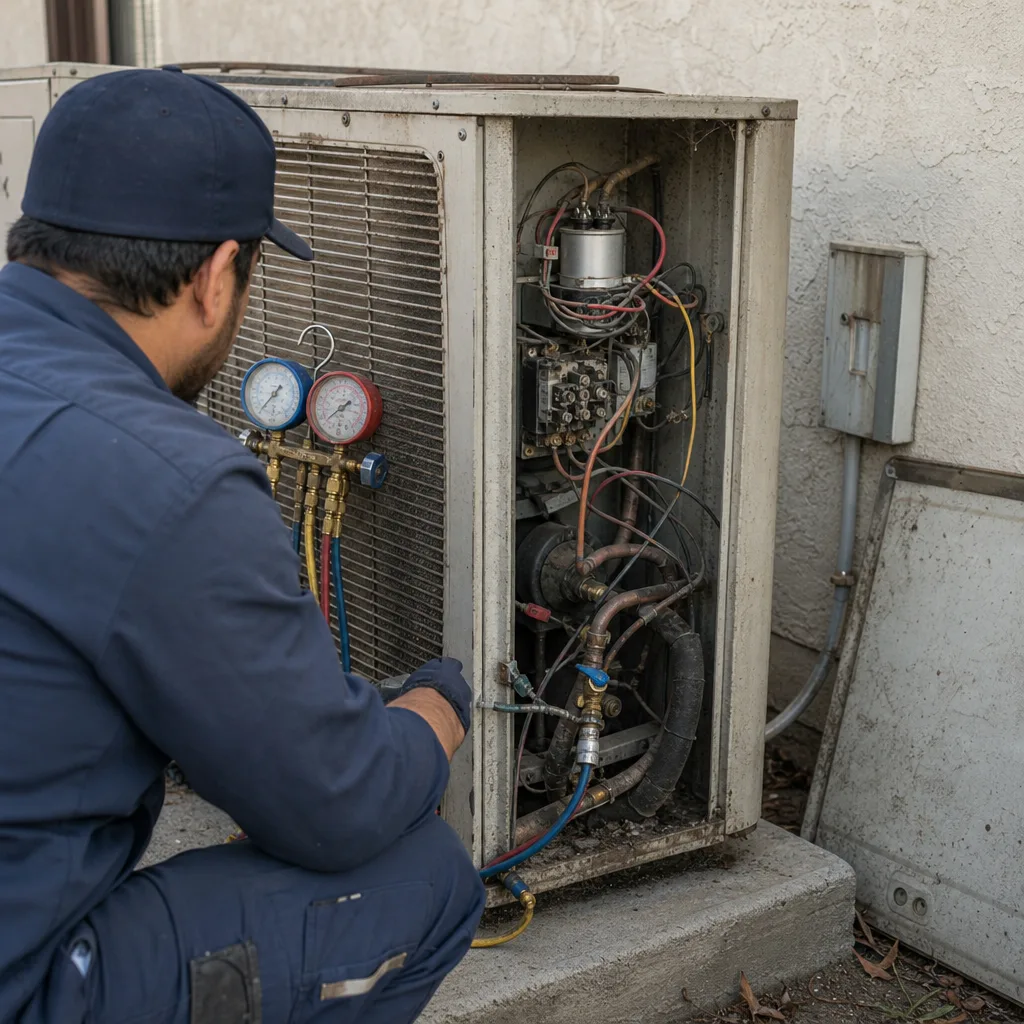 Before
 After
After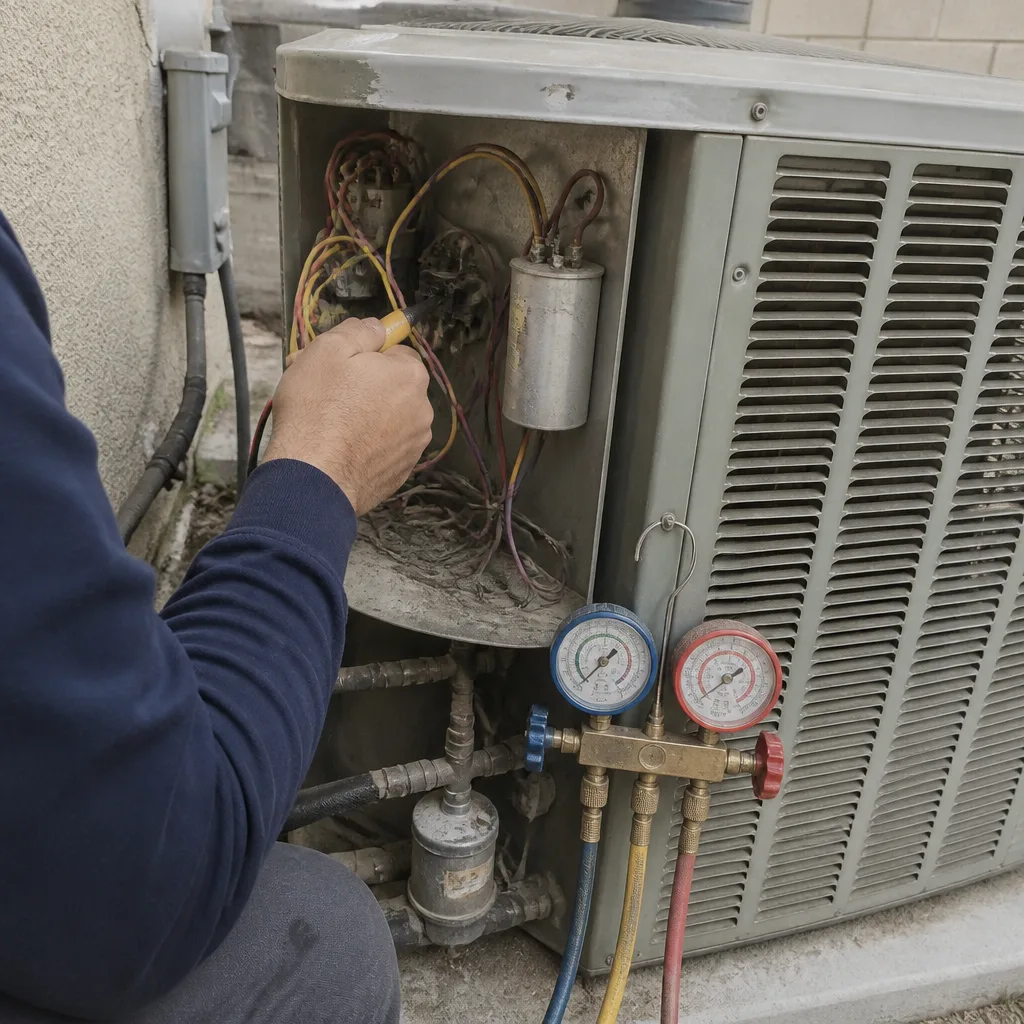 Before
 After
After Before
 After
After